9 Best Brow Mapping Tools for PMU Artists
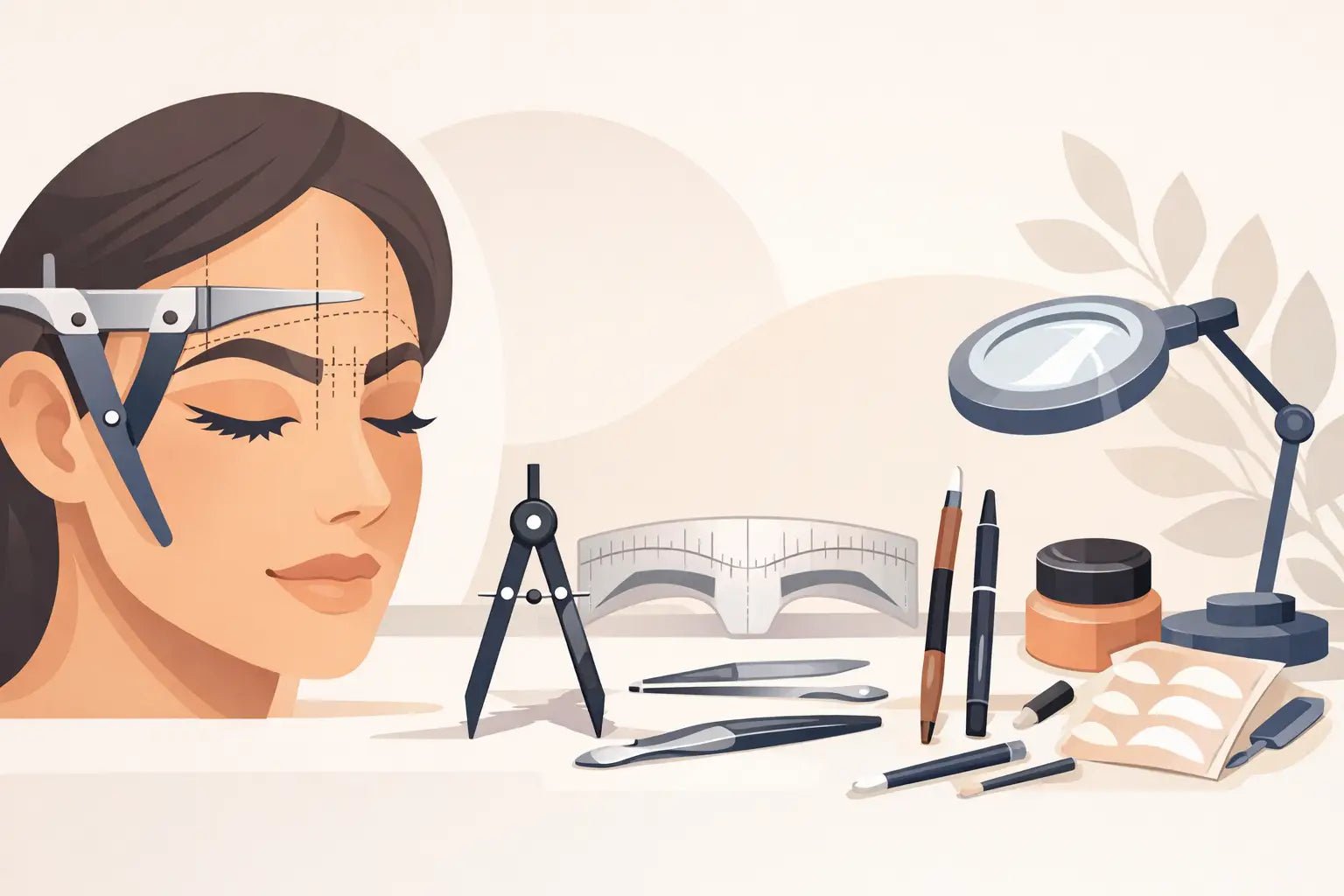
A rushed pre-draw shows up in the final result. Most artists learn that early, usually after one set of uneven fronts or a client whose natural muscle movement shifts everything once they sit upright. The best brow mapping tools are the ones that help you work accurately, quickly, and consistently under real treatment conditions, not just on a practice skin sheet.
For PMU artists, brow mapping is less about owning every gadget and more about building a setup that matches your technique. A high-volume brow specialist may want speed and disposable convenience. A trainer may need tools that clearly demonstrate proportion and symmetry. A newer artist often benefits from a simpler system with fewer variables. That is why there is no single perfect mapping kit, but there are clear standouts depending on how you work.
What makes the best brow mapping tools worth buying
Good mapping tools do three jobs well. They improve visual symmetry, they reduce guesswork during the pre-draw, and they hold up in a clean professional workflow. If a tool looks helpful but slows you down, smudges easily, or creates more adjustment points than it solves, it is not helping your service.
The best options also respect the reality of brow work. Faces are not symmetrical. Brow bone structure, previous PMU, muscle pull, scar tissue, and client preference all affect your outline. A tool should guide your measurements, not force identical brows where identical brows do not make anatomical sense.
That is the main trade-off in this category. The more rigid the measuring system, the easier it is to create consistency. But if you rely on strict measurements without reading the face, your mapping can look technically correct and still feel wrong on the client.
1. Brow mapping string
If you only keep one dedicated mapping item in your brow station, make it mapping string. Pre-inked string is fast, clean, and highly visible, which makes it one of the best brow mapping tools for artists who want crisp reference lines without overworking the skin.
It is especially useful for establishing the center line, front points, arch placement, and tail direction. Because the line is stamped rather than drawn freehand, you get better straightness and often better speed. For artists working back-to-back appointments, that matters.
Not all string performs the same way. You want pigment that transfers clearly without bleeding and a spool that feeds smoothly. If the line is too dry, you will press harder and risk uneven transfer. If it is too saturated, your marks can spread and muddy the pre-draw.
2. Flexible brow mapping rulers
A good brow ruler is still a staple, especially for newer artists or anyone who likes visible measurement checkpoints during the consultation and design stage. Flexible rulers conform better to the forehead than stiff plastic options, and that alone can improve accuracy.
These are most helpful when you are checking horizontal alignment and reference distances. They give structure to your process and can be reassuring for clients who want to see that the design is being measured carefully.
The downside is that rulers can become a crutch. They help with proportion, but they do not account for asymmetry caused by expression, healed work, or bone structure. Use them as a guide, then refine by eye with the client sitting upright.
3. Golden ratio calipers
Golden ratio calipers have a place in advanced brow design, particularly for artists who like a more engineered approach to facial proportion. They can help identify balanced start, arch, and tail relationships and are often favored in training environments because they make design theory easier to demonstrate.
That said, they are not automatically the best choice for every appointment. On some faces, strict ratio-based shaping can ignore individual anatomy or client style preferences. Soft powder brows on a mature client, for example, may need a different visual balance than a crisp hybrid set on younger skin.
Calipers are most effective in experienced hands. If you understand when to follow the ratio and when to override it, they can elevate consistency. If not, they can create overbuilt shapes that look measured instead of wearable.
4. White mapping pencil or skin marker
No brow mapping setup is complete without a reliable white pencil or skin-safe marker. This is the tool that turns your measurements into a readable pre-draw. You need opacity, control, and enough firmness to create clean edges without dragging.
White pencils are ideal for outlining shape corrections, adjusting bulb height, and clarifying tail thickness before you commit. They also photograph well, which helps with consultations, approvals, and training content.
Texture matters here more than many artists expect. A pencil that is too creamy can smear under gloves or while stretching the skin. Too dry, and it skips. Many artists keep more than one option in their drawer because oily skin, mature skin, and post-cleansing skin all behave differently.
5. Fine-tip measuring thread and standard thread
Some artists prefer to work with plain thread plus their own pigment or marker rather than pre-inked mapping string. It is a valid approach, particularly if you want tighter control over the amount of product on the line or you are teaching foundational mapping methods.
Standard thread can also be useful for custom techniques and backup station setup. It is not usually the fastest option, but it gives flexibility. For trainers and artists who like to demonstrate the mechanics of line placement, that flexibility can be worth the extra step.
For daily production, though, many working PMU artists find pre-inked string more efficient. This is a classic case of technique preference over absolute product superiority.
6. Brow paste
Brow paste is not always the first product artists mention in a mapping conversation, but it can be one of the most practical. It creates a visible border around the shape, helps with client approval, and gives you a strong visual boundary before implanting pigment.
It is particularly useful for bold shapes, oily skin, and content capture. If your white pencil tends to fade during a longer appointment, paste can give you a more durable frame.
The trade-off is precision. Paste is excellent for emphasis, but it is usually less exact than a sharp pencil line for tiny front adjustments or subtle arch refinements. Many artists use both, sketching first with pencil and reinforcing with paste only where needed.
7. Measuring calipers for direct point-to-point checks
Unlike golden ratio calipers, standard measuring calipers are simple workhorses. They are excellent for checking equal distances from the center line, comparing front heights, and confirming tail placement side to side.
This is one of the best brow mapping tools for artists who want hard measurement confirmation without relying entirely on visual judgment. It is also helpful when working over old PMU, where healed shapes can distort your perception.
The best use for these calipers is selective, not constant. Check the points that matter most, then step back and assess the whole face. Over-measuring can break your rhythm and make the design feel mechanical.
8. Disposable mapping accessories
Cotton-tip applicators, micro swabs, disposable spoolies, and lint-free pads are not glamorous, but they support better mapping. Cleanups, edge refinement, and quick corrections all depend on having the right disposables within reach.
In a professional setup, efficiency is part of precision. If you are reaching across the room for cleanup tools or trying to sharpen a blurred line with the wrong applicator, your pre-draw suffers. Artists who map cleanly tend to organize their station around those small adjustments, not just the hero tools.
9. Good lighting and magnification
This is the category many artists under-rate until they upgrade. Even the best brow mapping tools will underperform in poor lighting. Neutral, shadow-free light changes how clearly you can assess front balance, arch transition, and tail taper.
Magnification can help with detail work, but it should not replace stepping back to view the full face. If you map entirely from a magnified perspective, it is easy to over-correct tiny differences that are not noticeable at conversational distance.
How to choose the right brow mapping setup
For most PMU artists, the smartest setup includes a flexible ruler, mapping string, a white pencil, and a measurement tool such as standard calipers. That combination covers speed, symmetry, and refinement without making the process overly complicated.
If you are newer to brows, keep your system tight. Too many tools can create hesitation. Build confidence with a repeatable method first, then add specialty tools like golden ratio calipers or brow paste if they genuinely improve your workflow.
If you are a trainer or studio owner, standardization matters more. Your team or students should be able to reproduce the same mapping process consistently across clients and models. In that case, selecting a clear core kit and teaching when to adapt it is more valuable than chasing every new accessory.
Artists sourcing through professional suppliers like Inkbox Artistry usually benefit from choosing category depth over random product mixing. When your mapping supplies, pigments, disposables, and machine accessories are all selected for PMU use, the workflow is simply tighter.
The real standard for the best brow mapping tools
The best tool is the one you can trust on your fifth client of the day, on oily skin, over previous work, and under the pressure of a full schedule. Precision matters, but repeatability matters just as much.
If your current mapping feels inconsistent, do not assume you need more products. You may just need better-performing basics and a cleaner method. The strongest brow setups are rarely the most complicated. They are the ones that let the artist see clearly, mark confidently, and adjust with intention.