Best Lip Pigment Modifiers for PMU Artists
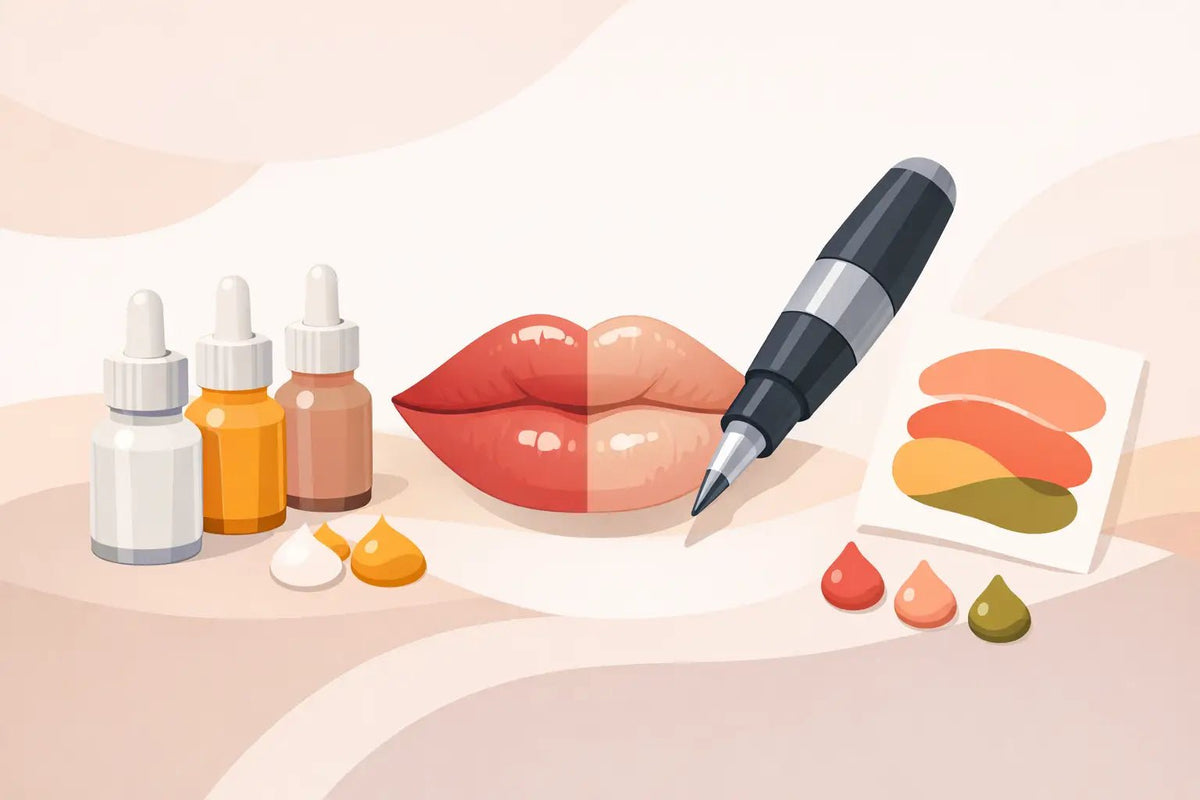
A lip blush set can look perfectly balanced in the cup and still heal too cool, too muted, or unexpectedly ashy if the underlying lip color was not properly accounted for. The best lip pigment modifiers give PMU artists controlled ways to correct temperature, lift dullness, and adjust saturation without abandoning the pigment line they already trust.
Modifiers are not a shortcut around consultation, skin assessment, or proper technique. They are precision tools for building a formula around the client in front of you. Used thoughtfully, they help create a more predictable healed result across pale lips, cool-toned lips, mature lips, and lips with significant natural pigmentation.
What Lip Pigment Modifiers Actually Do
A modifier changes a pigment’s behavior or visual direction. In lip work, that usually means moving a target shade warmer or cooler, increasing or reducing intensity, or correcting a visible undertone that could interfere with healing.
The word "modifier" can cover several product types, including warm correctors, cool adjusters, lighteners, darkeners, and concentrated mixing colors. Not every pigment labeled as a modifier should be treated the same way. A highly saturated orange corrector, for example, has a very different role from a soft warm nude used to gently warm a pink blend.
For artists, the goal is not to create the prettiest fresh color. It is to formulate for the client’s natural lip base, skin tone, lifestyle factors, desired healed result, and the tendency of the chosen pigment to settle warmer, cooler, brighter, or softer over time.
The Best Lip Pigment Modifiers by Correction Need
The best choice depends on what needs correcting. Start with the lip’s visible undertone in natural light, then consider the client’s desired outcome. A client asking for a cool rose does not automatically need a cool formula if their lips already carry blue, purple, or gray tones.
Orange and Peach Modifiers for Cool or Dark Lips
Orange is a core correction color for lips with blue, purple, gray, or cool brown undertones. It is especially useful in dark lip neutralization when the objective is to counteract visible coolness before attempting a pink, rose, berry, or nude healed result.
A vivid orange corrector is powerful. It should be used with intention, not dropped into every formula because a client has naturally deeper lips. On a lip with only mild coolness, a peach, coral, or warm orange-based modifier may provide enough warmth while keeping the blend refined.
For stronger discoloration, a dedicated neutralization session may be the better clinical and artistic choice. Trying to force a bright desired color over a heavily cool base in one appointment can lead to uneven healing and a result that still reads gray or purple in certain areas.
Yellow and Warm Golden Modifiers for Purple Casts
Yellow or golden warmth can support correction when lips show a pronounced violet or purple cast. These modifiers can also help soften overly cool berry or mauve formulas when an artist needs warmth without the stronger visual push of orange.
The trade-off is that yellow can quickly make a mixture look flat, mustard-toned, or overly muted if used too heavily. It works best as a deliberate adjustment in a balanced formula, particularly where violet undertones are visible but not dominant throughout the entire vermilion.
Red and Warm Red Modifiers for Depth and Vitality
Red modifiers add energy, warmth, and depth. They can be valuable for clients whose lips are cool and dull but do not need a full orange correction, or when a nude or pink formula needs more life to remain visible after healing.
Warm red is often a better choice than bright red when the intended healed result is a soft rose or natural blush. Bright red can overpower a delicate target shade and may create more saturation than the client expects. Work in small additions, document your ratios, and remember that lips can heal lighter but still retain a noticeable temperature shift.
Pink and Rose Modifiers for Softening Warm Blends
Pink and rose modifiers are useful when a neutralized base has enough warmth but needs a more wearable, client-friendly finish. They can soften a coral-leaning formula, shift a nude toward a rosier result, or help rebuild the desired color after correction.
These shades are typically finishing tools, not substitutes for neutralization. Adding rose to a visibly blue or gray lip may make the fresh result look attractive, but the underlying coolness can still influence the healed color. Correct first when correction is required, then layer the aesthetic choice into the formula.
White, Lighteners, and Diluters: Use With Restraint
White and opaque lighteners can make a formula appear more pastel, but they are not a universal solution for clients requesting lighter lips. On lips with natural darkness or cool undertones, adding too much opacity can increase the risk of a healed result that looks chalky, gray, or uneven.
A clear diluter has a separate purpose. It reduces pigment concentration and can create a more translucent effect without changing the color direction as dramatically as white. It may be useful for sheer lip blush styles, but dilution does not neutralize undertones. Technique, passes, needle choice, and tissue response still determine how softly the pigment heals.
How to Choose Lip Pigment Modifiers for Your Kit
Build your modifier selection around the correction challenges you actually see in your studio. A reliable professional kit generally needs a concentrated orange or coral corrector, a warm red, a yellow or golden warm adjuster, a rose modifier, and a compatible diluter. If your pigment line offers a tested lightener or darkener, add those only after understanding how they perform in healed work.
Compatibility matters. Whenever possible, mix within the same pigment system or follow the manufacturer’s mixing guidance. Different carriers, bases, and pigment loads can change the consistency of a blend, its implantation behavior, and its healed appearance. A modifier that works beautifully with one line may not behave identically when mixed with another.
It also pays to stock both concentrated correction colors and softer wearable warm shades. A high-impact orange is essential for meaningful neutralization, while peach, coral, and warm nude shades give you more finesse for minor adjustments. Artists who rely on one corrective color for every cool lip often end up fighting unnecessary brightness or warmth.
A Better Formulation Process Before You Begin
Assess the lips clean, makeup-free, and before anesthetic whenever possible. Look at the full lip, not only the center. Many clients have different tones along the border, upper lip, lower lip, or healed scar tissue. Note asymmetry in color as well as shape.
Then identify whether you are performing a true neutralization, a standard lip blush service with a minor adjustment, or a color refresh. These are different treatment plans. Neutralization prioritizes correction and may require multiple sessions. A standard lip blush formula can prioritize the requested family of color, provided the natural base supports it.
Make a small test blend and assess it against the lip rather than judging it only on a white palette. On a white surface, a formula can look too warm, too dark, or too saturated compared with how it will visually interact with the client’s natural tissue. Photograph the starting point and record every ratio in the client chart. That documentation is invaluable at the perfecting session.
Common Modifier Mistakes That Affect Healed Results
Overcorrecting is one of the most common issues. If a lip has mild coolness, a heavy orange formula can heal warmer than intended and leave you trying to cool down the result later. Correction should match the degree of discoloration, not the artist’s anxiety about cool undertones.
Another mistake is adding white to chase a pale nude result. Pale healed lips are not created by simply making the formula lighter. They depend on the natural lip base, skin tone, opacity, placement, saturation, and healing response. For some clients, a softly neutral pink or warm nude will look lighter and more natural after healing than an opaque pastel mix.
Finally, avoid treating a modifier ratio as a universal recipe. Needle configuration, machine speed, hand pressure, number of passes, and client healing all influence retention. A formula that healed beautifully on one client may be wrong for the next client with a different undertone and tissue quality.
Stock Modifiers Like a Working PMU Artist
Professional lip work calls for pigments that are consistent, easy to identify, and supported by clear manufacturer information. Keep modifiers organized by temperature and intensity, check expiration dates, and use single-use pigment caps for every procedure. Your formulation station should be as disciplined as your brow mapping or needle setup.
When choosing the best lip pigment modifiers, prioritize correction range over an oversized collection of similar fashion shades. A few dependable warm and cool adjusters, paired with quality lip pigments and careful client assessment, will give you more control at the procedure chair. The most valuable modifier is the one that helps you make a restrained, informed adjustment - and send your client home with a result designed to heal beautifully.