PPE Essentials for PMU Studios to Keep Stocked
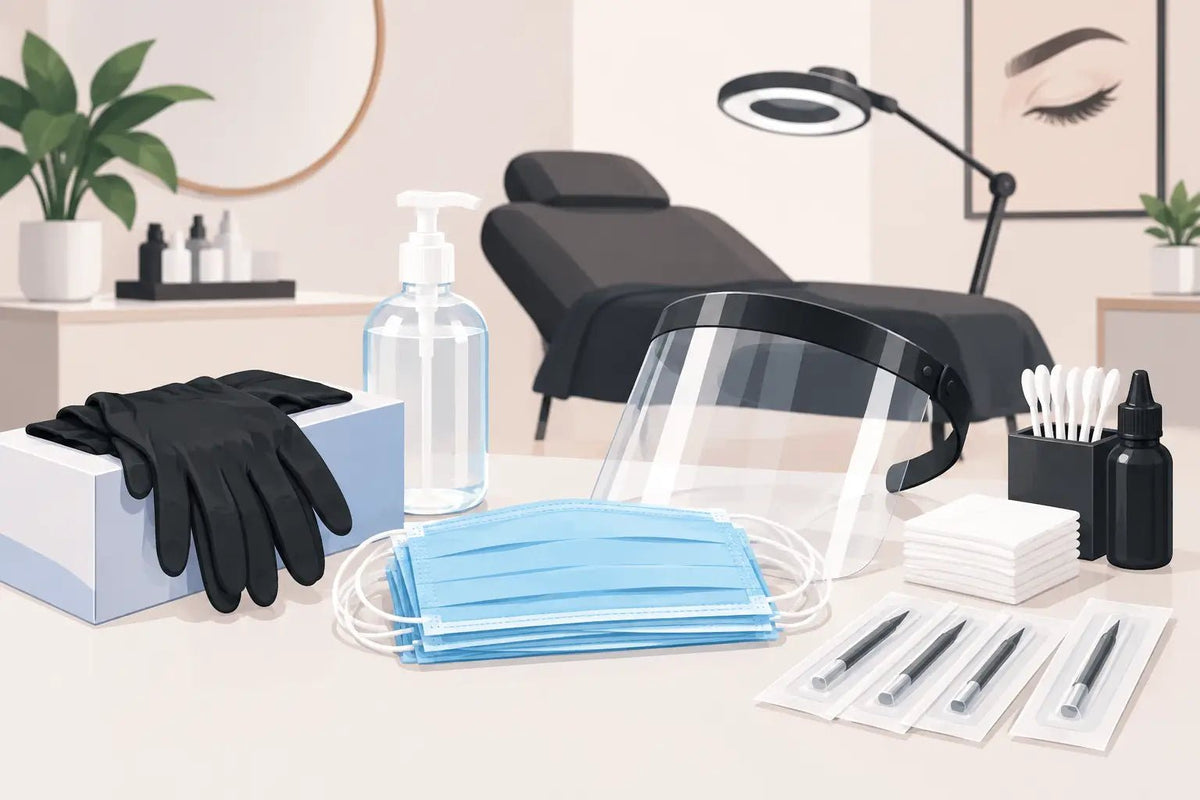
A beautiful healed result starts long before pigment enters the skin. The PPE essentials for PMU studios are part of every professional treatment setup, protecting the artist, the client, and the clean workflow behind brows, lips, eyeliner, scalp micropigmentation, and cosmetic tattoo services. When your barrier supplies are consistent and within reach, you spend less time interrupting a procedure and more time focused on precision.
For working artists, PPE is not an afterthought or a box to check before opening the studio. It is a practical system that supports client confidence, treatment efficiency, and the standards your reputation is built on.
PPE Essentials for PMU Studios Start With Gloves
Single-use medical-grade gloves are the foundation of personal protective equipment in a PMU treatment room. Nitrile is a common choice because it is durable, latex-free, and suitable for artists who want a dependable barrier while working with pigment, topical products, and potentially infectious materials.
Fit matters more than many new artists realize. Gloves that are too loose can reduce control when stretching skin, holding a machine, or placing fine hair strokes. Gloves that are too tight can fatigue the hands and may tear more easily. Keep multiple sizes available for every artist in the studio, and consider stocking more than one cuff length if your team has different preferences.
Gloves must be changed whenever they become compromised, when moving from a contaminated task to a clean task, and between clients. That includes moments that can feel minor in a busy appointment: touching a phone, opening a drawer that was not prepared, adjusting eyewear, handling a payment device, or leaving the procedure area. A clean glove is only clean until it contacts a non-clean surface.
Face Protection Should Match the Service
Masks help reduce exposure to droplets and help prevent respiratory secretions from reaching the treatment field. For routine PMU procedures, studios often use disposable procedure masks as part of their standard setup. The right level of protection can depend on the procedure, the products in use, your studio's policies, and applicable state or local requirements.
For procedures where splashes or splatter are possible, eye protection deserves equal attention. Protective glasses or a face shield can help shield the artist's eyes from pigment, blood, fluids, cleansing products, and accidental splashes during setup or breakdown. Prescription glasses alone may not provide enough coverage, particularly at the sides.
A face shield works best as added splash protection, not as a replacement for a mask when a mask is required by your protocols. Choose equipment that allows clear visibility without constant adjustment. If it fogs, slips, or interferes with your loupes or task lighting, artists are less likely to wear it correctly for the full appointment.
Barrier Supplies Keep the Treatment Zone Controlled
PPE protects the person. Barrier products protect the workflow. Both belong in a studio's infection-control plan.
Machine bags, clip cord covers, tray covers, protective film, disposable bibs, and barrier sleeves help create separation between reusable equipment and the treatment environment. They are especially useful around machines, power supplies, cords, lamps, work surfaces, bottles, and other high-touch items. The goal is not to cover every object without a plan. The goal is to identify what may be touched during a procedure and make safe changeover realistic.
Set up barriers before gloving into the procedure. Once your treatment starts, avoid opening packages, searching for extra supplies, or reaching into cabinets with contaminated gloves. Pre-portion what you expect to use, including pigment cups, applicators, microbrushes, gauze, wipes, and aftercare materials. If you need an additional item, remove gloves, perform hand hygiene, retrieve the item, and re-glove before returning to the treatment area.
This is where a well-organized supply station pays off. A studio that has its barriers, gloves, masks, and disposables arranged by treatment type moves with more confidence than one that relies on last-minute substitutions.
Build a Practical PPE Restock System
Running out of a core disposable in the middle of a booking week creates avoidable pressure. A simple par-level system helps studio owners and solo artists reorder before the shelves look empty.
Track the supplies that are used with every client, then set a minimum quantity based on your weekly appointment volume, team size, shipping lead time, and a reasonable buffer for busy seasons. Trainers should plan even more generously when teaching hands-on classes, since each student needs a complete, clean setup.
Your routine PPE and barrier inventory should include:
- Nitrile gloves in the sizes your team actually wears
- Disposable masks and protective eyewear or face shields
- Machine bags, cord covers, tray covers, and protective film
- Disposable bibs, gauze, applicators, microbrushes, and pigment cups
- Surface disinfectant appropriate for your studio protocol and hand hygiene supplies
Separate Clean Setup From Breakdown
A reliable PPE routine has clear beginning, middle, and end points. At setup, begin with hand hygiene, disinfect and prepare the designated work area, place barriers, and stage clean single-use items. During the service, maintain aseptic awareness: treat anything touched with contaminated gloves as contaminated until properly addressed.
At breakdown, dispose of single-use items according to your local requirements and studio policies, remove barriers carefully, and disinfect reusable surfaces and equipment as directed by the manufacturer and your infection-control protocol. Hand hygiene belongs at every transition, including after glove removal.
The details vary by jurisdiction, treatment type, and studio model. A private suite may require a different storage approach than a multi-artist academy, for example. But the principle remains the same: clean supplies should stay clean, used materials should be contained promptly, and reusable equipment should never rely on guesswork.
Do Not Let PPE Create a False Sense of Security
Gloves, masks, and barriers are essential, but they cannot compensate for poor hand hygiene, improper surface disinfection, cross-contamination, or rushed technique. PPE works as one layer within a larger safety practice that includes staff training, written protocols, appropriate waste handling, and regular review of local health department rules.
This is particularly relevant for PMU studios because our services involve close client contact, precision work, and equipment that moves between a clean supply area and an active procedure field. Every artist on the team should be trained not only on what to wear, but also on when to change it, what not to touch, and how to reset a station correctly.
For studio owners, consistency is a client-experience advantage. Clients may not know the exact name of every barrier sleeve or machine bag, but they notice an artist who opens fresh supplies, changes gloves at the right moments, and maintains a calm, controlled treatment room.
Choose PPE That Supports Your Actual Workflow
The best PPE setup is one your team can use correctly all day. Choose gloves with dependable fit, masks that stay comfortable through long appointments, barriers sized for your machine and equipment, and storage that makes fresh supplies easy to access without crossing into contaminated areas.
Inkbox Artistry was built by permanent makeup artists for artists, which means sourcing can follow the way a PMU station actually functions: machines and cartridges, pigments and mapping tools, then the disposable protection that keeps every step controlled.
Your PPE system should feel almost invisible during a service. When it is stocked, organized, and built into your routine, it gives you more room to focus on the work clients came for: safe, precise, professional results.