How to Choose Cosmetic Tattoo Supplies
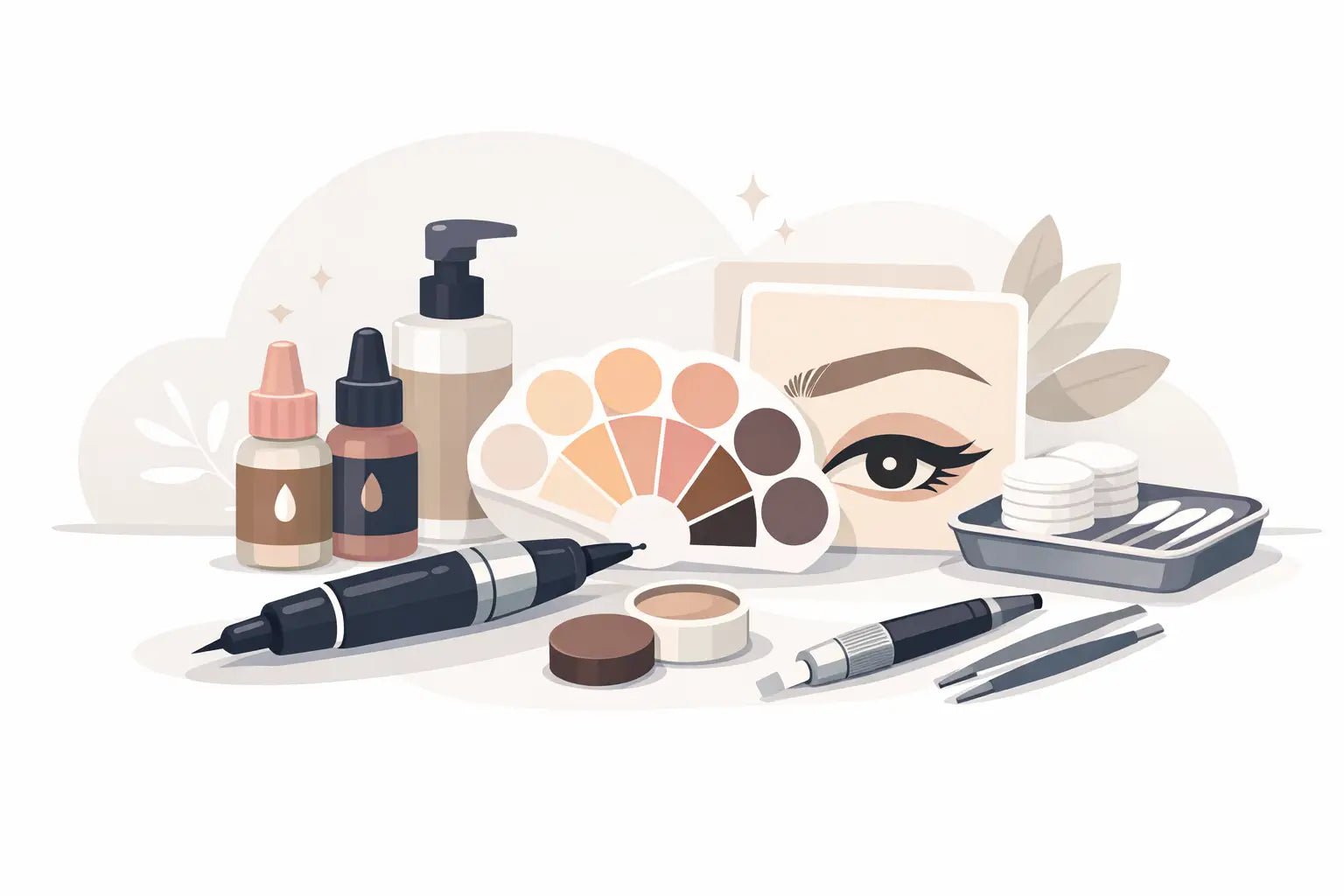
A brow set can go sideways long before the first pass if your setup is off. When cosmetic tattoo supplies are chosen purely on price or hype, artists usually feel it where it matters most - saturation, healed results, appointment flow, and client trust.
For PMU artists, supplies are not just inventory. They are part of your technique. The machine affects hand speed and skin response. The cartridge affects control and trauma. The pigment affects healed color and retention. Even small items like mapping string, rulers, barrier film, and aftercare can tighten your process or create unnecessary friction chairside. That is why building a kit should feel intentional, not random.
What good cosmetic tattoo supplies actually do
Professional-grade cosmetic tattoo supplies should make your work more predictable. That does not mean every artist needs the same setup. A machine that feels perfect for pixel brows may not be your favorite for lips. A pigment line that performs beautifully in one artist's hands may require a different adjustment in another's, depending on implantation depth, skin type, and technique.
The real benchmark is consistency. You want products that perform the same way from client to client, with clear manufacturing standards and a reputation that holds up in daily studio use. Established PMU brands earn trust because artists can evaluate them over time - not just on first impression, but on healed outcomes, color stability, and treatment efficiency.
Start with the machine, not the trend
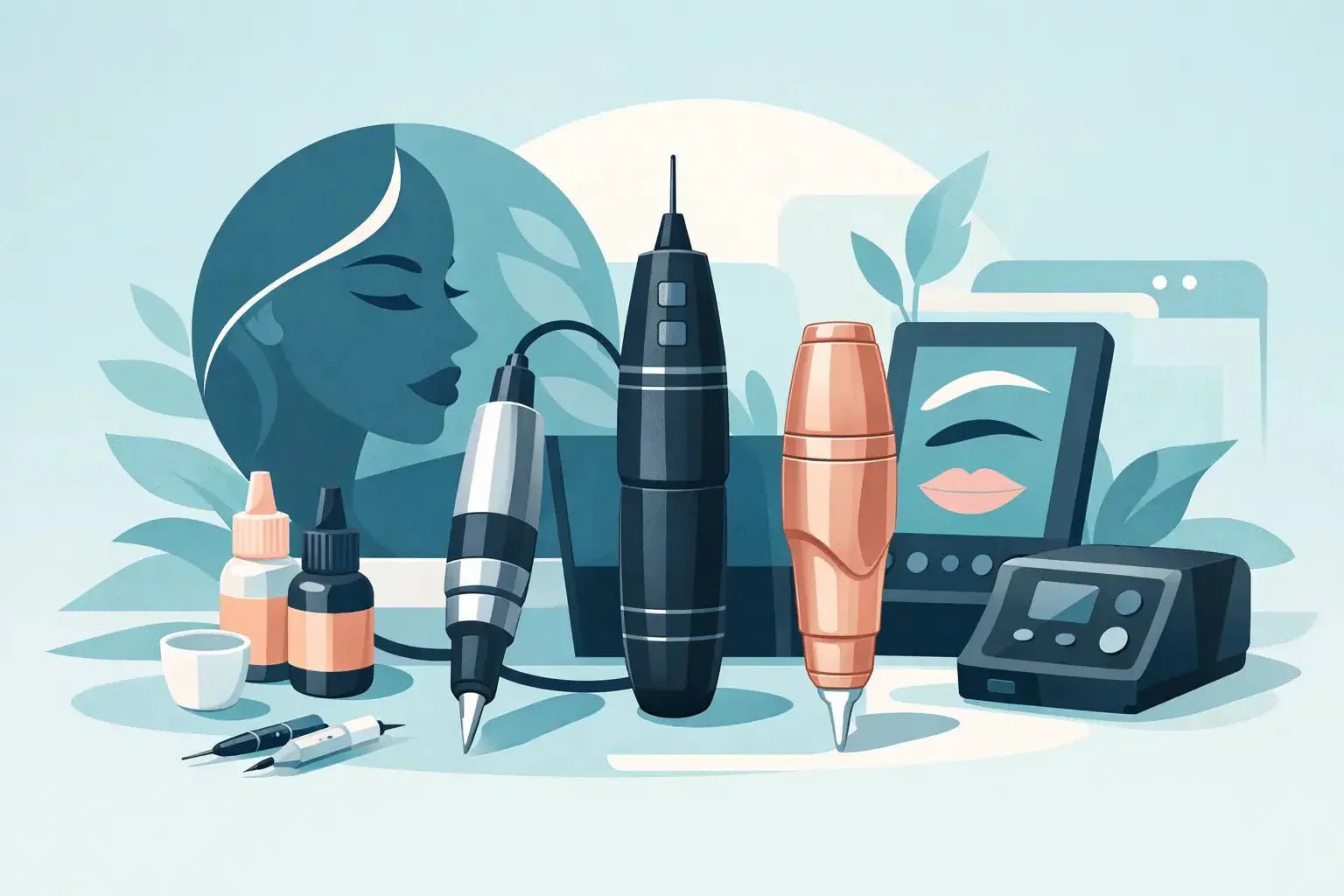
Machines tend to get the most attention, and for good reason. Your machine shapes precision, comfort, and fatigue across a full day of appointments. Wireless options are especially popular because they reduce cord drag and give artists more freedom at the chair, but convenience alone is not enough.
When comparing machines, think about stroke, weight distribution, grip comfort, voltage range, and whether the machine suits the services you perform most. An artist focused on machine hair strokes may prioritize control and hit differently than someone doing soft shaded brows all day. Lip blush artists may want a setup that supports smooth movement and even saturation without chewing up delicate tissue.
There is also a business angle here. A premium machine can absolutely be worth it if it improves speed, consistency, and artist comfort. But the most expensive option is not automatically the best fit. If you are still refining your style, a dependable mid-range machine with compatible universal cartridges may be the smarter buy than chasing every new launch.
Needle cartridges: small detail, major impact
If there is one category artists should stop treating like a minor accessory, it is cartridges. Needle configuration directly affects pixel placement, line quality, trauma, and saturation. In cosmetic tattooing, where soft healed results matter as much as immediate saturation, cartridge quality is not negotiable.
Membrane quality, needle sharpness, consistency from cartridge to cartridge, and fit within your machine all matter. A cartridge that spits, wobbles, or runs inconsistently can throw off your rhythm and your results. Trusted names like Kwadron are popular for a reason - artists need reliability at a very fine level of detail.
Configuration choice depends on service and technique. A liner may support crisp definition in specific applications, while round shaders or magnums may be preferred for soft fill or lips depending on the artist's method. The point is not to own every option. It is to stock the sizes and groupings that match your workflow and perform predictably in your hands.
Pigments should be chosen for healed results, not bottle appeal
Pigment shopping gets emotional fast because color is what clients see first. But professionals know the bottle is only the beginning. Cosmetic tattoo supplies for brows and lips need to be evaluated based on formulation, undertone behavior, retention, and how they settle in real skin.
That is why artists continue to rely on professional pigment lines like Perma Blend, Tina Davies, Brow Daddy, and Mara Pro. Strong brand reputation matters here because pigment performance is tied to both artistry and safety. You need confidence in batch consistency, ingredient transparency, and the way shades heal across different Fitzpatrick types.
Brows require particular discipline. A flattering fresh color means very little if it heals too cool, too warm, or too flat. Lips bring their own complexity, especially when working over melanin-rich lips or uneven natural tone. Choosing pigments well means understanding color theory, yes, but also understanding how each line behaves in practice. That is where artist-to-artist product knowledge matters more than marketing language.
Mapping tools keep your service profitable
Artists sometimes think of mapping supplies as low-cost basics, but they play a real role in service quality. Brow mapping rulers, calipers, pre-inked string, pencils, and skin markers help create symmetry, save time, and improve client communication before implantation begins.
A clean mapping process reduces hesitation. It also gives clients confidence because they can see the structure before the service starts. In a busy studio, those minutes matter. Efficient prep supports better pacing across the appointment and lowers the chance of correction work later.
This is one area where consistency in your tools can tighten your entire workflow. If you know exactly how your string marks, how your ruler sits, and how your pencil shows up on different skin tones, your setup becomes faster and more repeatable.
Do not separate hygiene supplies from performance
PPE, barriers, bibs, machine covers, clip cord sleeves, gloves, surface disinfecting support, and disposable applicators are often filed under compliance. They should also be viewed as part of performance. Clean organization reduces contamination risk, but it also reduces stress and keeps your station efficient.
When your barrier setup is dialed in, you move better. You are not reaching across your tray, improvising mid-service, or touching items twice. That matters in PMU because treatments are detail-heavy and concentration-dependent. Good hygiene systems protect clients, protect artists, and support smoother execution.
The same goes for topical anesthetics and aftercare. Comfort management can affect the client experience dramatically, but products need to be chosen responsibly and within your scope, local regulations, and treatment protocol. Aftercare is not an afterthought either. The product you send home should support healing without adding confusion. If your aftercare instructions are solid but the product is inconsistent, you create avoidable variables in retention.
Practice materials are not beginner-only purchases
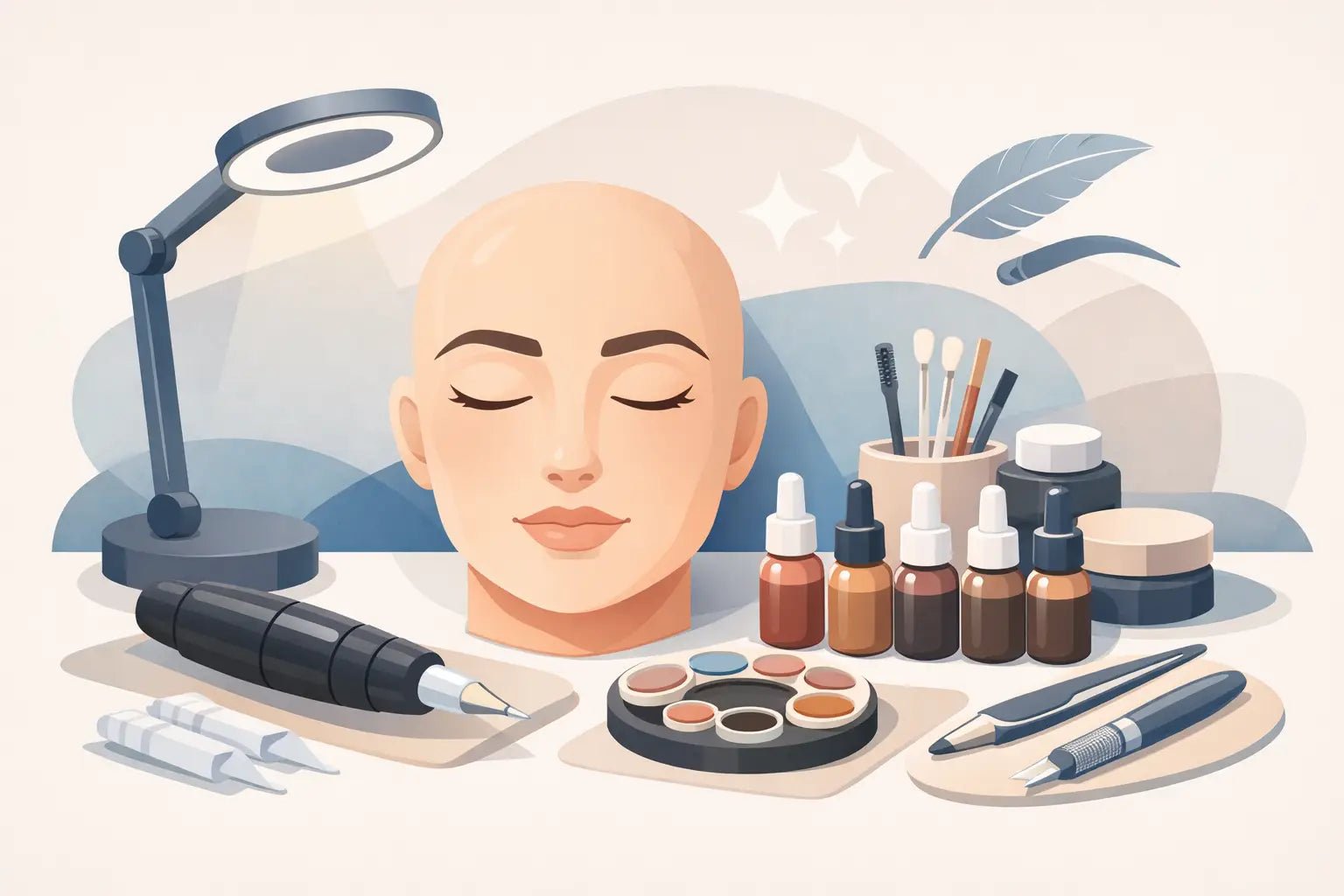
One of the smartest cosmetic tattoo supplies investments is practice skin. Not because it replaces live work, but because it gives artists a low-risk space to test machine settings, cartridge choices, pressure, and movement patterns.
Experienced artists benefit from practice materials too. If you are switching pigment lines, learning a new lip technique, trialing a machine, or training staff, practice surfaces help shorten the adjustment period. Trainers especially need reliable materials that let students focus on consistency before working on models.
That same logic applies to studio growth. As your service menu expands, your supply strategy should become more intentional, not more cluttered. Buying for education, team development, and service testing is different from panic-ordering because you ran out of basics.
Buying smarter means buying by workflow
The easiest way to overspend is to shop by category in isolation. The better approach is to buy by treatment flow. For brows, that might mean cartridges, chosen pigment set, mapping tools, anesthetic support, aftercare, barriers, and client disposables considered together. For lips, your ideal setup may shift toward different needle groupings, pigment modifiers, and comfort products.
This approach makes reordering easier too. You start to see which products are true daily drivers and which were impulse purchases. Studio owners and trainers can also forecast more accurately when they know what each service consumes in real terms.
That is where a supplier built by permanent makeup artists for artists has an edge. The product mix tends to reflect actual treatment workflows rather than generic beauty retail logic. If you are sourcing from a curated professional supplier like Inkbox Artistry, the benefit is not just access to known brands. It is the fact that the assortment makes sense for how PMU artists actually work.
When to upgrade and when to stay consistent
There is a difference between upgrading and constantly switching. Upgrading makes sense when your current setup is limiting efficiency, healed results, or physical comfort. Switching for the sake of novelty usually adds noise, especially if you are changing machine, cartridges, and pigments all at once.
If you want better results, change one major variable at a time. Test methodically. Track healed outcomes. Keep notes on skin response, saturation, and client feedback. That disciplined approach is less exciting than chasing trends, but it is how strong kits are built.
Your supplies should support the level of work you want to be known for. When every product in your setup has a job and earns its place, your appointments run cleaner, your results get more consistent, and your clients feel the difference before they ever see the mirror. Build your kit like a working artist, not a collector.