How to Mix Brow Pigment Shades With Confidence
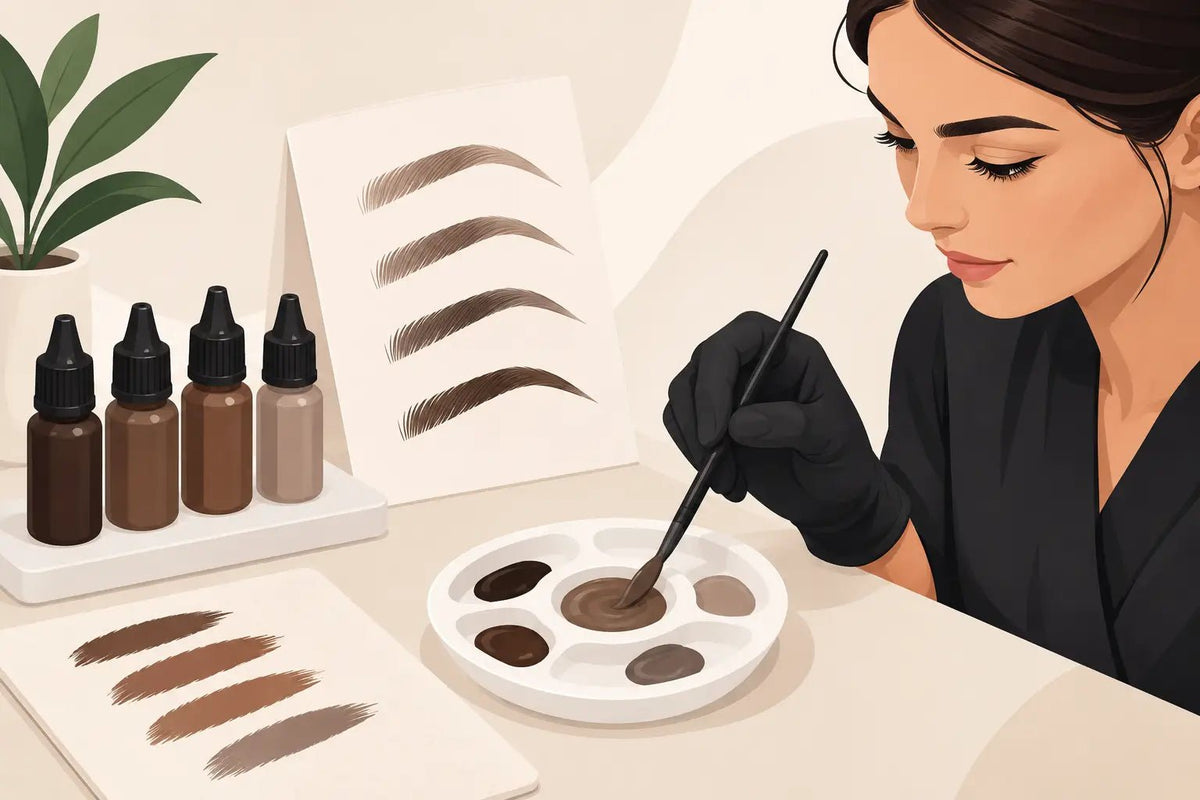
A beautiful pre-draw can still heal too warm, too cool, or too flat if the pigment choice is off. Knowing how to mix brow pigment shades gives you more control over the final result, especially when a client’s skin tone, natural brow hair, and previous work do not fit neatly into one bottle.
For working PMU artists, pigment mixing is not about creating a custom color for the sake of it. It is a technical decision based on undertone, skin behavior, saturation, and the manufacturer’s color system. The goal is a brow that looks believable on day one and balanced after healing.
Start With the Client, Not the Pigment Bottle
The natural brow hair can be useful context, but it should not be the only reference. Assess the client’s skin tone and undertone, their Fitzpatrick type, existing brow makeup habits, and the amount of contrast they can comfortably wear. Then evaluate the treatment area itself.
Skin can present differently from the rest of the face. Some clients have visible warmth through the brow area, while others have a cool or ruddy cast. Mature skin, oily skin, sun-exposed skin, and previously tattooed skin may all retain and shift pigment differently. A shade that appears perfectly neutral in a cap can heal warmer or cooler depending on the canvas.
Ask what the client means when they request “ash brown,” “soft brown,” or “not too warm.” Their language may describe a preference, not a technically accurate pigment direction. Pull out the colors you are considering, place small dots beside the natural brow, and explain the plan in professional terms. This creates alignment before the procedure begins.
Understand the Color Family Before You Mix Brow Pigment Shades
Every pigment line has its own formulation, base, and behavior. That is why artists should understand a brand’s shade chart and follow its guidance before making custom blends. A warm brown from one line may not function like a warm brown from another, even if the bottle labels sound similar.
Start by identifying the dominant direction of your base shade:
- Warm shades usually carry more golden, orange, or red influence.
- Cool shades typically lean toward ash, olive, gray, or muted brown.
- Neutral shades sit closer to the middle and can be adjusted in either direction.
- Modifiers are designed to shift, correct, or support a formula rather than serve as the main brow color.
Work Within Compatible Pigment Systems
The safest, most consistent approach is to mix shades within the same product line unless the manufacturer specifically confirms cross-line compatibility. Different brands may use different bases, concentrations, carriers, and particle profiles. Mixing unrelated formulas can make healed results less predictable and complicate your ability to troubleshoot later.
This is also a practical studio standard. When a client returns for a color boost, you want clear records of what was used and enough confidence to recreate or refine the formula. A controlled system produces more reliable work than a random blend built from whatever is open on the tray.
Build the Blend From a Base Shade
Choose the shade that is closest to your intended healed result, then adjust it conservatively. In most cases, the base should make up the majority of the blend. Think in small percentages rather than equal parts.
For example, if a medium brown is nearly right but needs more warmth, begin with a small amount of a compatible warm corrector or warmer brown rather than rebuilding the entire formula. If it needs to soften or cool down, introduce a compatible neutral or cooler supporting shade gradually. Tiny additions can create meaningful change, particularly in highly concentrated professional pigments.
A simple 80/20 or 90/10 starting point is often easier to control than a 50/50 blend. Equal-parts mixing can quickly pull the formula away from the result you intended, especially when one pigment is much stronger than the other.
Avoid the urge to chase a perfect-looking wet color. The pigment must be selected for how it is expected to settle and heal, not just how it appears immediately after implantation. If your experience with a line tells you that a certain brown heals warm on oily skin, plan for that before you begin.
Do Not Treat Modifiers as a Shortcut
Modifiers have a place in professional pigment work, but they are not a universal fix. Too much warmth can create an orange cast. Too much cool or ash influence can heal gray, dull, or overly dense. A modifier should support a thoughtful base selection, not compensate for an unsuitable pigment choice.
Be particularly cautious with strong correctors on clients with minimal natural brow hair, very light skin, or a preference for a soft powder effect. The lower the visual density of the finished brow, the more obvious an unwanted color direction can become.
Match the Formula to Technique and Saturation
The same pigment blend can read differently in hairstrokes, nano brows, soft shading, and machine powder brows. Technique affects density, and density affects perceived color.
A delicate hairstroke pattern may allow more skin tone to show through, making the healed result appear lighter and sometimes cooler. A saturated powder brow can make the same shade look deeper, warmer, or more solid. If you are working with a bolder client request, do not assume the answer is a darker pigment alone. It may be a controlled increase in saturation, a deeper base shade, or a more layered technique.
Skin type also matters. Oily skin can soften crispness and affect retention, while dry or mature skin may hold color differently and require a lighter hand. There is no one formula for every Fitzpatrick type or skin category. Your blend should always work alongside your depth, needle choice, machine settings, and passes.
Correcting Around Previous Work Requires Restraint
Covering old brow tattooing is one of the most common situations where artists overcorrect. Before mixing, determine whether the existing work is light enough and neutral enough to cover. If old pigment is dark, heavily saturated, cool gray, red, or unevenly faded, another brow procedure may not be the appropriate first step.
Camouflage is not removal. A new warm brown placed over blue-gray residual work can turn muddy if the old color remains too visible. In some cases, lightening or removal sessions may be the better recommendation before a new shape and color are attempted.
When correction is appropriate, use the least aggressive adjustment that supports the desired result. Work in stages, explain realistic healing expectations, and avoid promising that one appointment will erase years of previous pigment history.
Test, Document, and Repeat What Works
A clean pigment workflow protects both your results and your business. Dispense only what you need into single-use pigment cups, use clean tools for mixing, and never return leftover pigment to the original bottle. Follow your local regulations, studio infection-control procedures, and each manufacturer’s instructions for use.
Document more than the shade name. Your client notes should include the exact formula, approximate ratio, brand and color names, technique, needle configuration, skin observations, and any relevant previous tattoo history. A quick photo of the cups or written shorthand such as “90% medium neutral + 10% warm modifier” can save time at the touch-up.
Over several months, these notes become one of your most valuable professional references. You will see which blends heal best with your hand, your machine, your preferred techniques, and your local client base.
Keep Your Pigment Station Intentional
A well-built pigment collection does not need every shade on the market. It needs dependable core colors, compatible modifiers, and a system you understand deeply. Stock the shades you reach for most, replace products before they become a last-minute concern, and keep your setup organized so you can make color decisions without rushing.
Inkbox Artistry supports that kind of working kit with professional pigment options and the disposable supplies that keep every treatment station clean and efficient. The best blend is rarely the most complicated one - it is the formula you can explain, document, and confidently stand behind when your client returns healed.