How to Choose Brow Pigment for Better Retention
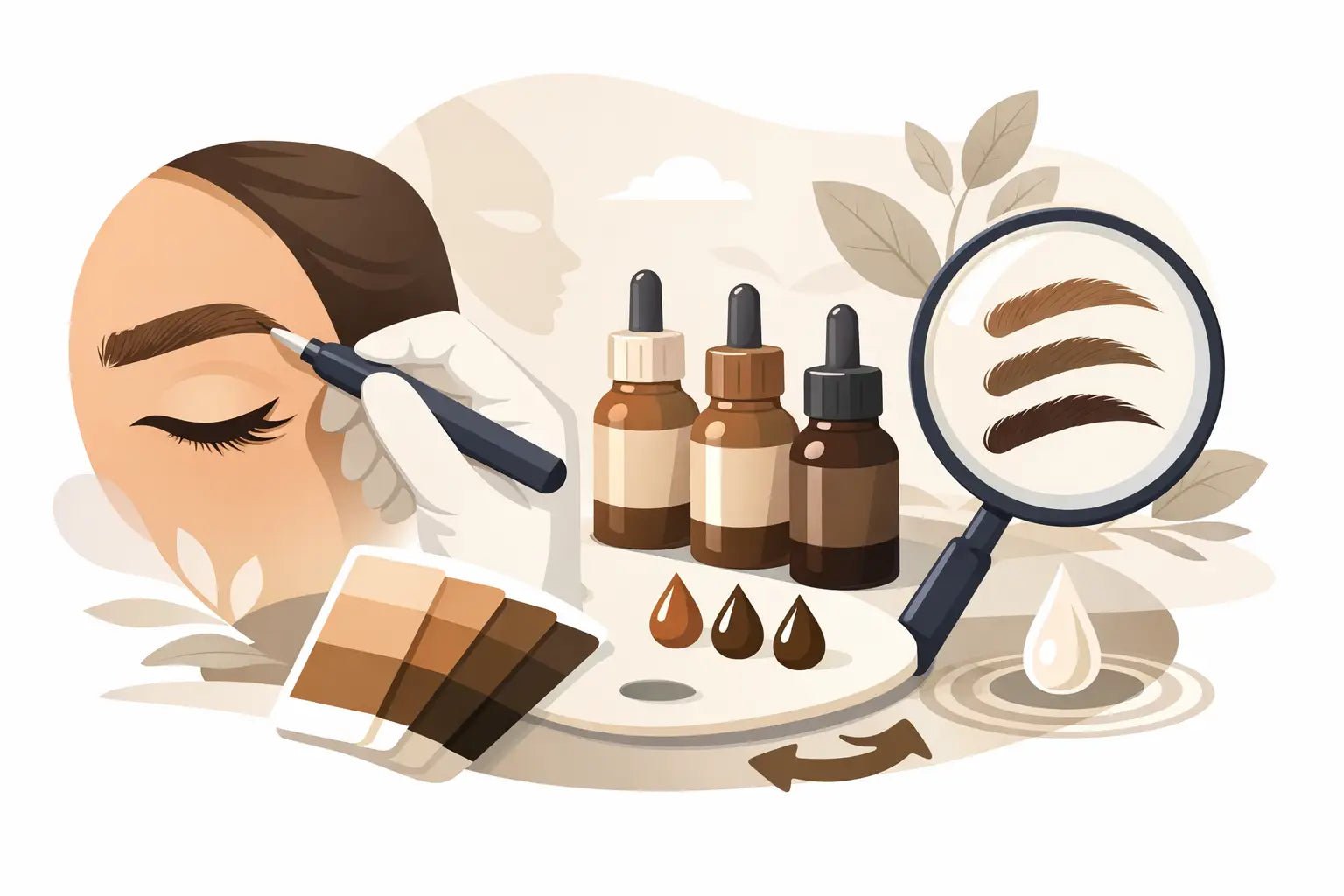
A brow pigment can look perfect in the cup, implant beautifully, and still heal too cool, too warm, or too soft for the client. That is why learning how to choose brow pigment is less about finding a single “best brown” and more about reading the skin, the existing brow, the client’s expectations, and the pigment system in front of you.
For PMU artists, color selection is part technical assessment and part disciplined recordkeeping. A reliable choice should support the client’s features on day one while accounting for how the color will settle after healing. The goal is not to match every visible hair. The goal is to create a healed brow that looks balanced, believable, and appropriate for the client’s skin.
How to Choose Brow Pigment: Start With the Client, Not the Bottle
Begin with the client’s natural brow hair, but do not let it make the decision for you. Hair can be highlighted, colored, sun-lightened, or naturally mixed with grays. It is useful as a reference point for depth, yet the skin and overall coloring determine whether a selected pigment will harmonize once healed.
Assess the client in natural, neutral lighting whenever possible. Look at the neck, chest, and face rather than relying only on facial redness or surface warmth around the brows. Foundation, skincare, recent sun exposure, rosacea, and post-cleansing sensitivity can all distort what you see during the appointment.
A practical consultation considers three things together: the client’s skin tone, their undertone, and the desired finished brow depth. A fair client can have cool, warm, or neutral undertones. A deeper skin tone can also present warm, cool, or neutral. Skin depth alone does not tell you which pigment family will heal best.
Read undertone without oversimplifying it
Undertone is the subtle cast beneath the surface of the skin. In brow PMU, you are usually looking for whether the skin reads more cool or rosy, warm or golden, olive, or relatively neutral. This assessment helps you anticipate how a pigment may visually shift as it settles beneath the skin.
Cool or rosy skin may make an ash-forward pigment appear even cooler. Warm or golden skin can pull a very warm formula warmer still. Olive skin is often where artists need the most restraint, because an overly warm pigment can turn noticeably orange while an overly cool choice can heal dull or gray. Neutral skin can be flexible, but it is not a free pass to ignore pigment temperature.
Avoid treating undertones as rigid categories. A client may have neutral-looking facial skin with a warmer neck, or cool surface redness over a warmer underlying complexion. When the assessment is unclear, choose a balanced pigment direction and avoid extremes unless the brand’s color chart and your healed-case experience clearly support the selection.
Match Pigment Temperature and Value
Once you have evaluated the client, separate your selection into two decisions: temperature and value. Temperature refers to warmth or coolness. Value refers to how light or dark the healed result will appear. Artists often focus heavily on temperature and overlook value, but a correctly balanced pigment can still look too strong if it is implanted too dark for the client’s natural contrast.
For clients with soft hair color, low contrast, or mature skin, a lighter and more diffused healed target often creates the most flattering result. For clients with dark natural hair and stronger contrast, a deeper pigment may be appropriate, provided it does not overwhelm the face or age the client’s appearance.
Remember that a dark pigment is not always a better choice for longevity. Saturation, implantation depth, skin characteristics, and aftercare all affect retention. Choosing a shade that is too deep in an effort to “make it stay” can leave the client with a healed brow that feels harsh rather than enhanced.
Work within the pigment system
Professional pigment lines are not interchangeable just because the bottle labels sound similar. One brand’s medium brown may be an inorganic, warm-leaning formula, while another may be a hybrid blend with stronger organic colorants and a different healed appearance. Read the manufacturer’s color guidance, ingredient profile, base information, and recommended use for the specific line you carry.
Inorganic pigments often offer softer, more muted healed results and can be useful for clients seeking natural-looking powder brows. Organic or hybrid formulas may provide stronger saturation and more vivid color payoff, which can suit certain techniques and skin types but require a precise hand with temperature and depth. Neither category is universally superior. Your choice should match the treatment plan, the client’s skin, and your working method.
Build familiarity with a focused pigment range before constantly switching brands. Healed knowledge is one of the most valuable tools in your kit. When you know how a particular warm medium brown, neutral dark brown, or modifier performs in your own hands, you can make faster, more confident decisions during consultation.
Consider Fitzpatrick Type, But Do Not Let It Choose for You
Fitzpatrick skin typing can help you anticipate sensitivity, tanning response, and certain retention patterns, but it is not a pigment-selection formula. Two clients with the same Fitzpatrick type can have very different undertones, skin thickness, oil production, and healed outcomes.
Use Fitzpatrick type as one piece of the assessment, not the final answer. Pay close attention to skin texture and condition as well. Oily, porous skin may blur or soften pigment more quickly than dry, fine-textured skin. Mature skin may require a gentler technique and a softer target. Thick, highly sebaceous skin may need a treatment plan that manages expectations around crispness and retention rather than simply adding more pigment.
A client’s lifestyle also matters. Frequent sun exposure, active skincare routines, exfoliating treatments, and regular use of color-changing hair products can influence the long-term appearance of cosmetic tattooing. Discuss these factors before the service so color expectations are realistic from the start.
Let the Technique Influence Your Selection
The same pigment can produce different healed results in nano brows, microblading, machine hairstrokes, ombré powder brows, and combination brows. Stroke work demands careful attention to warmth and depth because each line is visible. Shading techniques may allow for a softer overall effect, but oversaturation can still make a brow appear heavy.
Your machine, needle configuration, hand speed, and layering style affect color delivery. A pigment that works beautifully with a soft whip-shading approach may require a different application strategy in dense pixel work. This is where quality equipment and consistent consumables protect your results. If your needles, machine settings, or skin stretch vary from client to client, pigment selection becomes harder to evaluate accurately.
Do not compensate for an uncertain shade by implanting deeper or repeatedly overworking the skin. Trauma can affect retention and healing, while excess saturation can leave less room to adjust at the perfecting session. A controlled first pass and a thoughtful follow-up plan usually serve the client better than chasing full intensity in one appointment.
Use Modifiers With Purpose, Not Panic
Modifiers can be valuable when a primary pigment needs a controlled adjustment, but they should not replace a sound base selection. Adding warmth to counter a cool healed tendency or balancing an overly warm formula may be appropriate within a manufacturer-approved system. Random mixing across brands or adding large amounts of modifier without healed evidence creates unnecessary risk.
Keep blends simple and document them precisely. Record the pigment names, ratios, lot numbers, needle configuration, technique, client skin assessment, and any visible skin characteristics. At the touch-up, compare the healed result to your notes. Over time, those records become a working color library built around your actual clientele.
If a client arrives with previous PMU, do not select a new pigment based on natural brow hair alone. First identify the existing color, saturation, shape, and likely undertone of the old work. Neutralization, correction, removal, or a revised treatment plan may be necessary before a straightforward color refresh is appropriate.
Set Expectations Around Healed Color
The client should understand that fresh brows are not healed brows. Fresh pigment may look darker, warmer, cooler, or more saturated immediately after the procedure. As the skin heals, the result softens and settles. The final appearance depends on the pigment formulation, skin response, implantation, lifestyle factors, and proper aftercare.
Use your healed portfolio during consultation, especially for clients with similar skin tone, texture, and brow goals. This gives clients a more useful reference than a photo taken immediately after treatment. It also reinforces that PMU is a process, not a one-day color reveal.
At Inkbox Artistry, we believe artists should be able to source pigments, mapping essentials, cartridges, and aftercare with the same level of intention they bring to every brow design. The better your selection process, the more consistent your healed work becomes.
The bottle matters, but your assessment matters more. Slow down at consultation, choose for the healed target rather than the fresh photo, and keep detailed notes after every appointment. That discipline is what turns pigment selection from guesswork into a recognizable signature in your work.