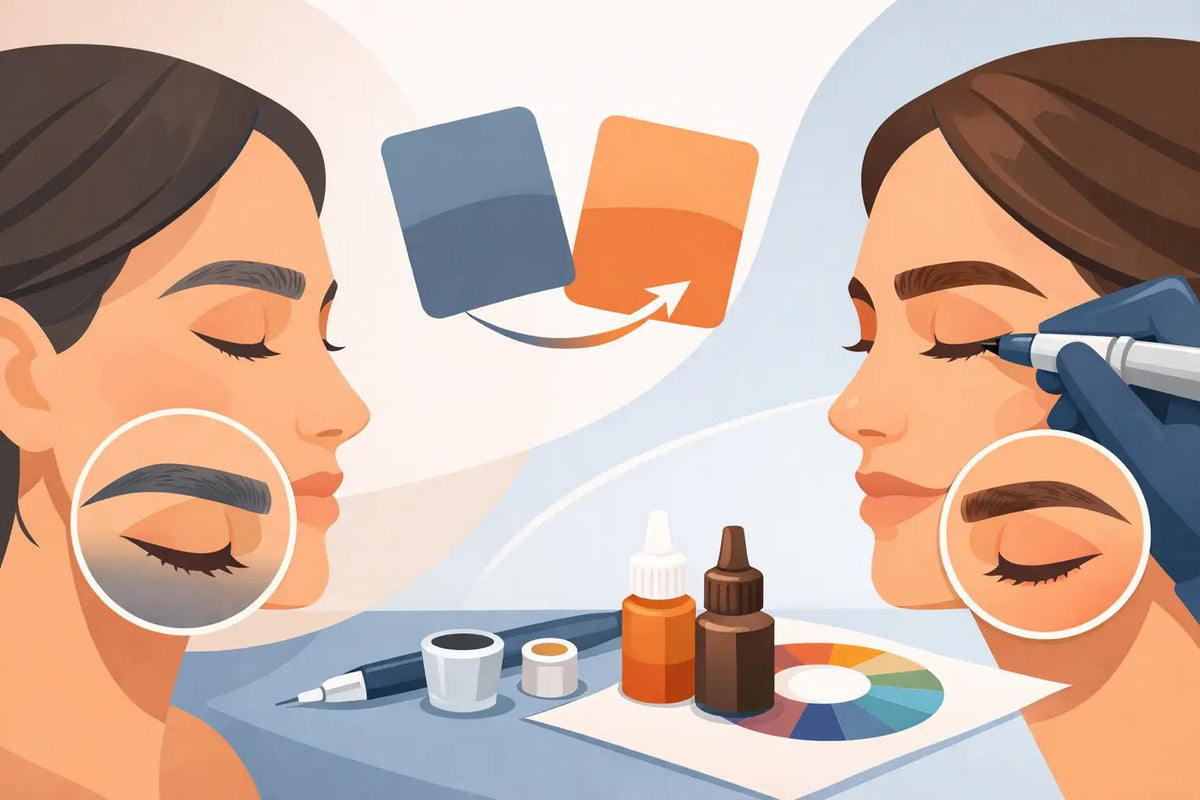
Pigments Versus Inks: What PMU Artists Need
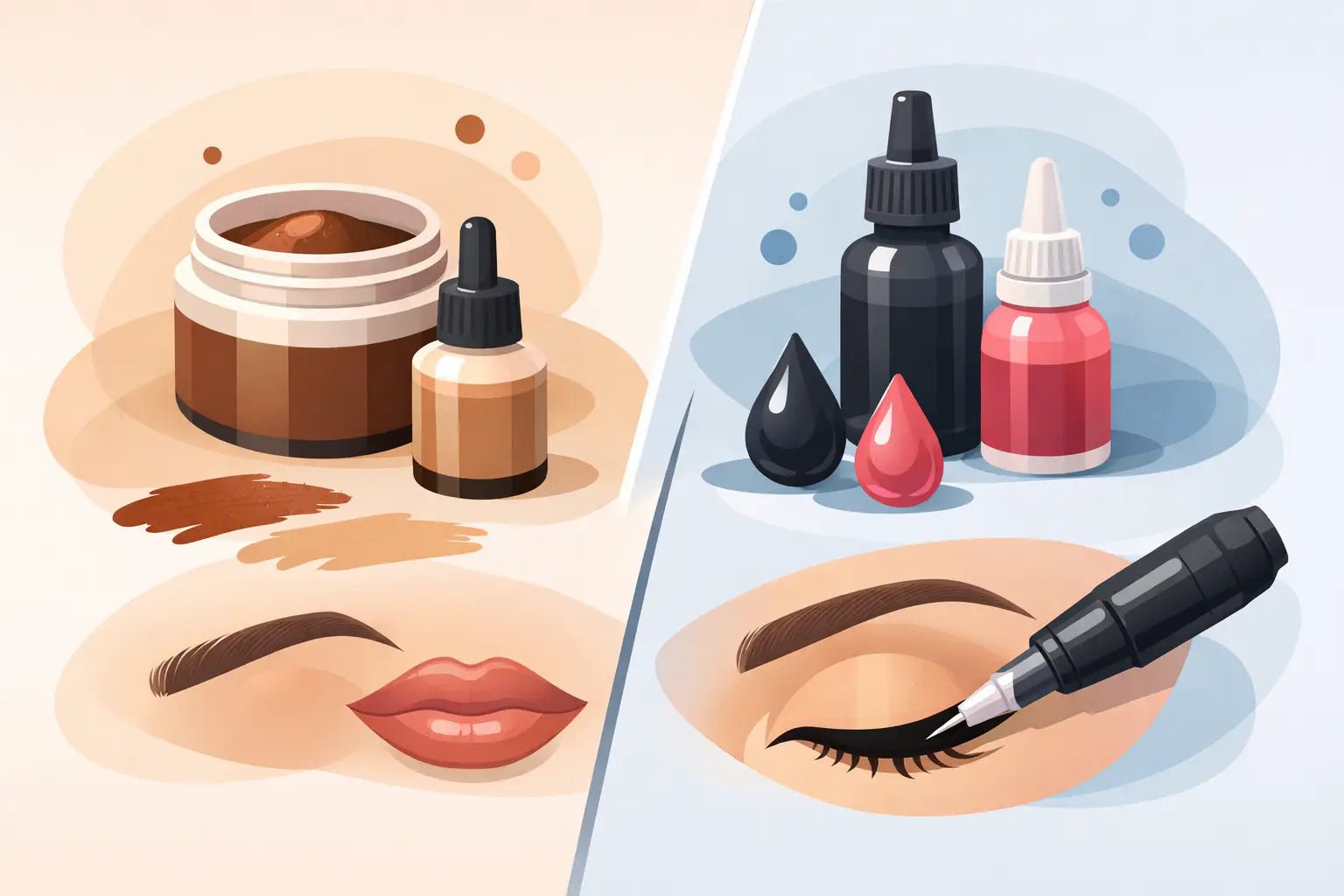
A bottle can look perfect under the ring light and still heal differently than expected. For permanent makeup artists, the conversation around pigments versus inks is not just about terminology. It affects color selection, technique, client suitability, touch-up expectations, and how confidently you can plan the healed result.
The short answer is that pigments create color, while inks are the complete liquid formulations used to deposit that color. In PMU, however, the words are often used interchangeably. That overlap can cause confusion when artists compare product lines, evaluate safety documentation, or explain color behavior to clients.
Pigments Versus Inks in Permanent Makeup
A pigment is the colored material itself. It is made of tiny insoluble particles that reflect light and create the visible shade in brows, lips, eyeliner, and corrective work. Those particles may be organic, inorganic, or a blend of both.
An ink is a finished suspension or dispersion. It combines pigment particles with a carrier solution and other ingredients designed to help the formula flow, remain stable in the bottle, implant predictably, and perform consistently in skin. Depending on the manufacturer and product category, that formula may also include ingredients that support preservation, viscosity, and dispersion.
In cosmetic tattooing, most artists refer to their color collection as pigments because the industry is focused on the final healed color and the pigment technology behind it. A brand may use the term ink, especially when a formula is designed for tattooing more broadly, but that does not automatically mean it is unsuitable for PMU. The label alone does not tell you how a product will heal.
What matters is whether the formulation is purpose-built for the treatment area, aligned with your technique, and supported by clear manufacturer guidance.
Why the Difference Matters in Your Treatment Room
Pigment particles do not behave independently once they enter the skin. The carrier system, particle distribution, concentration, viscosity, and the artist's implantation depth all influence the result. Two colors with similar bottle swatches can perform very differently when healed.
For brows, artists are usually balancing color retention with a soft, believable finish. A formula that implants too densely or is worked too deeply can heal cooler, more saturated, or less natural than intended. For lips, flow and translucency may matter just as much as saturation, especially when building color gradually across delicate tissue.
This is why a product cannot be judged by whether it is called a pigment or an ink. A professional PMU formula should be evaluated by its intended use and real working characteristics. Look at the color family, base composition, opacity, fluidity, recommended techniques, and how the manufacturer positions it for brows, lips, or eyeliner.
A high-quality brow pigment from a professional range such as Perma Blend, Tina Davies, or Brow Daddy is developed with PMU healing in mind. That does not eliminate the need for color theory or proper technique, but it gives the artist a more reliable starting point than adapting an unknown formula intended for a different tattoo application.
Colorants, Bases, and Healed Color
The terms organic and inorganic are often oversimplified in pigment education. Artists may hear that organic pigments are brighter or that inorganic pigments are softer, but neither statement is a complete purchasing rule.
Inorganic pigments commonly include mineral-based colorants such as iron oxides. They are frequently associated with earthier brow shades and can offer a natural-looking result when selected correctly. Organic pigments are carbon-based colorants that can offer brighter, cleaner, or more intense color expression. Hybrid formulations combine pigment types to create a specific balance of warmth, saturation, opacity, and retention.
The right choice depends on the treatment. A warm, low-saturation client with mature skin may need a different approach than a client with dense, oily skin and strong natural brow hair. A lip blush client with cool-toned lips may require strategic neutralization before their target color can read true. The formula is part of the equation, not the entire plan.
Healed color also depends on what sits beneath it. Skin undertone, melanin level, vascularity, existing cosmetic tattoo, skincare habits, sun exposure, and immune response can all influence the final appearance. This is why artists should never promise that a pigment will heal exactly like the bottle swatch.
Choosing the Right Formula for Your Technique
Your machine setup and hand speed can expose differences between formulas quickly. A highly fluid pigment may work beautifully with one needle configuration and technique but feel too fast-moving for an artist who prefers slower, controlled pixel placement. A thicker formula may offer more control in certain applications while requiring attention to saturation and buildup.
For machine hairstrokes, choose a formula that supports crisp implantation without forcing the skin. If you are repeatedly going over a stroke just to see color, reassess the needle choice, machine settings, skin tension, and pigment selection before increasing pressure or depth.
For powder brows, consider how the formula builds. Some shades are designed for airy layering and soft fronts, while others reach saturation quickly. Both can be useful, but they require different handling. A heavily concentrated color may be ideal for a defined tail yet too strong for a diffused bulb if applied with the same passes.
For lips, prioritize products specifically intended for lip procedures. Lip tissue demands a controlled approach, and color selection should account for the client's natural lip tone, previous work, and desired healed intensity. A beautiful rose shade is not automatically the right choice for every set of lips.
Reading Beyond the Bottle Label
Professional artists should treat pigment selection like any other technical supply decision. Do not rely solely on a shade name, social media photos, or what another artist uses on a different client base. Review the product's intended application, batch information, expiration date, storage instructions, and manufacturer-provided documentation.
Before a new color reaches a client, test how it works in your own setup. Practice skins are useful for observing flow, saturation, and how a formula wipes, but they cannot replicate living skin. Your first live use should be a planned decision, not an experiment made halfway through an appointment.
Keep your workspace organized so you can track exactly what was used for each procedure. Record the brand, shade, modifier or corrector, lot information when required by your protocols, needle configuration, machine settings, and any relevant skin observations. Strong records protect your business and sharpen your decision-making at touch-up.
When “Ink” May Be the Wrong Choice
Not every tattoo ink belongs in a PMU procedure. Traditional body tattoo inks can be formulated for different artistic goals, different saturation levels, and different placement expectations. Even if a shade appears similar to a cosmetic tattoo pigment, its healed behavior may not fit a natural brow, lip blush, or eyeliner service.
That does not mean every product labeled ink is automatically off-limits. It means artists need to verify its intended use rather than assume terminology determines performance. Buy from reputable professional suppliers, work with established brands, and avoid unverified products with vague labeling or incomplete information.
Price should not be the deciding factor. A lower-cost formula that creates inconsistent healed color, requires more correction work, or undermines client trust is not a value purchase. Reliable pigment performance supports efficient appointments, clearer treatment planning, and a stronger portfolio over time.
Build Your Color System, Not Just Your Collection
A crowded pigment shelf is not the same as a functional color system. Start with the shades you can confidently use across your core services, then add correctors, modifiers, and specialty tones as your client demand grows. Learn how each formula performs in your hands before introducing another brand or color family.
When comparing pigments versus inks, focus less on the word printed on the label and more on the formulation behind it. The best choice is the one that gives you predictable handling, appropriate color behavior, and a result that respects the client's skin, goals, and long-term satisfaction.
The next time you restock, choose colors with the same discipline you bring to mapping and needle selection. Your healed work will always be the most persuasive proof of what belongs in your tray.