PMU Color Correction Case Study for Ashy Brows
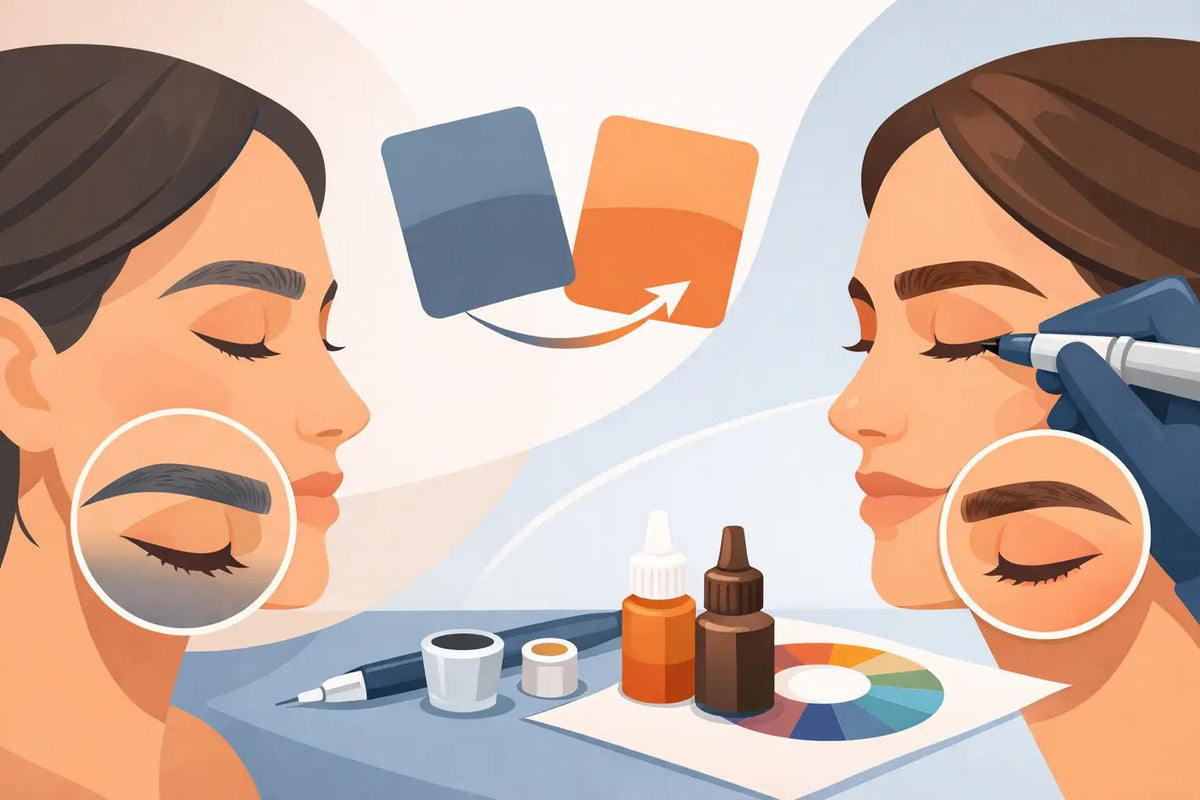
A client arrives for a brow refresh expecting a simple color boost, but the existing work has healed cool gray through the fronts and dense blue-gray at the tails. This PMU color correction case study follows the more valuable question: not “what brown should I use?” but “what is actually sitting in the skin, and what will move it in the right direction?” For correction work, that distinction protects the result, the client’s skin, and your professional reputation.
This is a composite case based on common corrective brow scenarios. It is not a substitute for an in-person consultation, patch testing where appropriate, or your pigment manufacturer’s instructions. The purpose is to show the reasoning behind a controlled correction plan rather than promote a one-session miracle.
The Starting Point: Cool, Saturated, Uneven Brows
The client had received powder brows approximately three years earlier. She reported one previous touch-up and no known pigment brand or color record. At consultation, the fronts appeared muted gray, while the arches and tails showed a more concentrated charcoal cast. The shape was workable, although the tails were slightly heavier than the client’s current preference.
Her skin presented as combination, with mild texture through the T-zone and no active irritation around the brow area. The old work was visible without makeup but not deeply saturated enough to immediately rule out correction. That said, visibility alone is not the deciding factor. A brow can look faded on the surface while still contain enough cool residual pigment to shift a fresh brown deposit toward gray or khaki as it heals.
Before selecting pigment, the artist photographed the brows in neutral lighting, reviewed contraindications and previous treatment history, and set expectations. The client was told that the first appointment was designed to neutralize unwanted undertones and improve softness, not necessarily to deliver the final warm brunette result in one pass.
That conversation matters. Color correction is often a staged service. When a client understands the sequence, they are less likely to judge a purposeful warm correction layer as the finished brow color.
PMU Color Correction Case Study: Reading the Undertone
The visible color suggested a cool residual base with blue-gray and ash influence. In basic color theory, orange counters blue, while warmth can help offset grayness. But corrective work is never as simple as placing a bright orange pigment over every cool brow.
The artist considered three factors together: the undertone of the old tattoo, the depth of saturation, and the client’s desired healed result. Because the gray was strongest through the tails, the correction needed to be more concentrated there. The fronts needed a lighter hand to avoid a heavy, over-warmed look.
A warm orange-based modifier was selected for the correction pass. The exact formula should always depend on the manufacturer’s pigment line, concentration, and color chart. Artists should avoid mixing by assumption across brands or relying on a modifier’s bottle color alone. Pigments from professional lines such as Perma Blend, Tina Davies, Brow Daddy, and other established PMU brands are formulated differently, so the manufacturer’s guidance and your own healed-results experience should drive the choice.
The goal was not to make the brow orange. The goal was to place enough targeted warmth into the cool residual pigment that the next healed layer could read balanced rather than ashy.
Why a standard brown was not the first choice
Applying a conventional medium brown directly over gray-blue brows can create a result that looks acceptable immediately after the appointment but heals dull, muddy, or green-gray. The old cool base remains part of the equation. A fresh brown contains its own color bias, and when it combines visually with a blue-gray foundation, the healed result may not resemble the swatch you expected.
This is where artists need to separate a cover-up from a correction. A cover-up prioritizes hiding what is visible that day. A correction plan prioritizes how color will settle after inflammation resolves and the skin completes its healing cycle.
Treatment Strategy: Controlled Deposit, Not Aggressive Saturation
The artist began with a conservative, localized correction pass, focusing on the most concentrated blue-gray zones. A soft machine technique was used to build even coverage without overworking the skin. Correction appointments already carry a higher risk of chasing saturation, especially when old pigment makes the surface look inconsistent during the procedure.
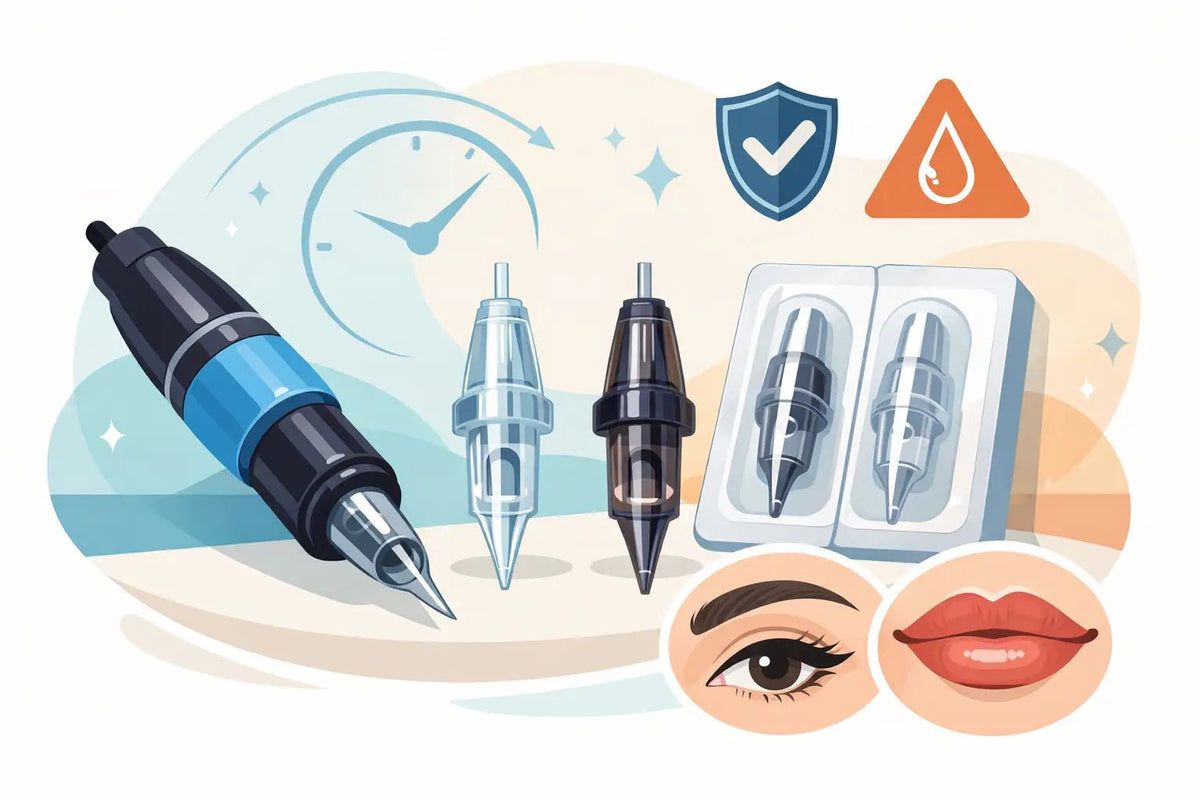
Needle configuration, machine speed, hand speed, and skin response should work together. There is no universal cartridge choice for every correction. A smaller configuration can offer control in narrow tails and detailed areas, while a broader grouping may be appropriate for a soft powder effect when the skin can tolerate it. The right choice depends on your machine, technique, desired pixel pattern, and the client’s tissue quality.
The artist avoided repeated passes simply to force immediate opacity. Overworking can lead to trauma, poor retention, scar tissue concerns, and unpredictable healed color. For this client, a lighter first correction was the safer trade-off. It allowed the artist to evaluate the shift after healing rather than create a dense, warm block that could be difficult to refine later.
Throughout the service, the artist checked symmetry and color placement from a seated position. Since the tails carried more residual coolness, they received more corrective attention, but not more density than the rest of the brow design could support. Correcting color should not compromise balance.
Healing and the Eight-Week Assessment
Immediately after the appointment, the brows looked warmer than the client expected. This was anticipated and documented during the consultation. The client received clear aftercare instructions, including keeping the area clean, avoiding unnecessary moisture and friction, and allowing flakes to release naturally. Good aftercare does not replace proper implantation, but it helps protect the work during a sensitive healing period.
At the eight-week follow-up, the strongest charcoal cast had softened substantially. The healed brows read warmer and more neutral, although the tails still held a slight cool cast under certain lighting. This was a successful first-stage correction because the artist had changed the underlying direction without creating an orange or red healed result.
The second appointment focused on refinement. A neutral-warm brunette formula, selected to suit the client’s hair color and skin tone, was implanted over the corrected base. A small amount of warmth was maintained in the formula rather than switching to a heavily ash brown. The artist also softened the tail density and adjusted the outline slightly so the final brow looked more current and less blocky.
The result after the second healing cycle was a balanced medium brunette with no obvious gray through the fronts and only minimal residual coolness at the tails. The client understood that old pigment can continue to influence long-term fading, so future maintenance should be assessed carefully rather than scheduled automatically with the same formula.
What Made This Correction Work
The improvement came from decision-making, not from one “magic” pigment. The artist identified the visible undertone, treated the most saturated areas with intention, and respected the skin’s limits. Just as important, the client was prepared for a multi-step process.
For artists handling similar cases, keep your consultation focused on evidence. Ask for previous pigment records if available. Inspect the brows without makeup in more than one lighting condition. Assess whether the old work is too dark, too dense, too cool, too warm, or too structurally restrictive for a safe correction. If the saturation is excessive or the shape cannot be worked around, saline removal, laser removal, or a referral may be the more responsible route.
Quality tools support better corrective work, but they do not replace judgment. Reliable machine performance, consistent needle cartridges, hygienic disposables, accurate mapping supplies, and pigments you know well help you execute the plan you have built. For working artists, keeping correction essentials organized in advance prevents rushed substitutions during a service where precision matters most.
The Practical Takeaway for Your Next Consult
A gray brow is not automatically an orange-correction brow, and a faded brow is not automatically ready for a standard touch-up. Look beyond the surface label. Determine what undertone remains, how much pigment is still present, how the skin is behaving, and whether the client can commit to the full correction timeline.
The best corrective result often looks uneventful during the appointment: measured passes, no overworked skin, a client who understands why the brows are temporarily warmer, and a clear plan for reassessment. That disciplined approach is what turns a difficult color history into a result the client can wear confidently.