What Cartridges for Powder Brows Work Best?
A powder brow can look beautifully diffused in a fresh photo and still heal unevenly if the cartridge is too aggressive, too large for the area, or simply mismatched to the artist’s hand speed and machine. When artists ask what cartridges for powder brows they should use, the best answer is not one universal needle size. It is a controlled setup that supports soft pixel placement, clean saturation, and a healed result that suits the client’s skin.
What cartridges for powder brows deliver the right effect?
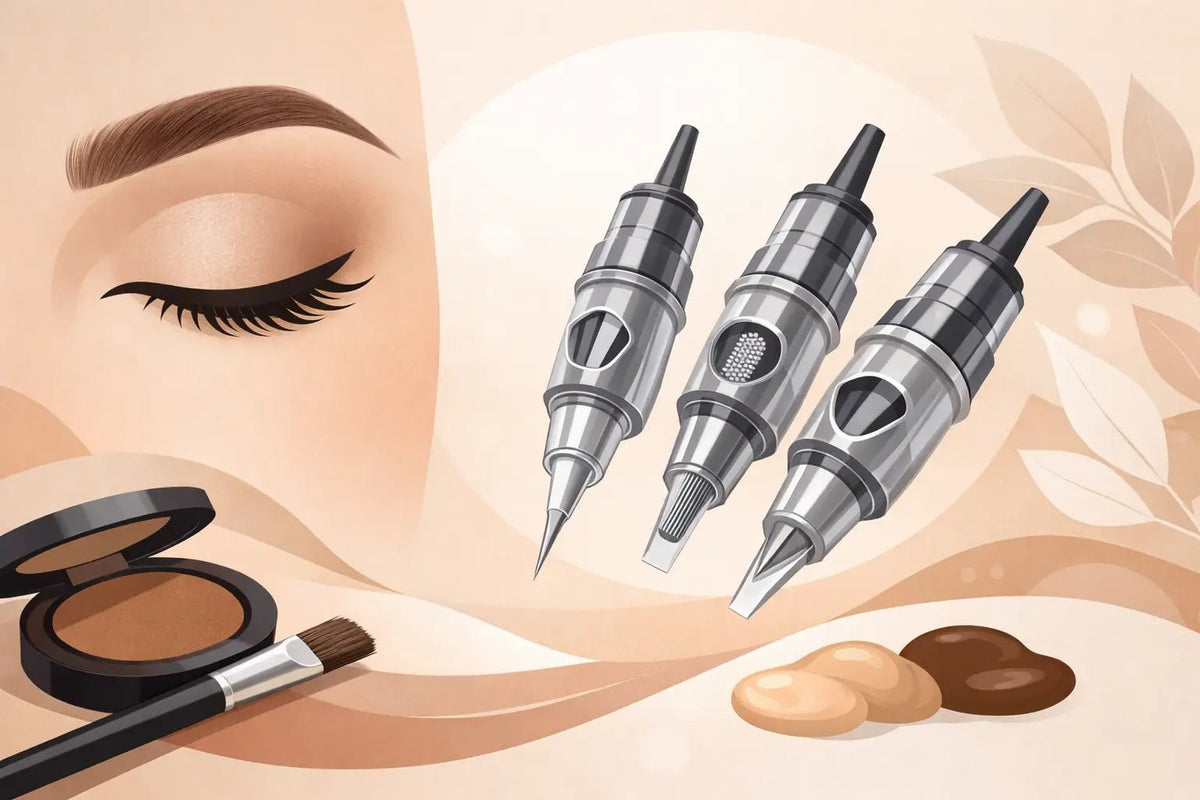
For most powder brow work, artists rely on round liner and round shader cartridge configurations. Small round liners are highly versatile because they create controlled points of pigment, allowing you to build an airy front and a denser body without sacrificing precision. Round shaders can cover more surface area and are useful when you need efficient, even saturation through the arch and tail.
A practical working kit often includes 1RL, 3RL, 3RS, and 5RS cartridges. The exact labels vary by manufacturer, so always check the brand’s configuration chart rather than assuming every cartridge marked “3” performs identically. Needle spacing, taper, membrane design, and housing shape all influence how the cartridge feels in the skin.
For artists building consistency across different brow patterns, it helps to think in terms of purpose rather than chasing one “best” cartridge:
- A 1RL is ideal for refined pixel work, crisp tail control, and light layering in the front.
- A 3RL offers a balance of precision and speed for many machine powder brow techniques.
- A 3RS can create soft, compact shading while moving more efficiently across the brow body.
- A 5RS is often useful for larger brow bodies or faster saturation, but it requires a lighter hand and disciplined movement to avoid a heavy, blocky finish.
Choose the configuration by brow zone
The front, body, and tail do not always need the same cartridge. Many experienced artists switch configurations during the appointment to preserve the right texture across the design.
Fronts: prioritize air and control
The front of a powder brow should generally have the least density. A 1RL, often in a fine diameter, gives you the control to create sparse pixelation and avoid a harsh starting line. This is especially useful on clients who want a soft ombré transition or have mature, thin, or easily sensitized skin.
Work with a light pigment load and avoid repeatedly stacking passes in exactly the same area. If the front starts to look too solid during the procedure, it will not soften simply because the client leaves the studio. Fresh redness can disguise excess saturation, so maintain a conservative approach from the first pass.
Body: build even, controlled saturation
The brow body carries the visual weight of the treatment. A 3RL is a dependable choice for artists who prefer stippling, pendulum, whip, or short shading movements. It offers enough coverage to build color without giving up the ability to adjust density around previous work, scar tissue, or texture changes.
A 3RS can be a strong option when the client has a fuller brow design and healthy, resilient skin. Because it can place pigment over a slightly wider area, it may reduce unnecessary passes. That efficiency matters, but only when your machine speed, voltage, and hand movement are calibrated to the cartridge.
Tails: keep the edge precise
Tails often benefit from a smaller configuration, particularly when the design is narrow or sharply lifted. A 1RL or 3RL can help keep the lower line and tip clean while still allowing a powdered finish. A larger shader can work in a broad tail, but it can make a delicate design look blunt if it is not kept inside the mapped shape.
Needle diameter changes the feel in skin
Diameter is one of the most useful variables when selecting powder brow cartridges. Fine needles, commonly around 0.20 mm to 0.25 mm, can support lighter pixel placement and detailed control. They are popular for soft fronts, thin skin, and artists who favor gradual layering.
A 0.25 mm to 0.30 mm diameter is a versatile range for many powder brow services. It can deliver enough pigment for efficient saturation while retaining a soft appearance when used with correct technique. For clients with normal skin and a medium-density makeup preference, this range is often a practical starting point.
Larger diameters can move more pigment, but they are not a shortcut to better retention. On thin, mature, dehydrated, or compromised skin, an overly aggressive setup can create unnecessary trauma and unpredictable healing. Likewise, oily or thick skin may require a thoughtful approach to saturation, but more force is rarely the answer. Adjust your technique and expectations to the skin rather than forcing every client into the same cartridge choice.
Taper and needle quality matter more than many artists expect
Taper affects how the needle enters the skin and how the cartridge responds during delicate movements. A medium taper is often forgiving and efficient for shading. A longer taper may feel more precise and can support refined pixel work, but it may require a more deliberate hand and a better understanding of your machine’s performance.
High-quality PMU cartridges also matter for reasons beyond sharpness. Consistent needle grouping, a stable membrane, clear visibility, and reliable pigment flow make it easier to repeat your technique from client to client. Wobble, inconsistent needle exposure, or poor cartridge construction can turn a normally controlled movement into uneven implantation.
This is why professional artists should avoid selecting cartridges on price alone. A lower-cost cartridge that skips, spits pigment, or varies from one unit to the next can cost more in extra passes, longer appointments, and compromised results. Inkbox Artistry curates professional-grade universal cartridges because consistency is part of the treatment, not an optional upgrade.
Match the cartridge to your machine and technique
Even an excellent cartridge can perform poorly when paired with the wrong machine settings. Wireless PMU machines, pen machines, and machines with different stroke lengths each create a distinct feel at the needle. A setup that works beautifully for one artist’s light pendulum motion may feel too sharp or too slow for another artist’s stippling technique.
Before using a new cartridge configuration on a client, test it on practice skin at your usual voltage and hand speed. Watch how it deposits pigment, how quickly it fills an area, and whether it encourages you to press harder than normal. If you have to fight the cartridge to achieve saturation, change the setup instead of escalating pressure.
Machine compatibility is equally non-negotiable. “Universal” generally refers to the cartridge connection style, but fit and performance can still vary by machine grip, drive system, and manufacturer. Confirm that the cartridge seats securely, that the membrane is intact, and that there is no unusual vibration before beginning the service.
Build a smart powder brow cartridge kit
For a working PMU station, a focused selection is usually more useful than a drawer full of untested sizes. Keep a fine liner for detailed fronts and tails, a versatile 3RL for everyday powder work, and one or two round shaders for efficient saturation on suitable skin types. Once you know how each configuration heals in your hands, you can add specialty options with intention.
Document the cartridge, diameter, taper, pigment, machine setting, skin type, and healed outcome for every client. Those notes reveal patterns that memory misses. You may find that a 3RL gives you your most consistent healed body on normal skin, while a fine 1RL produces the cleanest fronts on mature clients. That information becomes part of your signature technique.
Use sterile, single-use cartridges, inspect packaging before every appointment, and follow your local bloodborne pathogen and disposal protocols. Great brow work is equal parts artistry and procedure. The cartridge should support both.
The right choice is the one that gives you calm control, not the one that promises the fastest saturation. Start with a small, reliable range, study your healed results, and let each client’s skin guide the final setup.