When to Replace PMU Cartridges for Safe Work
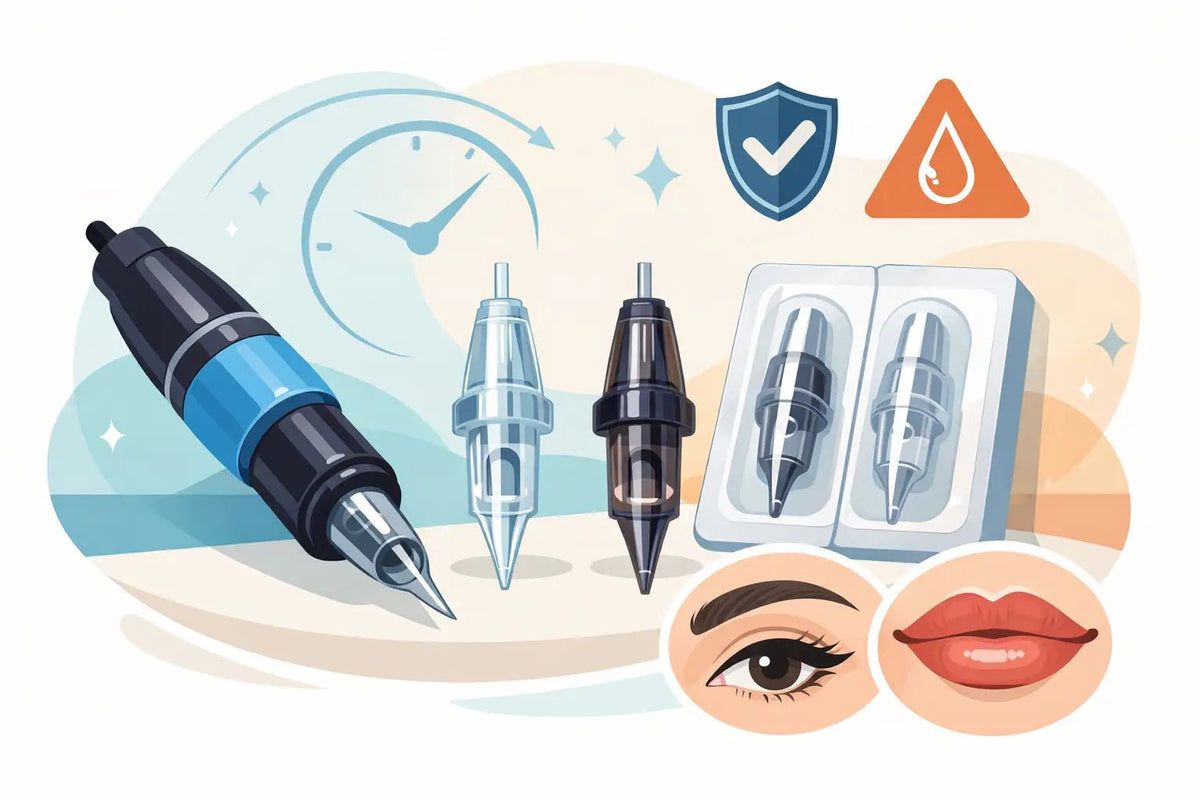
A cartridge that still looks usable is not necessarily a cartridge that belongs in your machine. Knowing when to replace PMU cartridges protects more than your workflow - it protects your client, your treatment quality, and the professional standard your studio is known for. For cosmetic tattoo artists, cartridge replacement is not a matter of getting a few more passes from a needle. It is a non-negotiable part of infection control.
Universal needle cartridges are designed to support fast, precise PMU work, but they are still single-use consumables. The right decision is usually straightforward: use one sterile cartridge for one client, then dispose of it correctly. The situations around pigment changes, interruptions, machine handling, and compromised packaging are where artists need clear protocols.
When to Replace PMU Cartridges: The Non-Negotiables
A PMU cartridge must be replaced after every client. Never reuse a cartridge on another person, even if the needle appears clean, the service was brief, or the cartridge was used only for a small correction. It is a single-use item that has been exposed to blood, lymph, skin debris, and pigment during the procedure.
A cartridge should also be discarded if its sterile packaging is damaged, wet, torn, or opened before you are ready to begin the service. Once a sterile barrier is compromised, you cannot assume the cartridge remains safe for client use. The same applies if a cartridge drops onto an unprotected surface or comes into contact with anything outside your protected treatment field.
Do not attempt to clean, disinfect, sterilize, or save a used cartridge for a future appointment. A cartridge is not a reusable machine component. It should go into an appropriate sharps container immediately after the procedure, following your local regulations and studio infection-control protocol.
Replace a Cartridge During a Service When Performance Changes
One cartridge may be appropriate for an entire brow, lip, or eyeliner procedure when it remains stable and you are working with one pigment approach. But treatment performance should guide your decision. If the needle no longer delivers pigment consistently, drags instead of glides, or begins producing results that do not match your hand movement, pause and assess the cartridge.
Needle damage can be difficult to see without magnification. A cartridge that has been bumped, dropped, or handled roughly may have a bent or compromised needle configuration even if the housing looks intact. Continuing with a damaged needle can create unnecessary trauma, uneven implantation, and a less controlled healed result. A fresh cartridge is a small cost compared with correcting poor retention or managing an unhappy client.
Replace the cartridge if you notice excessive clogging that does not clear through normal, hygienic workflow. Thick pigment, dried pigment at the tip, dense tissue fluid, or extended work in a small area can affect flow. Do not force a struggling cartridge to finish the service. If pigment delivery is inconsistent, your pressure may increase without you realizing it, which can quickly lead to overworked skin.
A loss of sharpness is another reason to change. This may show up as increased resistance, fuzzy hair strokes, unstable crispness in eyeliner, or lip pixels that begin looking more traumatic than polished. Artists who work with fine configurations, especially nano needles and small liners, often benefit from having a backup ready before they begin.
What About Pigment Changes?
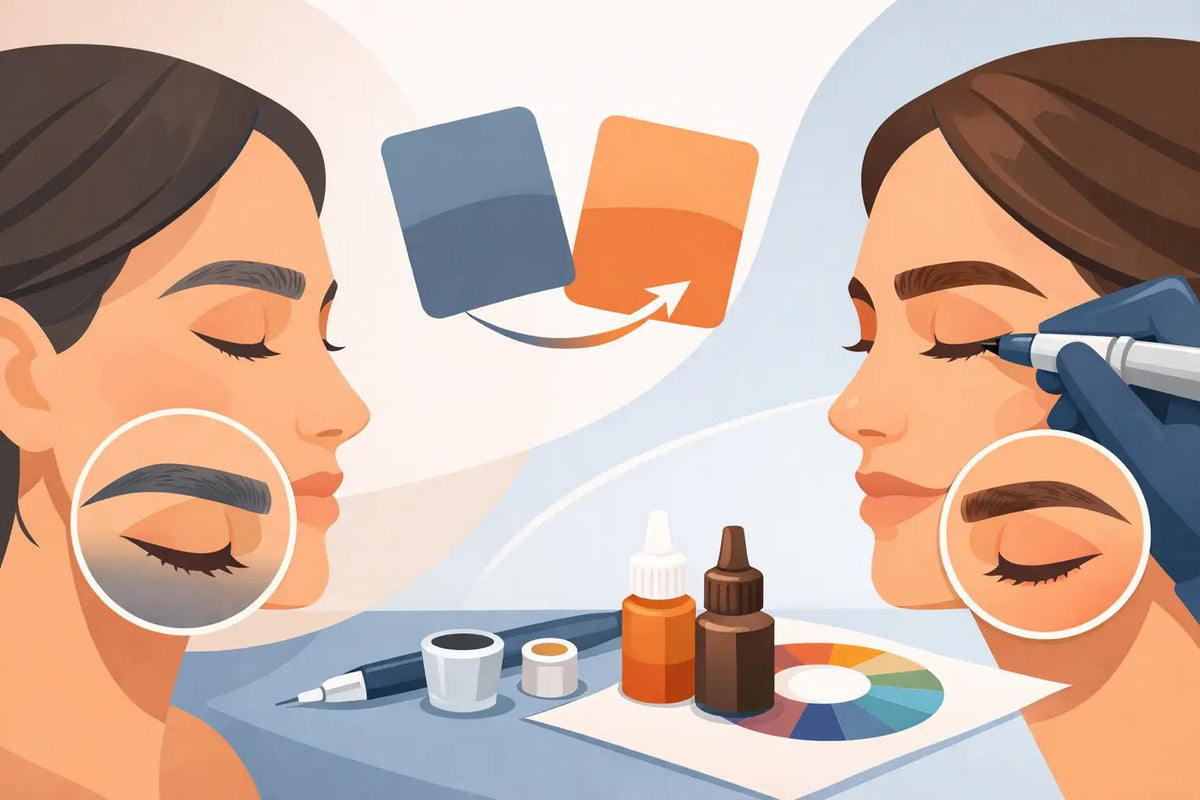
Changing pigments does not automatically require a new cartridge if you are continuing to work on the same client and your technique allows for a controlled transition. For example, an artist may work from a deeper lip border tone into a lighter blend or adjust a brow formula during a single service. However, the decision should be based on color cleanliness, treatment goals, and the condition of the cartridge.
For a major color shift, a fresh cartridge can be the cleaner and more efficient choice. This is especially true when moving from a dark pigment into a light corrective shade, adding a bright lip modifier, or switching to a detail color where pure saturation matters. Trying to flush out a dark residue may waste time and make it harder to judge the color you are implanting.
Using separate cartridges for separate pigments can also support a more organized setup. Label pigment cups, keep your work area intentional, and avoid crossing from used surfaces back to clean supplies. A few extra disposables can make the procedure more controlled, particularly during advanced lip neutralization, camouflage work, or multi-tone areola treatments.
A Cartridge Is Only One Part of a Clean Setup
Even a premium cartridge cannot compensate for weak barrier practices. Your machine should be bagged correctly, with protection that suits the machine body and grip setup. Barrier film, clip cord covers where applicable, clean gloves, protected pigment caps, and a clearly defined clean-to-dirty workflow all work together to reduce cross-contamination risk.
Cartridge membranes matter, too. A quality safety membrane is designed to help prevent fluid and pigment from traveling back into the machine. That does not mean the machine can be treated as contamination-proof. Wipe-down, disinfection procedures, and proper machine barriers remain essential. The membrane is an added layer of protection, not permission to cut corners.
Before starting, confirm that the cartridge fits your machine securely. Universal-style cartridges are convenient, but compatibility can vary by machine, grip, and brand. A cartridge that wobbles, does not lock in properly, or creates inconsistent needle hang will affect your control. Test fit and needle projection before the client is in the chair, not halfway through a treatment.
Build Cartridge Changes Into Your Treatment Plan
The best time to think about replacing a cartridge is before the service starts. Set up with the primary configuration you expect to use and keep sterile backups available within your clean workflow. For many artists, that means having one backup of the same configuration ready, plus any additional groupings needed for shading, detailing, or pigment changes.
Your backup plan will vary by procedure. A hairstroke brow artist may begin with a fine nano configuration and keep another identical cartridge ready in case the first loses its edge. A powder brow artist may want a second shader available for a long session or dense saturation. Lip artists commonly benefit from separate configurations for outlining and pixel shading, depending on their technique and the client’s lip condition.
Do not make cartridge decisions based solely on appointment length. A 45-minute touch-up with dense scar tissue may require more attention to needle performance than a two-hour service on receptive, healthy skin. Skin type, treatment area, pigment viscosity, needle configuration, and your technique all affect how a cartridge performs.
Signs Your Studio Needs a Clearer Cartridge Protocol
If you have ever paused mid-procedure to search for a compatible cartridge, questioned whether a package was still sterile, or tried to stretch a cartridge through inconsistent pigment flow, your setup process needs more structure. Clear protocols reduce decision fatigue and keep the artist focused on design, implantation, and client comfort.
A practical cartridge protocol should cover how you inspect packaging, where sterile backups are stored, how you handle pigment changes, what triggers an in-service replacement, and how used cartridges are disposed of. Trainers should teach this alongside needle selection and machine settings. New artists often focus heavily on configuration choice while underestimating how cartridge condition affects the finished result.
For studio owners, consistent cartridge standards also make team training easier. Every artist should know that a used cartridge never returns to the supply area, a compromised package is discarded, and a performance issue is solved with a fresh sterile cartridge rather than extra pressure or repeated passes.
Choose Consistency Over Convenience
The most reliable answer to when you should replace a PMU cartridge is simple: replace it between every client and any time sterility or performance is in doubt. The cost of a fresh cartridge is built into professional treatment delivery. The cost of ignoring a compromised one can show up in trauma, inconsistent retention, contamination risk, and lost trust.
Stock the configurations your services actually demand, keep backups accessible, and use cartridges that pair securely with your machine and technique. Inkbox Artistry was built by permanent makeup artists for artists, because details like this are not minor operational choices - they are part of delivering work clients can feel confident booking again.