Cosmetic Tattoo Machine Voltage Guide for PMU
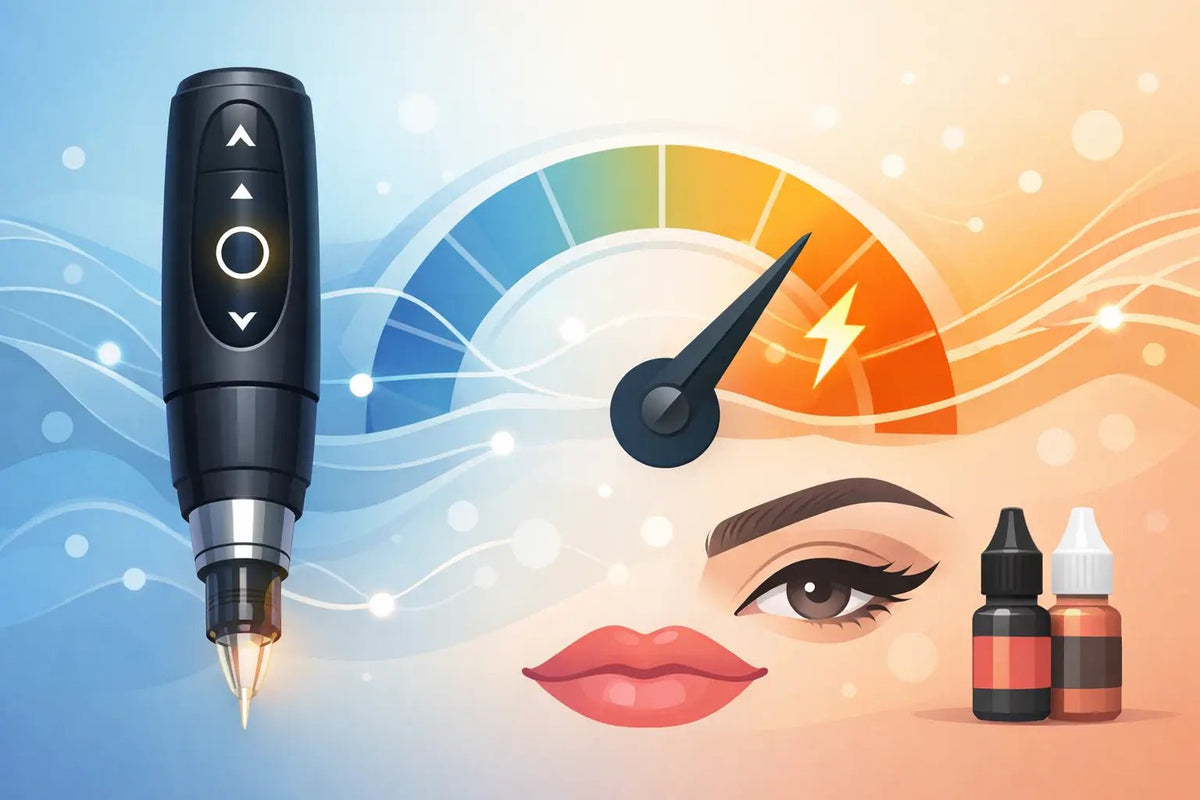
A voltage display can look deceptively simple: one number, a plus button, a minus button. In practice, it is one of the most consequential adjustments in your setup. This cosmetic tattoo machine voltage guide is designed to help PMU artists use voltage as a controlled variable, not a guesswork shortcut. The right setting supports clean implantation, predictable pigment placement, and a calmer experience for the skin.
Voltage is not a universal recipe. Your hand speed, needle configuration, machine stroke, cartridge resistance, pigment consistency, skin condition, and treatment area all influence the setting that performs best. Treat the voltage number as the starting point for a conversation between your machine, your technique, and the client's skin.
What Machine Voltage Actually Changes
Voltage determines how much electrical power reaches your machine motor. In practical terms, raising the voltage generally makes the needle cycle faster and with more force behind its movement. Lowering it slows the cycle and can make the handpiece feel softer or more controlled.
That does not mean higher is better. If your hand is moving too slowly at a high voltage, you can overwork the skin, create unnecessary trauma, and risk a result that heals less evenly. If the voltage is too low for your hand speed or cartridge grouping, pigment may not implant efficiently. You may compensate by making repeated passes, which can create the same problem from the opposite direction.
A productive setup creates a balance: the needle has enough speed to deposit pigment with your normal hand movement, while the skin remains stable and responsive. This is why artists with identical machines may work at different voltages and still achieve excellent healed results.
Cosmetic Tattoo Machine Voltage Guide: Start With the Machine
Before comparing settings with another artist, review the manufacturer guidance for your exact machine. A compact wireless PMU pen and a traditional rotary machine may show similar voltage ranges, but their motors, stroke lengths, battery output, and needle behavior can feel completely different.
Stroke length matters especially. A shorter-stroke machine is commonly favored for soft, controlled cosmetic work and may require a different voltage than a longer-stroke machine to achieve the same visual pace. Cartridge construction matters too. A tight liner, a fine single needle, and a larger magnum-style configuration each create different resistance and require different handling.
For wireless machines, also pay attention to battery level. Some units maintain consistent power extremely well, while others can feel different as the battery drains. If a setting that normally feels dependable suddenly becomes sluggish, check the battery and cartridge before changing your technique.
Never force a setting outside the manufacturer's recommended operating range. The display is there to give you precision, not to invite unnecessary extremes.
Use a Sensible Starting Range, Then Adjust
Many cosmetic tattoo artists begin delicate work in a lower-to-mid range, often around 5.5 to 7 volts, then make small adjustments based on real-time feedback. This is only a working range, not a treatment protocol. Some machines run efficiently below it, while others need more voltage to create comparable needle speed.
For a new machine, start conservatively on practice skin before taking it into a client appointment. Run a few lines, hair strokes, pixels, and soft shading movements with the cartridges you use most. Notice the sound of the machine, the consistency of the marks, and whether your natural hand speed feels supported.
Make changes in small increments, usually 0.1 to 0.3 volts at a time. A one-volt jump can be dramatic on a sensitive machine. Small changes make it easier to identify what actually improved the result rather than changing multiple variables at once.
Match Voltage to Your Hand Speed
Your hand speed and machine speed must work together. A quicker hand can often pair well with a moderately higher voltage because it moves across the skin efficiently. A slower, deliberate hand may need a lower setting to avoid packing too much pigment into one area.
Do not chase another artist's number if their technique is different from yours. The better question is whether your machine is depositing pigment cleanly with a light, consistent pass. If you find yourself pausing, dragging, or repeatedly going over the same area, assess voltage alongside hand movement, angle, stretch, and cartridge choice.
Let Skin Feedback Lead the Adjustment
Skin response is more useful than a number on a screen. Watch for excessive redness, swelling, pinpoint bleeding beyond what is expected for the treatment, or a surface that begins to look shiny and overworked. These are signals to pause and reassess your pressure, pass count, stretch, and machine setting.
On skin that is thin, mature, sensitized, or compromised by previous procedures, lower voltage and a more conservative approach may be appropriate. However, lowering voltage is not a fix for poor technique. A slow machine paired with excessive pressure can still traumatize the skin.
When the skin is dense, oily, or resistant, the temptation is to turn the voltage up immediately. First check whether your cartridge is fresh, whether pigment flow is consistent, and whether your skin stretch is adequate. If a small voltage increase is needed, use it with a lighter hand and avoid treating the setting as permission for more passes.
Voltage by PMU Treatment Area
Brows, lips, and eyeliner demand different machine behavior because the tissue, design style, and desired saturation are different.
For powder brows and pixel shading, artists often prefer a stable, moderate pace that allows soft layering without harsh marks. A voltage that is too high can make the work feel aggressive and may lead to oversaturation, particularly through the brow head or on thin skin. For hairstrokes, cartridge selection, stroke length, and skin type are just as influential as voltage. Crisp strokes require control, not simply more motor speed.
Lips may call for a different approach because lip tissue is mobile, vascular, and highly variable from client to client. A setting that feels smooth on the vermilion border may not be ideal for building saturation through the body of the lips. Work within your training method, prioritize a consistent stretch, and adjust only when the skin response shows you that the machine is not keeping pace.
Eyeliner requires especially conservative decision-making. The area is delicate, client movement can affect precision, and aggressive settings leave little margin for error. Focus on a stable machine, appropriate cartridge, secure stretch, and controlled movement. More voltage cannot replace any of those fundamentals.
Troubleshoot the Cause, Not Just the Voltage
When pigment is not going in well, voltage is only one possible cause. Check the full setup before making major changes:
- Confirm the cartridge is compatible, properly seated, and not damaged.
- Check pigment flow and avoid letting the needle run dry.
- Review your hand speed, angle, pressure, and three-point stretch.
- Consider whether skin texture, scar tissue, oiliness, or prior tattoo work is affecting implantation.
- Replace a cartridge that begins to drag, skip, or perform inconsistently.
Build a Voltage Log for Better Consistency
A simple treatment log can sharpen your machine control faster than memorizing settings from social media. Record the machine model, stroke, cartridge type, voltage range, treatment area, skin observations, and healed result. Over time, patterns become clear: which cartridges run best on your preferred machine, which skin types require a lighter approach, and where your reliable starting points sit.
For trainers and studio owners, documented settings also create a stronger baseline for student practice and team consistency. It is not about locking every artist into one number. It is about teaching the reasoning behind the adjustment.
Professional-grade machines, reliable universal cartridges, and consistent consumables make this process easier because fewer variables change from appointment to appointment. Inkbox Artistry stocks the PMU essentials artists rely on to build a more controlled, repeatable setup.
The voltage that serves your work best is the one that lets you stay light-handed, intentional, and responsive to the skin in front of you. Start conservative, adjust with purpose, and let clean technique remain the standard behind every setting.