Does Numbing Affect Retention in PMU Treatments?
A client who feels comfortable is easier to work on, but comfort cannot come at the expense of a predictable healed result. Does numbing affect retention? It can, but not in the simple, universal way artists often hear discussed. The bigger issue is how a specific anesthetic changes that client’s skin, when it is applied, and whether the artist adjusts their technique accordingly.
For brows, lips, eyeliner, and scalp micropigmentation, retention is a full-treatment outcome. Pigment selection, needle configuration, depth, skin condition, trauma level, client healing, and aftercare all carry weight. Numbing is one variable in that equation. Used appropriately, it can support a calmer, more controlled appointment. Used too heavily or at the wrong stage, it may complicate implantation and make the skin harder to read.
Does Numbing Affect Retention? The Short Answer
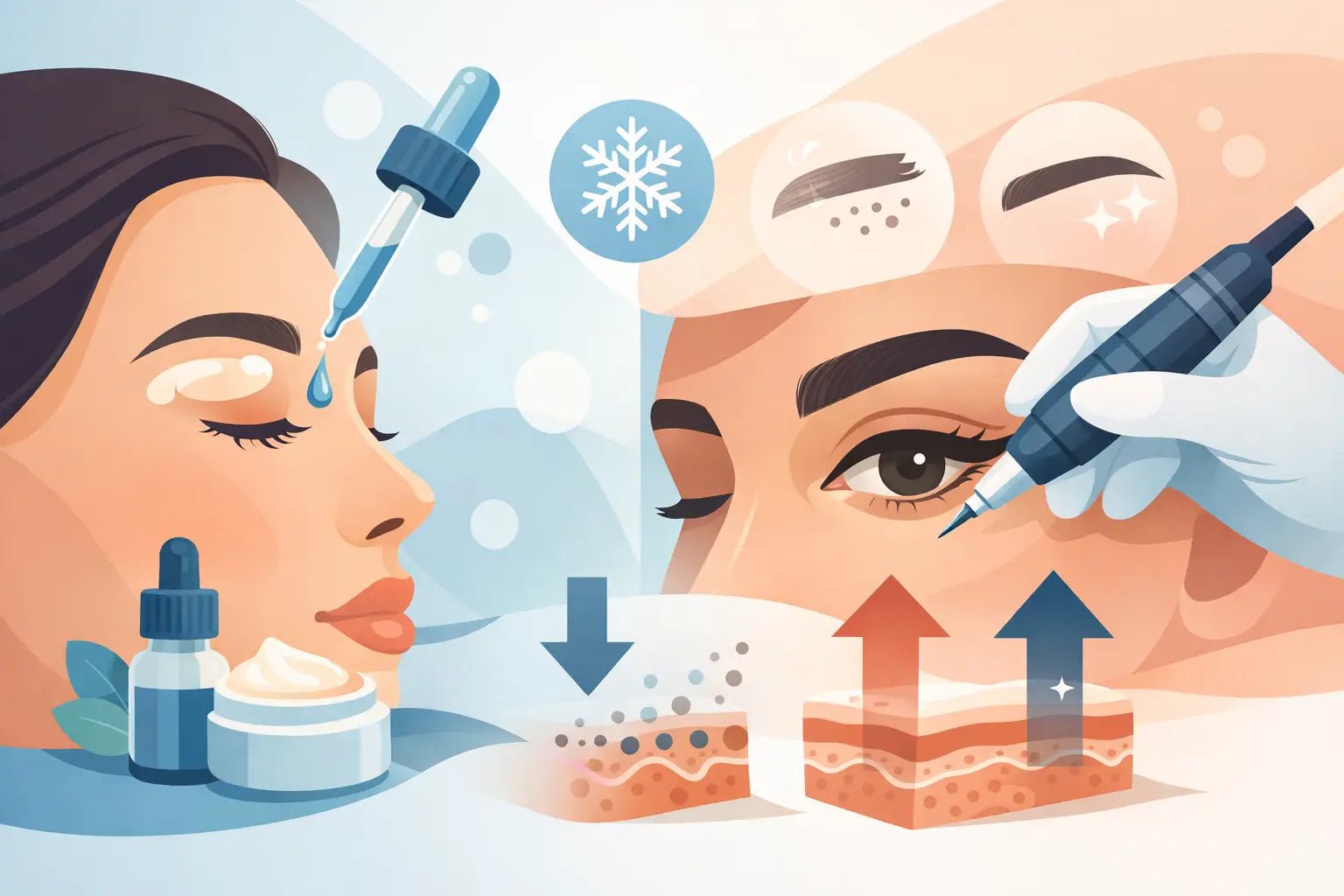
Numbing can affect retention indirectly by changing the working surface of the skin. Some topical anesthetics cause blanching, swelling, firmness, excess moisture, or a slick texture. Those changes may make it more difficult to gauge saturation, consistent needle depth, and true skin response during the procedure.
That does not mean every numbing product causes poor retention, or that artists should skip anesthetic whenever possible. Many experienced PMU artists use approved anesthetics successfully every day. The difference is product knowledge, conservative timing, and technique that responds to the skin in front of you rather than forcing a standard pass count.
Primary numbing is usually applied to intact skin before the procedure begins. Secondary numbing is used after the skin has been opened, but only when the product’s instructions and your local scope of practice allow it. Secondary products can be especially useful for client comfort during longer services, yet they also tend to have a more immediate effect on tissue behavior. That is where overapplication can create a retention concern.
What Anesthetic Can Change During a Procedure
The anesthetic formula matters. Ingredients, concentration, vehicle, contact time, and the presence of vasoconstrictive agents can all influence what you see in the treatment area. A client’s skin type, circulation, medications, hydration, and sensitivity history matter just as much.
Blanching and reduced skin feedback
When skin blanches, the surface can look paler and less reactive than it normally would. In some cases, this makes color assessment more difficult, particularly with lip blush and warmer brow pigment selections. An artist may think a pass has implanted evenly when the visual feedback is temporarily altered by the anesthetic response.
Blanching can also encourage chasing color. If you keep working until the area looks intensely saturated while it is numb and pale, you may overwork the skin. Trauma does not improve retention. It increases inflammation and can lead to a less predictable healed result.
Swelling, firmness, and altered depth perception
A numbed area may become puffy, tight, or temporarily firm. That can change how the needle enters the skin and how easily the pigment appears to deposit. On lips and eyeliner especially, even mild swelling can affect stretching, line placement, and the visual depth of your work.
The practical adjustment is not automatically to increase pressure or slow the machine dramatically. Instead, reassess your stretch, hand speed, needle choice, and the number of passes. Work with a light, consistent implantation pattern and check how the tissue responds as the anesthetic wears off.
Excess moisture and pigment behavior
Some secondary numbing gels or liquids can leave the skin wet if too much product remains on the surface. Excess moisture may dilute surface pigment, interfere with visibility, and make a delicate area feel slippery. It can also encourage repeated wiping, which adds mechanical irritation to already sensitized skin.
Use only the amount directed by the manufacturer, allow the recommended contact time, and remove residue carefully before continuing. More product does not equal more control. In PMU, clean visibility and a stable skin surface are usually more valuable than maximum numbness.
Timing Is Often More Important Than the Product
A reliable anesthetic workflow begins before the service, not halfway through it. Review the client’s health history, consent forms, prior PMU experience, allergies or sensitivities, and current medications according to your studio policies and local regulations. A client who reports an unusual reaction to a numbing product deserves a cautious approach, not a rushed workaround.
For primary numbing, follow the product directions exactly on intact skin. Leaving a product on longer than recommended can increase the chance of an exaggerated skin response without improving your result. Remove it thoroughly, cleanse the area according to your protocol, and assess the skin before mapping or beginning implantation.
For secondary numbing, wait until it is truly needed. Applying it repeatedly after every small section may create a cycle of swelling, blanching, and inconsistent tissue feedback. Many artists get better control by completing an initial pass, assessing client comfort and skin response, then using a small amount of secondary anesthetic only where appropriate.
Keep your protocol consistent enough to evaluate it. If you change anesthetic brand, pigment line, needle configuration, machine voltage, and technique all at once, you will not know what influenced the healed result. Document your products and observations in the client record, especially when you are refining a new workflow.
Retention Starts With Technique, Not Numbing
When retention is inconsistent, numbing can be an easy suspect because it is visible during the appointment. But the underlying cause may be pigment-to-skin match, needle trauma, poor stretch, shallow implantation, excessive depth, overworking, or healing variables outside the treatment room.
For powder brows, oily or highly porous skin may need a thoughtful pixel pattern and pigment strategy more than another anesthetic application. For lips, careful pre-care, a controlled hand, and realistic expectations around the first-session heal often matter more than whether the client received a second numbing application. For eyeliner, the precision required around thin, mobile skin makes a gentle approach and conservative use of product especially valuable.
Choose professional-grade supplies that support controlled application: reliable needle cartridges, pigments with clear usage guidance, clean disposable setup items, and anesthetics intended for professional procedures. Inkbox Artistry is built by permanent makeup artists for artists, with category-focused supplies that help keep the working setup consistent from service to service.
Machine settings should also serve the skin, not compensate for it. If an anesthetic has made the area firmer or more swollen, do not respond by aggressively increasing voltage or pressure. A quality wireless machine and a dependable cartridge can improve consistency, but neither replaces depth control and disciplined passes.
A Practical Workflow for Better Healed Results
Start every service with a clear baseline. Observe skin texture, hydration, oil level, redness, and any contraindications before product is applied. Take photos under consistent lighting when your client consent process permits it. This gives you a more reliable point of comparison than memory when you evaluate the healed outcome.
During the procedure, use anesthesia intentionally rather than automatically. Follow labeled directions, apply a minimal effective amount, and remove excess product before implanting more pigment. Watch for blanching, unusual swelling, persistent weeping, or a sudden change in tissue feel. If the skin is telling you it has had enough, reduce trauma rather than trying to force immediate saturation.
After the appointment, give aftercare instructions that fit the service and the client’s skin. Retention can be affected by picking, friction, heat exposure, sun exposure, premature makeup use, and failure to follow the artist’s healing guidance. Explain that healed color is the real measure of the procedure, not the intensity they see when they leave the studio.
At the touch-up, review the healed result alongside your treatment notes. Did the client retain unevenly in an area that was heavily numbed? Was the entire result light, suggesting a broader healing or implantation issue? Did the pigment heal true to its intended tone? Repeated documentation turns a vague retention concern into a workflow decision you can actually improve.
When to Rethink Your Numbing Protocol
A protocol deserves review when you see a consistent pattern across multiple appropriate candidates: excessive blanching, difficult pigment implantation after secondary numbing, unusual swelling, or healed results that are lighter specifically in repeatedly numbed areas. One client alone is not enough to condemn a product. Skin is individual, and each appointment has variables.
Consider testing one controlled change at a time. You might shorten contact time within the manufacturer’s directions, reduce the amount used, change the point in the service when secondary numbing is applied, or adjust your passes after application. Keep client safety, product labeling, state requirements, and professional training at the center of those decisions.
Never treat anesthetic as a casual add-on. Use products as directed, maintain sanitation, respect contraindications, and refer clients to an appropriate healthcare professional when they disclose concerns outside your professional scope. Comfortable clients and technically sound work should support each other.
The best numbing protocol is the one that keeps your client comfortable while preserving your ability to read the skin, implant with control, and assess the true healed result at the follow-up.