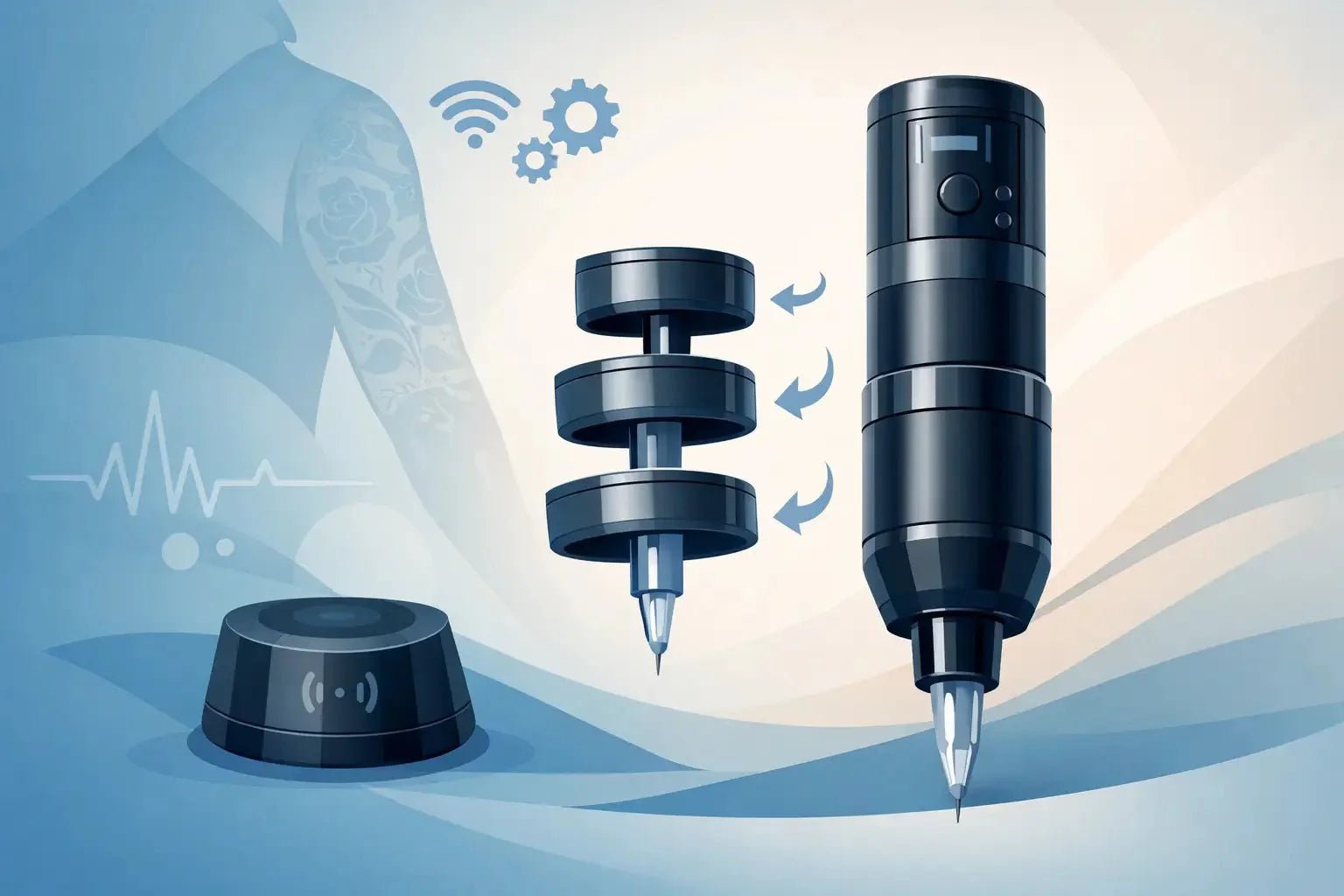
Wireless Tattoo Machines for PMU Artists
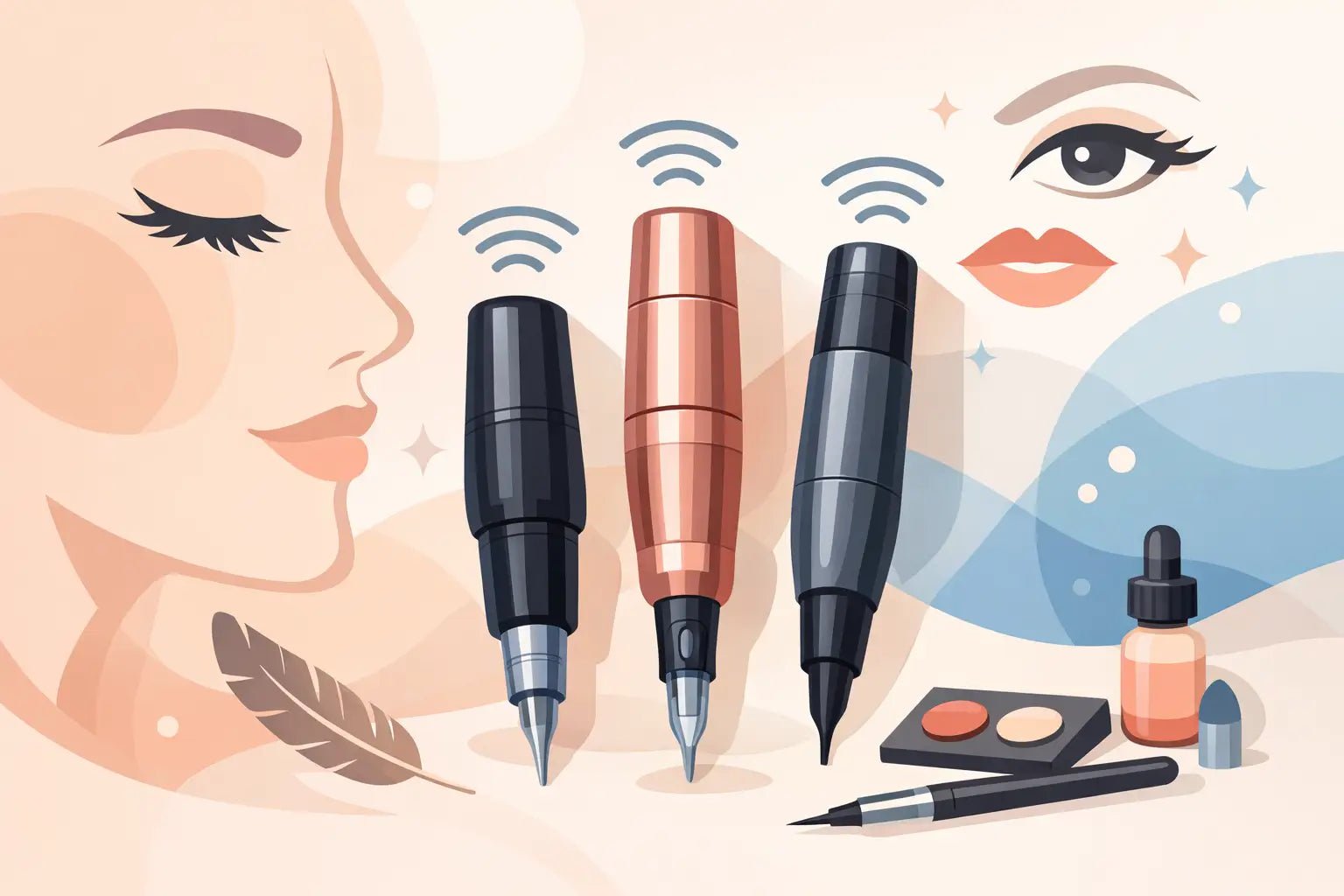
A machine cord catching on your tray mid-service is a small problem until it pulls your hand position off during a crisp brow pass. That is exactly why wireless tattoo machines have become a serious upgrade for PMU artists, not just a trend item. In permanent makeup, where control, ergonomics, and station efficiency affect every result, removing the cable changes more than the look of your setup.
For brow, lip, and eyeliner work, the right wireless machine can make your movements cleaner and your workflow faster. But not every cordless option is built for cosmetic tattooing. Some are better suited to body art, some run too heavy for long PMU sessions, and some look impressive on paper while falling short on balance, stroke versatility, or battery consistency.
Why wireless tattoo machines matter in PMU
In a permanent makeup environment, small handling differences show up quickly. A machine that feels back-heavy after the first hour, a battery pack that adds too much bulk, or inconsistent voltage output can all affect saturation, line quality, and hand fatigue. Wireless tattoo machines solve one problem immediately - cable drag - but the better models also improve mobility around the treatment bed and help keep the workstation more streamlined.
That matters for artists who move between angles often, especially during brows and eyeliner. Fewer cords also make barrier wrapping simpler and can reduce the clutter that builds up around power supplies, clip cords, and foot pedal setups. For studio owners and trainers, that cleaner footprint is useful in busy treatment rooms and class environments where efficiency counts.
Still, cordless is not automatically better in every case. If a machine sacrifices balance or power consistency to achieve a wireless design, it can become more frustrating than the corded setup you were trying to replace. The real question is not whether wireless is modern. It is whether the machine performs well for PMU-specific work.
What to look for in wireless tattoo machines
The first thing experienced artists usually notice is weight distribution. Total machine weight matters, but balance matters more. A lightweight machine with a bulky battery at the rear can feel less stable than a slightly heavier machine with a more centered profile. For delicate pixel work, soft shading, and detailed border passes, hand control is everything.
Stroke length is another key factor. PMU artists do not all work the same way, and treatment types vary. Brows, lips, scalp work, and liner can each benefit from different machine behavior. Some artists prefer a shorter stroke for softer implantation and controlled layering. Others want more versatility from one machine that can handle multiple services with fewer compromises. There is no single best stroke for everyone, but there is a best fit for your pressure, speed, cartridge choice, and technique.
Battery life deserves a practical review, not just a marketing one. A stated run time may sound generous, but actual performance depends on your operating voltage, cartridge resistance, and treatment length. If you are booked back-to-back, battery swap speed and charging convenience may matter just as much as total hours. Many artists prefer systems with interchangeable power packs so the machine never slows down the day.
Voltage stability is often overlooked until it becomes a problem. PMU work relies on predictability. If the machine output starts dipping as battery life drops, your passes can become inconsistent. That can affect healed results and extend treatment time. Professional-grade wireless systems should hold steady power through the working range, not just at full charge.
Noise and vibration also count. A machine that runs with too much chatter can feel less precise in the hand, even if the specs look strong. Lower vibration generally supports better comfort during longer procedures, especially for artists doing multiple sets of brows or lip blush appointments in one day.
Matching the machine to your service menu
Artists building a brow-focused setup may prioritize control, lower vibration, and a shape that supports careful front strokes and smooth shading. If your calendar leans heavily toward ombré brows, nano brows, or combination work, machine responsiveness matters more than broad claims about all-purpose power.
Lip artists may want a machine that stays comfortable at consistent working speed for longer saturation sessions. For eyeliner, compact design and visibility become more important because you are working in tighter spaces where hand positioning needs to stay precise.
This is where many buying mistakes happen. A machine can be premium, popular, and still wrong for your actual appointments. The best wireless tattoo machines for PMU are the ones that support your treatment mix, your hand mechanics, and the cartridge group you already trust.
Wireless tattoo machines and cartridge compatibility
A strong machine setup is never just about the handpiece. Cartridge compatibility affects flow, stability, and the overall feel of the treatment. Universal needle cartridges are convenient, but convenience should not come at the expense of fit or performance.
When evaluating a wireless machine, consider how it pairs with the cartridge membranes, taper profiles, and groupings you use most often. A machine that runs beautifully with one cartridge brand can feel noticeably different with another. Membrane tension, needle movement, and pigment delivery all influence the final result.
For PMU artists, consistency across consumables matters just as much as machine specs. If you are already dialed in with a cartridge brand you trust, make sure your wireless setup complements that system instead of forcing you to rework your entire technique.
Hygiene, barriers, and station efficiency
Wireless setups can simplify sanitation workflow, but only if the design makes sense for professional use. Machines with awkward seams, exposed button placements, or difficult-to-wrap battery shapes can create more prep time, not less. In a high-volume studio, those extra minutes add up.
A well-designed cordless machine should barrier easily and allow artists to maintain clear access to controls without compromising hygiene standards. This is especially relevant in PMU, where artists often work with mapping tools, pigment rings, anesthetics, disposables, and multiple surface barriers in a compact treatment space.
Cleaner setup is one of the strongest practical arguments for going wireless. Less cable management means fewer touchpoints around the station and an easier reset between clients. For trainers running student stations, that also makes room organization more manageable.
Is wireless always the best move?
Not always. Some artists still prefer corded machines for very specific reasons, especially if they already have a setup with excellent balance and stable power output. Others keep both options in rotation - wireless for mobility and convenience, corded for long sessions or a preferred treatment style.
There is also the issue of adaptation. Switching to wireless tattoo machines can change the feel of your hand position, especially if you trained on slim corded pens. The transition is usually quick, but it is still a transition. If your current machine performs well, the upgrade should solve a real problem, not just satisfy curiosity.
Price is another factor. In the professional category, wireless systems are an investment. The better value is not always the cheapest machine. It is the one that holds up under regular client work, supports your technique, and does not force unnecessary replacements or workarounds.
How experienced artists evaluate a machine before buying
The smart approach is to assess performance in real PMU terms. Think about session length, treatment types, grip comfort, battery management, and cartridge pairing. Ask whether the machine supports your current style or whether you will need to adjust your approach to make it work.
It also helps to buy from a supplier that understands cosmetic tattooing, not just tattoo hardware in a general sense. PMU artists need product curation that reflects healed results, hygiene protocols, and day-to-day treatment realities. That is where an artist-led supplier like Inkbox Artistry brings value - not by adding noise, but by offering equipment that actually fits the workflow of permanent makeup professionals.
A machine can have great branding and still underperform in a brow room. What matters is how it behaves in service, how it feels by the third client of the day, and whether it helps you produce consistent work without adding strain.
Wireless tattoo machines are worth the attention they are getting, but the best purchase is rarely the flashiest one. Choose the machine that supports clean implantation, steady hand control, efficient setup, and the services you perform most. When your tools match your technique, the work feels lighter, the station runs better, and your focus stays where it should be - on the client in front of you.