Wireless Tattoo Machines With Adjustable Stroke
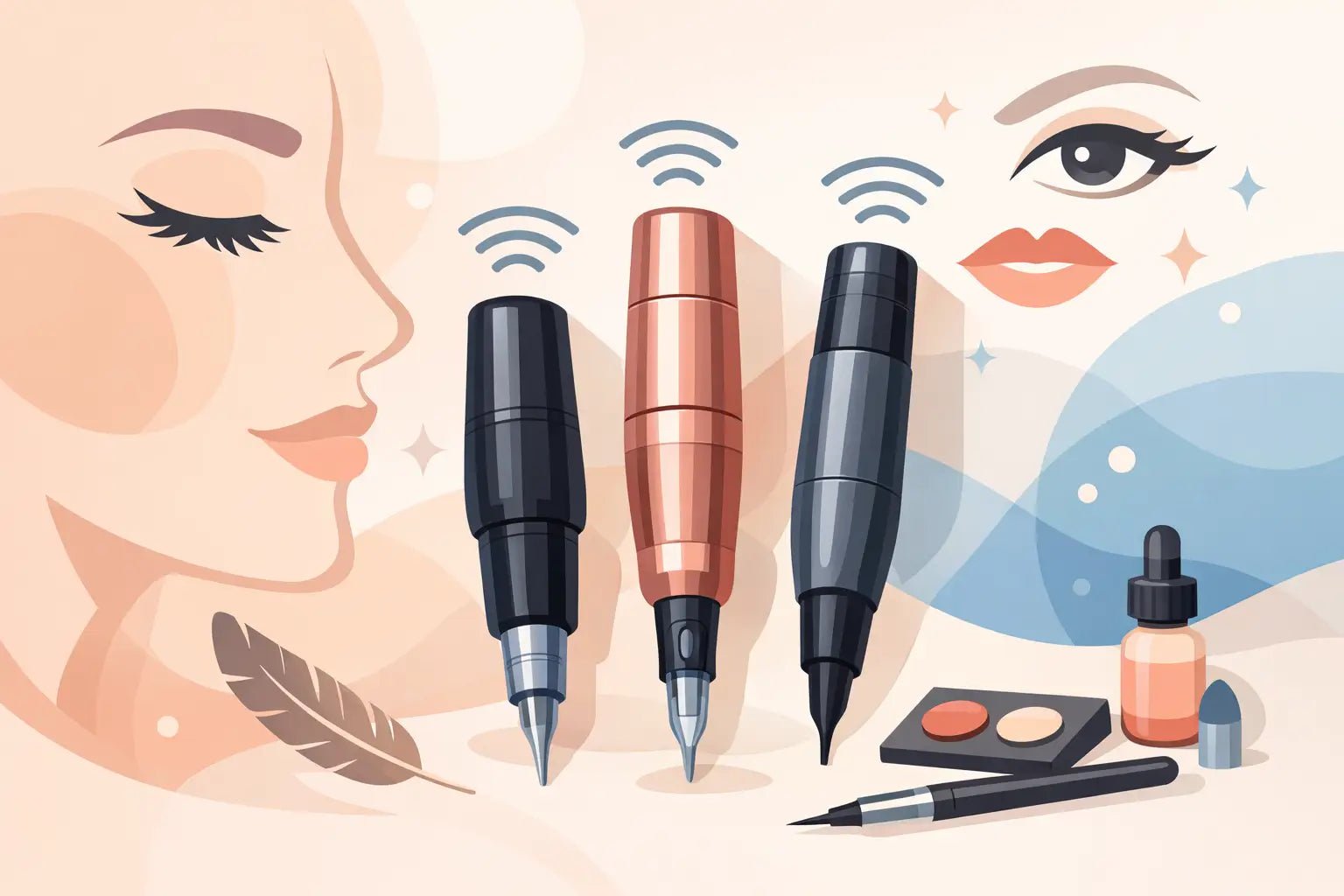
When a machine hits too hard on eyeliner or feels underpowered on lip blush, the problem is not always technique. Often, it is stroke length. That is why wireless tattoo machines with adjustable stroke have become such a smart upgrade for permanent makeup artists who want one device to handle more than one service category without sacrificing control.
For PMU, stroke is not a spec you glance at and ignore. It directly affects how the needle moves, how pigment is implanted, how much trauma you create, and how the machine feels in hand over a full day of appointments. Add wireless functionality, and now you are also talking about balance, battery weight, maneuverability, and setup speed. For artists working brows in the morning, lips in the afternoon, and touch-ups in between, adjustable stroke can be the difference between carrying multiple machines and relying on one platform that adapts with your treatment menu.
Why wireless tattoo machines with adjustable stroke matter in PMU
A fixed-stroke machine can be excellent if your service menu is narrow and your hand is dialed into that setup. Many artists still prefer that simplicity. But if you perform multiple PMU services, fixed stroke can start to feel limiting.
Shorter stroke lengths generally give you a softer hit. That can be useful for delicate areas, finer pixel work, or techniques where you want controlled layering without driving pigment too aggressively. Longer stroke lengths usually provide a firmer hit and more needle authority, which can help when working with denser tissue, larger needle groupings, or services where stronger implantation is appropriate.
The trade-off is that no single stroke length is ideal for every procedure. Brows, lips, eyeliner, scalp micropigmentation, and beauty mark work all place different demands on the machine. Adjustable stroke gives artists room to fine-tune instead of forcing every treatment through the same mechanical setup.
Wireless matters for a different reason. It removes cord drag, clears your tray setup, and helps around the face where clean movement and stable positioning matter. That freedom is not just about comfort. On detailed facial work, fewer distractions can translate into better consistency.
What adjustable stroke actually changes
Stroke length changes the travel distance of the needle bar. In practical terms, that affects how the machine delivers impact into the skin. It influences saturation speed, perceived softness, client comfort, and how forgiving the machine feels when your hand pressure shifts.
In PMU, the benefit is less about chasing the longest or shortest setting and more about matching the stroke to the treatment. Brow work often benefits from control and finesse, especially with machine hairstrokes or soft shading. Lip procedures may call for a different feel depending on your technique, pigment line, and whether you prioritize gentle layering or quicker saturation. Eyeliner usually demands precision and a stable, predictable hit, not brute force.
This is where adjustable stroke becomes practical rather than gimmicky. You are not buying extra settings for the sake of features. You are buying flexibility in how the machine responds.
That said, more range is not always better if the machine loses consistency across settings. Some devices advertise multiple stroke options but feel noticeably different in torque, vibration, or cartridge stability once adjusted. For working artists, that matters more than the number on the spec sheet.
How to choose wireless tattoo machines with adjustable stroke
The first question is not which machine looks best. It is which services bring in most of your bookings. If your schedule is heavy on powder brows and lip blush, your ideal machine may be different from an artist focused on eyeliner and scalp.
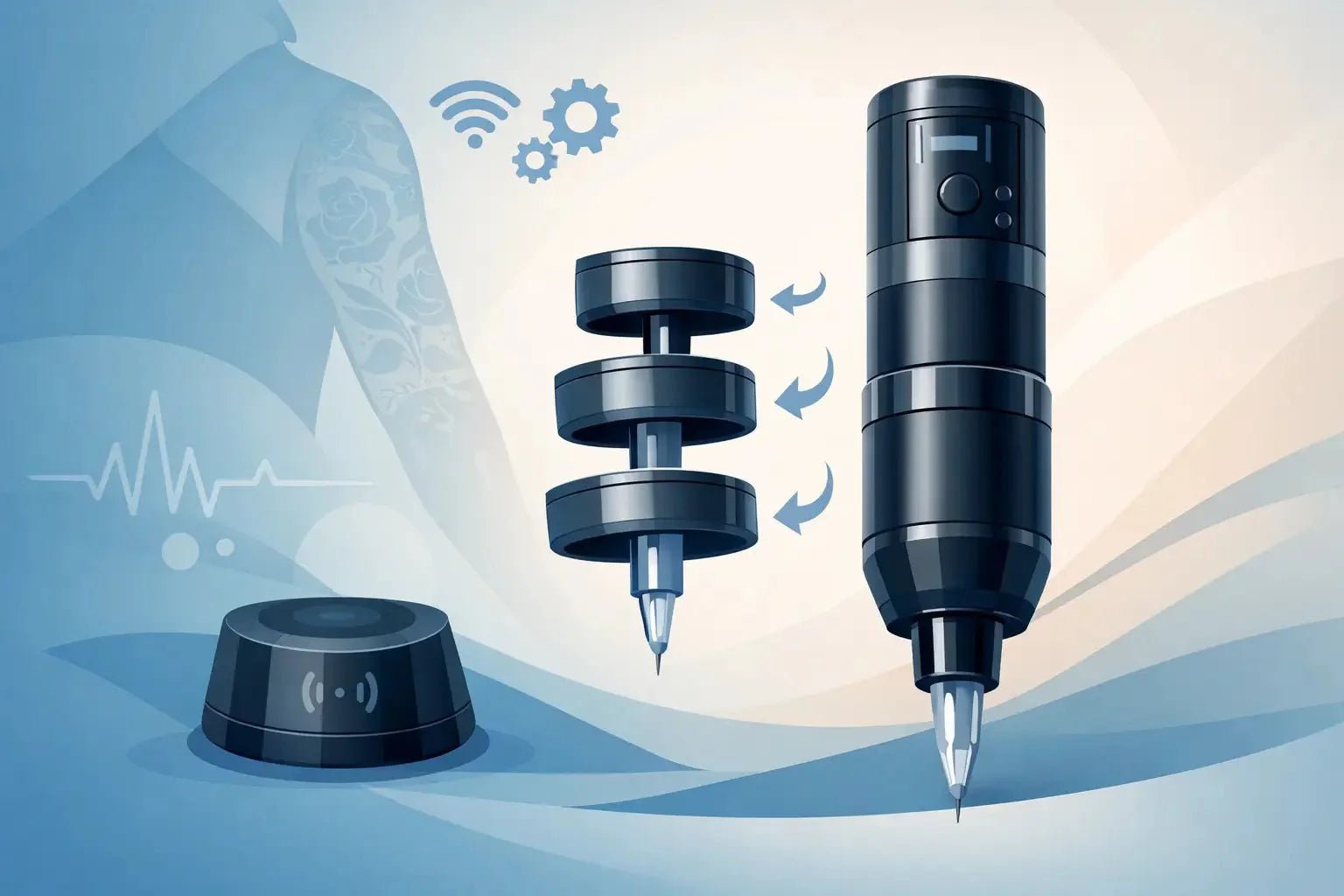
Look closely at the stroke range, but also at how the adjustment is built. Some machines use click-stop systems that make repeatable setup easier. Others rely on internal cams or interchangeable components. If you switch often between procedures, speed and clarity matter. You want to know exactly where you are set without second-guessing between clients.
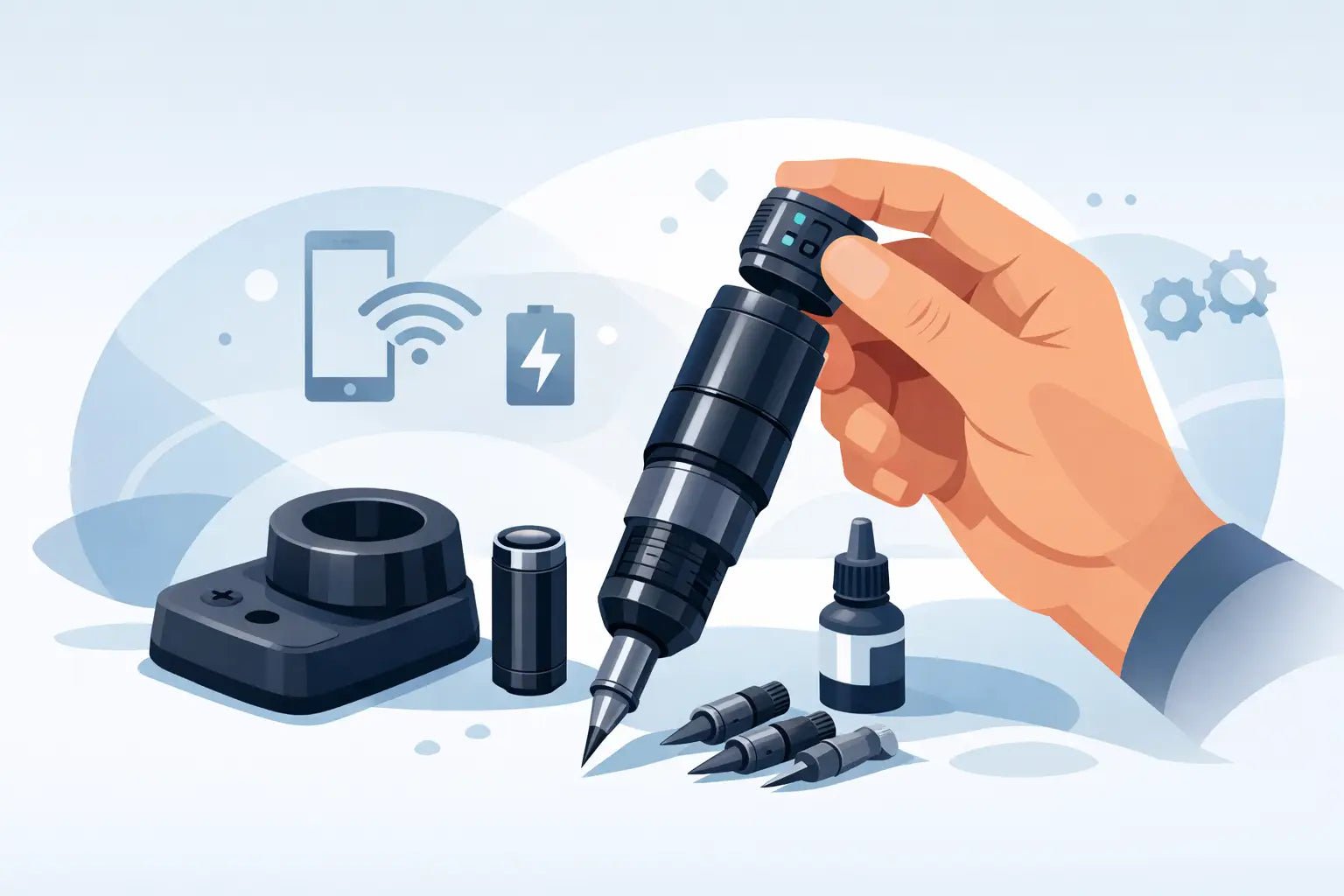
Battery performance deserves equal attention. Wireless convenience drops fast if the machine becomes back-heavy or loses power midway through a treatment. PMU artists usually benefit from a machine that stays balanced in the hand, even if that means slightly shorter battery life with swappable packs. A lighter setup can improve precision more than an oversized battery ever will.
Grip diameter is another factor artists underestimate. A stroke-adjustable machine may sound versatile, but if the grip feels bulky during detailed passes, hand fatigue will show up before lunch. For artists doing high-volume brow days or back-to-back lip appointments, ergonomics are not a luxury spec.
Cartridge compatibility also matters. Most artists want a machine that works smoothly with universal cartridges and does not become temperamental with different needle configurations. If your machine behaves well with one cartridge brand and inconsistently with another, that limits workflow more than the adjustable stroke helps.
Matching stroke to common PMU services
There is no universal setting chart because skin type, hand speed, depth, and cartridge choice all influence results. Still, the logic behind stroke selection is consistent.
For brows, many artists prefer a setup that supports soft implantation and controlled layering. Whether you are creating airy shading or more structured saturation, the machine should feel precise rather than aggressive. On mature, thin, or sensitive skin, that balance becomes even more important.
For lips, artists often want enough power to implant efficiently without turning the procedure into a trauma-heavy pass. Lip tissue can vary dramatically from client to client, so adjustable stroke helps when one lip set wants a gentler approach and the next needs more assertive performance.
For eyeliner, too much hit can make an already delicate service feel less forgiving. Stability, low vibration, and accurate needle response matter more than speed alone. Many artists value a machine that can be tuned for subtle, predictable movement here.
For scalp micropigmentation or paramedical-style detail work, the preferred setup may shift again depending on density goals and skin texture. This is why multi-service artists are increasingly drawn to machines that can adapt instead of forcing technique adjustments around a fixed mechanical limitation.
The trade-offs artists should be honest about
Wireless tattoo machines with adjustable stroke solve real workflow issues, but they are not automatically better for everyone. More features usually mean a higher price point, and not every artist needs that range.
If you are early in your PMU career and still building consistency, too many variables can work against you. A machine with multiple stroke options, voltage adjustments, and interchangeable battery configurations can tempt artists to blame settings for technique issues. Sometimes a simpler machine is the better teacher.
There is also the question of weight. Even well-designed wireless machines tend to weigh more than compact wired setups. Some artists love the freedom and never go back. Others still prefer the lighter hand feel of a corded machine for ultra-detailed work. It depends on your grip, your service menu, and how long your appointments run.
Maintenance and reliability should stay in the conversation too. Adjustable mechanisms add complexity. If the machine is not manufactured well, those extra moving parts can become a weak point over time. For professionals, consistency beats novelty every time.
Who benefits most from this category
Artists offering multiple services usually get the most value from adjustable stroke. If you move between brows, lips, liner, and occasional scalp work, one adaptable machine can streamline your setup and reduce the need for separate devices.
Trainers and studio owners can also benefit because adjustable stroke machines are easier to demonstrate across treatment types. Instead of explaining why one machine is for brows and another is for lips, you can show students or team members how mechanical changes affect skin response and implantation.
Established artists upgrading their kit often appreciate the efficiency. Fewer machines on the tray, fewer power supply considerations, and more freedom to tailor the feel of the machine to the client can make the workday cleaner and more consistent.
For artists sourcing professional tools through a supplier built by permanent makeup artists for artists, this category makes sense because it reflects how PMU actually works in treatment rooms - not in generic tattoo marketing language, but in service-specific performance.
What to look for before you buy
A strong machine in this category should feel consistent across stroke settings, maintain stable power delivery, and stay comfortable through a full appointment block. It should pair well with professional cartridges, offer dependable battery performance, and make stroke adjustment simple enough to use in real practice, not just on paper. Mast Tour and Mast Magi with Power Supply.
Brand reputation matters here. So does support, replacement access, and whether the machine is already trusted by PMU artists working in brows, lips, and liner every day. When you are investing in a machine upgrade, the best choice is rarely the one with the longest feature list. It is the one that helps you work cleaner, more confidently, and with fewer compromises between services.
If your current setup feels like a workaround from one appointment to the next, adjustable stroke is worth a serious look. The right machine does not replace technique, but it should stop fighting it.