Wireless vs Corded PMU Machines
A machine can feel perfect during a five-minute demo and completely different by the third brow set of the day. That is why the wireless vs corded PMU machines conversation matters so much in real studio work. The right choice affects hand fatigue, setup speed, movement around the bed, and how confidently you can work across brows, lips, liner, and correction appointments.
For most artists, this is not really a question of which format is better overall. It is a question of which format fits your treatment style, client flow, and technical preferences. Both have a place in a professional setup, and the smartest buying decision usually comes from understanding the trade-offs instead of chasing whatever feels newest.
Wireless vs corded PMU machines: what actually changes?
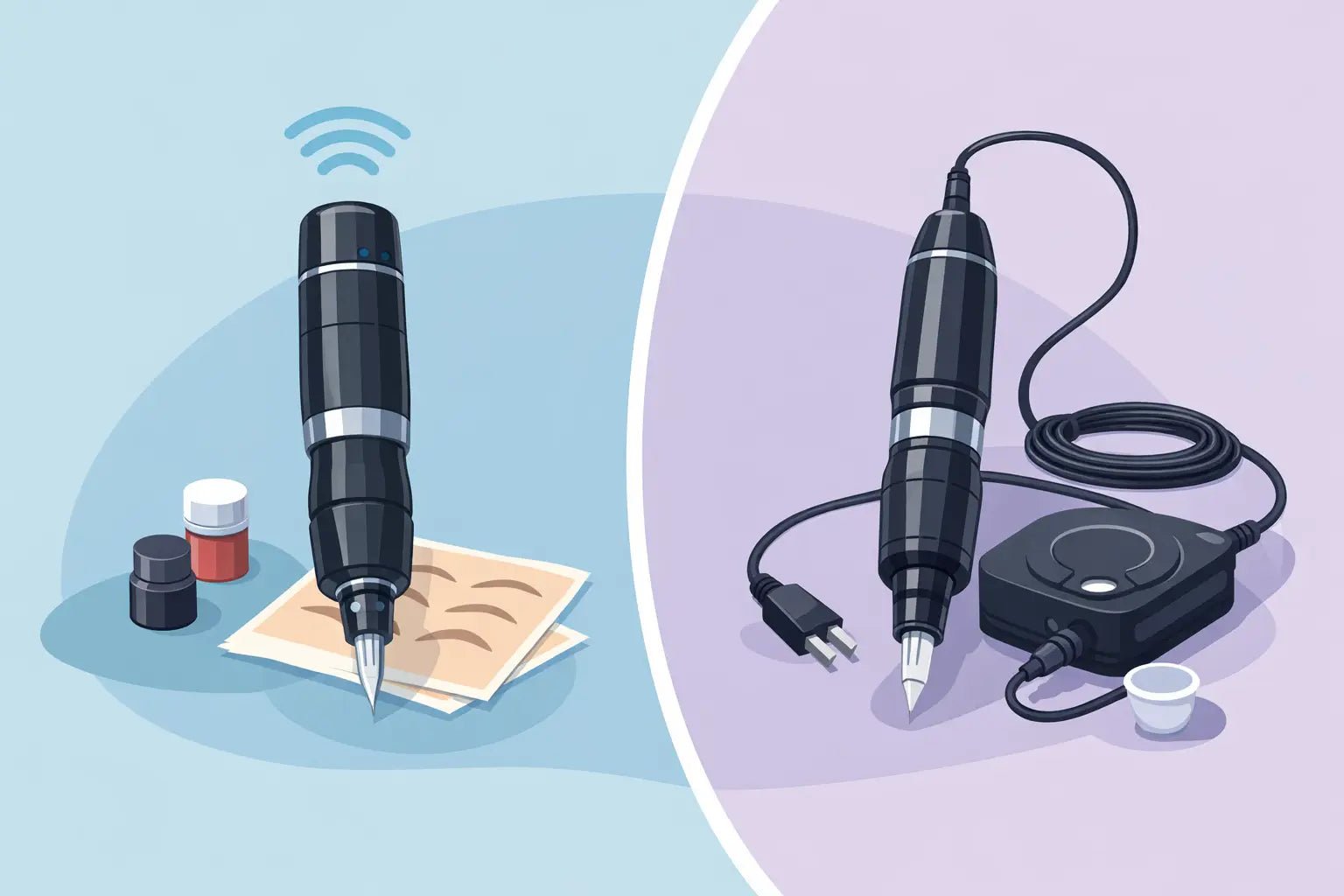
At the cartridge level, your precision still comes down to needle choice, hand control, skin knowledge, and stretch. But machine format changes the way that precision feels in your hand. Wireless machines build the battery into the unit or attach it directly to the machine body, while corded machines connect through an RCA or similar power setup to a separate power supply.
That difference changes weight distribution immediately. A wireless PMU machine often gives you more freedom of movement and a cleaner station footprint, but it can also feel heavier toward the back of the handpiece. A corded machine may feel lighter in hand, depending on the model, but you trade that for cable management and less mobility around the treatment area.
Neither setup automatically produces better healed results. Results come from technique and consistency. What the machine format influences is how easy it is for you to stay consistent for hours at a time.
Why wireless PMU machines appeal to so many artists
Wireless machines have obvious advantages in a busy PMU studio. Setup is fast, your workspace looks cleaner, and there is no cable pulling across your barrier film or getting caught as you reposition. For mobile artists, trainers, and technicians working conventions or pop-up education events, portability is a major selling point.
They also suit artists who like to rotate their body position often during a service. If you move from front-facing brow work to side angles around the bed, a wireless machine can feel less restrictive. That freedom is especially noticeable during lip blush or eyeliner, where body mechanics matter just as much as machine control.
There is also a practical retail reason wireless machines stay in demand. Many artists building a streamlined kit want fewer components to manage. One machine, charged batteries, cartridges, and barriers can feel simpler than maintaining a full corded setup with power supply, clip cord or RCA cable, and extra desktop hardware.
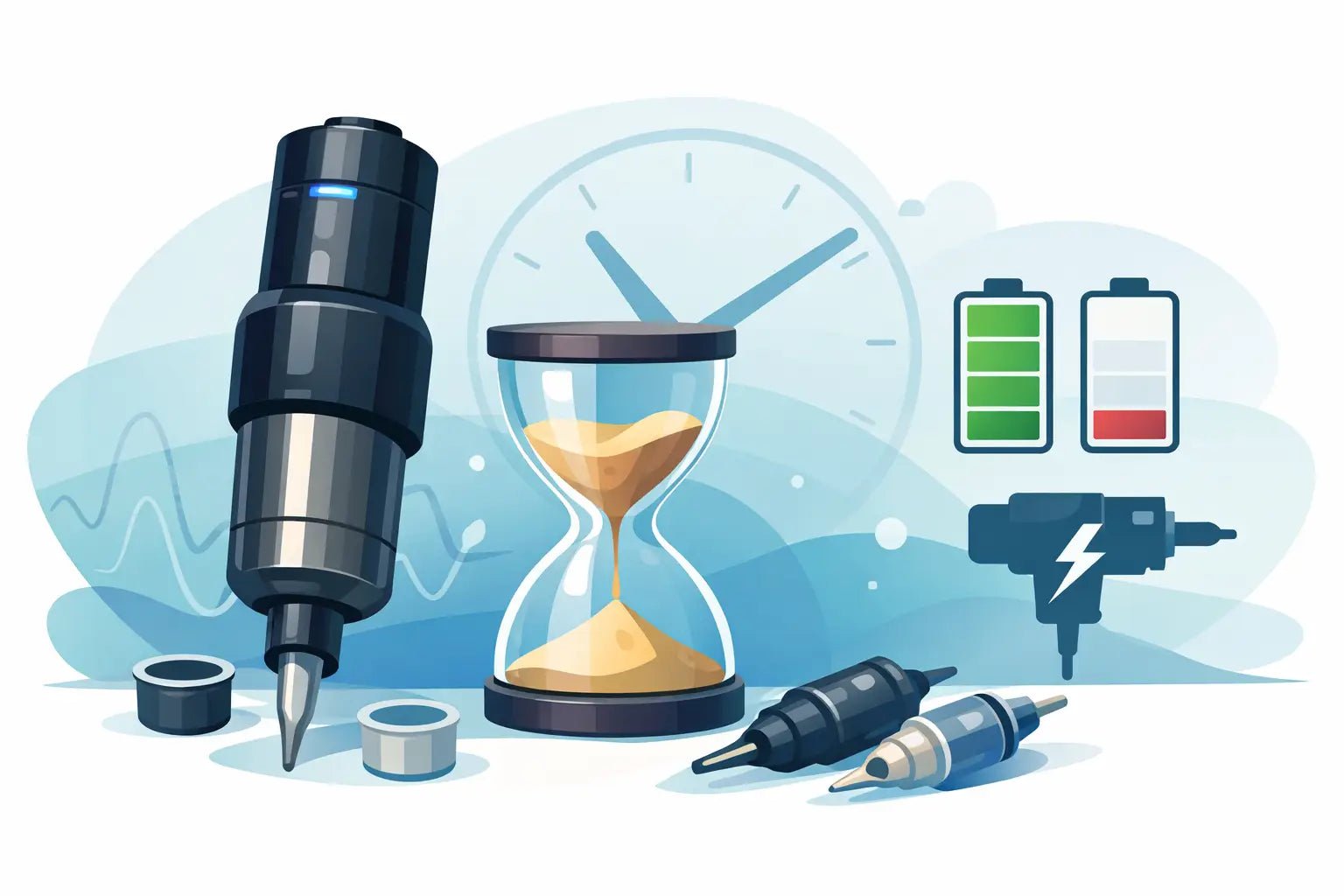
Still, wireless convenience is not the whole story. Battery life, charging routines, and machine balance matter more than the marketing language. A poorly balanced wireless machine can create wrist fatigue faster than a well-designed corded option. If your appointment days are long or your hand is sensitive to back-weight, that extra convenience may come at a cost.
Where wireless tends to work best
Wireless machines tend to shine for artists who prioritize mobility, minimal setup, and flexibility between stations. They are often a strong fit for brow artists with shorter services, trainers demonstrating technique, and PMU professionals who travel with their setup. They can also be ideal as a secondary machine in the studio, even if your primary workhorse is corded.
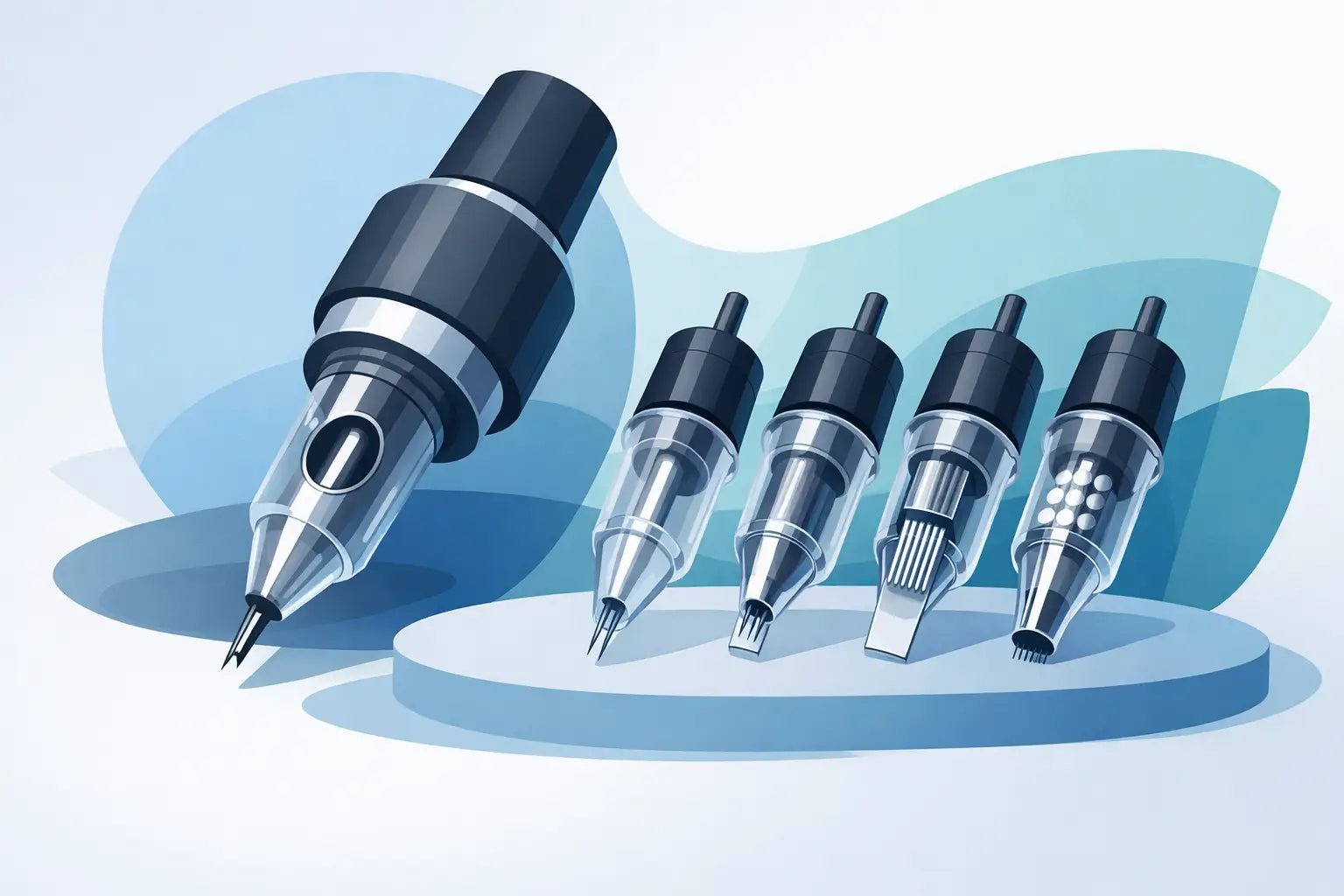
The key is making sure the machine still delivers the stroke, voltage stability, and cartridge compatibility you need. Convenience is valuable, but not if it changes your saturation pattern or makes your hand less stable.
Where corded PMU machines still win
Corded machines remain a favorite among many experienced PMU artists for one simple reason: consistency. With a quality power supply and a machine you know well, corded setups often provide a reliable, uninterrupted feel that artists trust for detailed procedural work.
That matters when you are working slowly through mature skin, doing precision eyeliner, or layering color in a longer lip appointment. You do not have to think about battery percentage or whether output may shift as a charge drops. For artists who value a stable routine and repeatable performance, corded still makes a very strong case.
Corded setups can also offer a lighter handpiece feel. If you prefer a pen-style machine with less rear weight, a corded option may help reduce fatigue during back-to-back clients. Some artists simply find that a cable is easier to ignore than a heavier machine body.
Another advantage is long-session readiness. In a high-volume studio, a corded machine can be the dependable daily driver that stays ready without recharging cycles or battery swaps. For trainers and studio owners, this can be especially useful when multiple artists are sharing equipment protocols or teaching with a standardized setup.
The downside of corded machines
The trade-off is freedom of movement. Cables can snag, drag, or subtly affect how the machine rests in your hand. Your station setup also becomes more involved, and barrier protection needs to be managed carefully across the cable and power components. None of this is difficult for an experienced artist, but it is less streamlined.
For newer artists, that extra setup can feel like one more thing to think about during treatment. For seasoned artists, it is usually just part of the workflow.
How to choose based on treatment style
If your work is heavily focused on powder brows, ombré brows, or machine hairstrokes, your ideal machine format often comes down to comfort over time. Artists who make many passes and work with deliberate, controlled movements may prefer the stable familiarity of corded machines. Others feel more fluid and less restricted with wireless, especially if they work quickly and value repositioning ease.
For lip blush, machine balance becomes even more important. Lips are long appointments, and poor ergonomics show up fast in your wrist and fingers. Some artists love wireless for the freedom to rotate around the client without fighting a cord. Others want the lighter feel of corded so they can maintain a softer hand through the full service.
For eyeliner, control usually takes priority over convenience. If your corded setup gives you the cleanest, most predictable feel, that may outweigh the appeal of wireless. But if your wireless machine is well balanced and you know it intimately, it can perform just as well.
This is where honest self-assessment matters. Think less about trend and more about how you actually work. Do you anchor heavily with your pinky? Do you rotate your grip often? Do you work long days? Do you travel? Those answers usually point you toward the right format faster than spec sheets do.
Wireless vs corded PMU machines for newer artists
New artists often assume wireless is automatically easier because the setup looks simpler. Sometimes that is true. A cleaner station and fewer components can reduce overwhelm in the early stages. But ease of setup is not the same as ease of control.
If a wireless machine feels bulky in your hand, it may slow down your learning curve. A corded machine with a balanced pen body might actually help you develop cleaner hand mechanics, even if the station setup is slightly more involved. On the other hand, if a corded cable makes you tense and interrupts your positioning, wireless may help you work more naturally.
This is why test feel matters more than assumptions. Grip diameter, body weight, vibration, and machine balance will affect your confidence much more than whether the power source is internal or external.
What matters more than the format
Artists can overfocus on cordless versus corded and miss the bigger buying factors. The format matters, but it is only one piece of the machine decision. Stroke profile, give, vibration, cartridge fit, compatibility with your preferred needle groupings, and how the machine responds on different skin types are just as important.
Build quality matters too. A well-made machine from a trusted professional brand will usually outperform a poorly built machine regardless of whether it is wireless or corded. The same goes for support products. Your cartridges, pigments, barriers, and overall station setup all influence performance in a real appointment.
That is why many working artists eventually keep both. A corded machine may be the reliable studio staple, while a wireless unit handles travel days, backup use, or treatments where mobility is a bigger advantage. For a supplier built by permanent makeup artists for artists, that kind of practical kit-building is the real conversation.
The best machine is the one that keeps your hand steady, your setup efficient, and your results consistent from the first client to the last. If you choose with your workflow in mind instead of just the trend cycle, your machine will start working for you instead of asking you to adapt around it.