How Long Do Wireless Tattoo Machines Last?
A wireless machine that starts dropping power halfway through a brow set is more than annoying - it disrupts your timing, your stretch, and your confidence behind the handpiece. That is usually the real question behind how long do wireless tattoo machines last. Artists are not asking for a theoretical number. They want to know how many months or years of reliable PMU work they can expect before performance starts slipping.
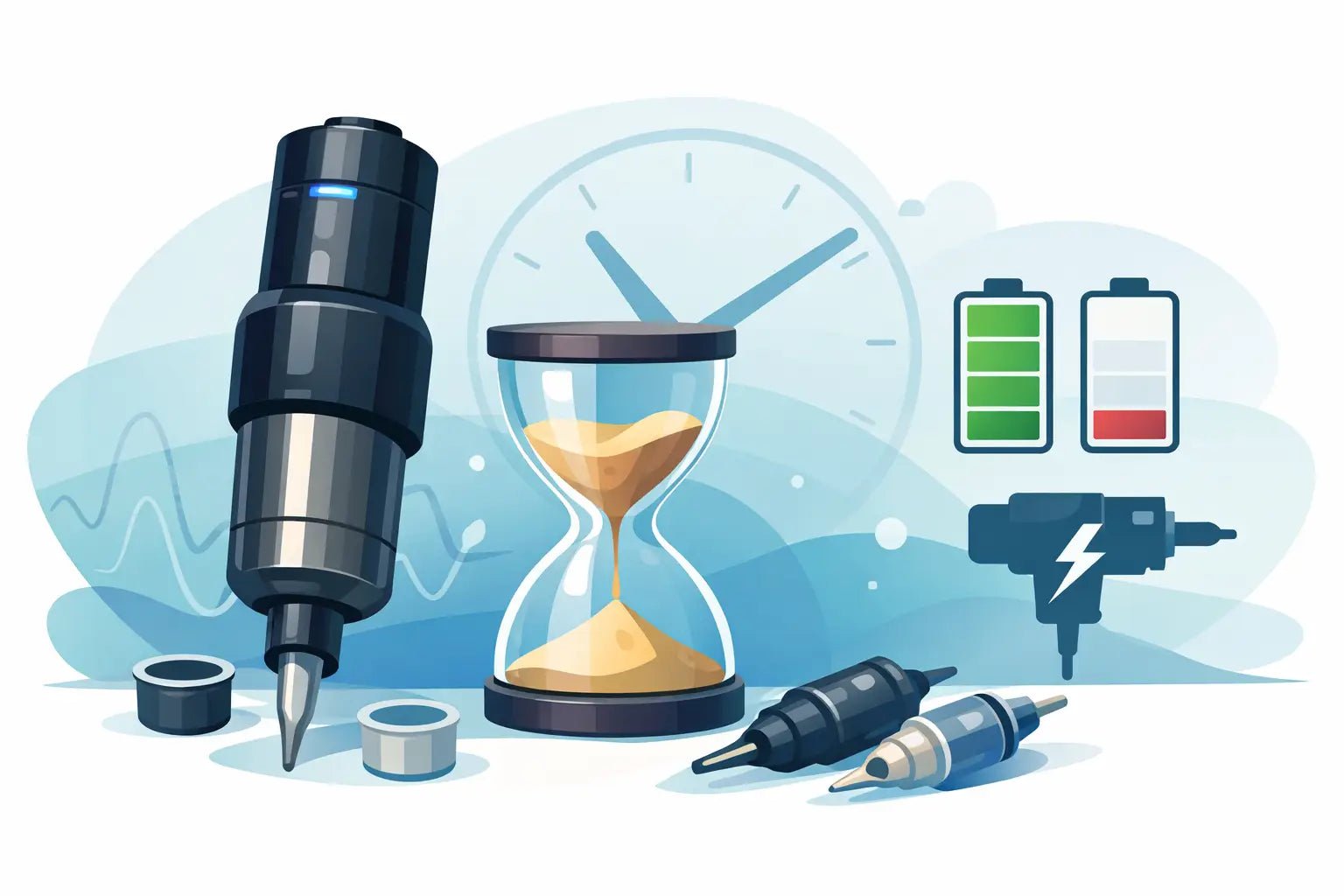
For most professional-grade wireless tattoo machines, the realistic answer is around 2 to 5 years of dependable service, with battery performance often declining before the motor housing itself gives out. Some machines stay in rotation longer when they are well maintained, used within their intended voltage range, and paired with quality cartridges. Others wear out faster because of heavy booking volume, poor cleaning habits, frequent drops, or battery abuse.
That range matters because not every part of a wireless setup ages at the same speed. The machine body, internal motor, connection points, and battery pack all have different lifespans. If you are a PMU artist working brows, lips, eyeliner, or scalp sessions every week, you need to think about durability as a working-life question, not just a warranty question.
How long do wireless tattoo machines last in real studio use?
In day-to-day PMU use, a well-made wireless machine can often stay professionally usable for several years. For artists with moderate booking volume, 3 years is a common benchmark for solid performance before noticeable wear becomes part of the equation. For high-volume artists or trainers using a machine across client work, demos, and student practice, that timeline can shorten.
The reason is simple. Wireless machines combine a motorized handpiece with a battery system, and both are under regular stress. The motor is working through every pass, while the battery is cycling through repeated charging and discharging. Even if the handpiece still runs smoothly, the battery may hold less charge over time, take longer to recharge, or deliver less stable output.
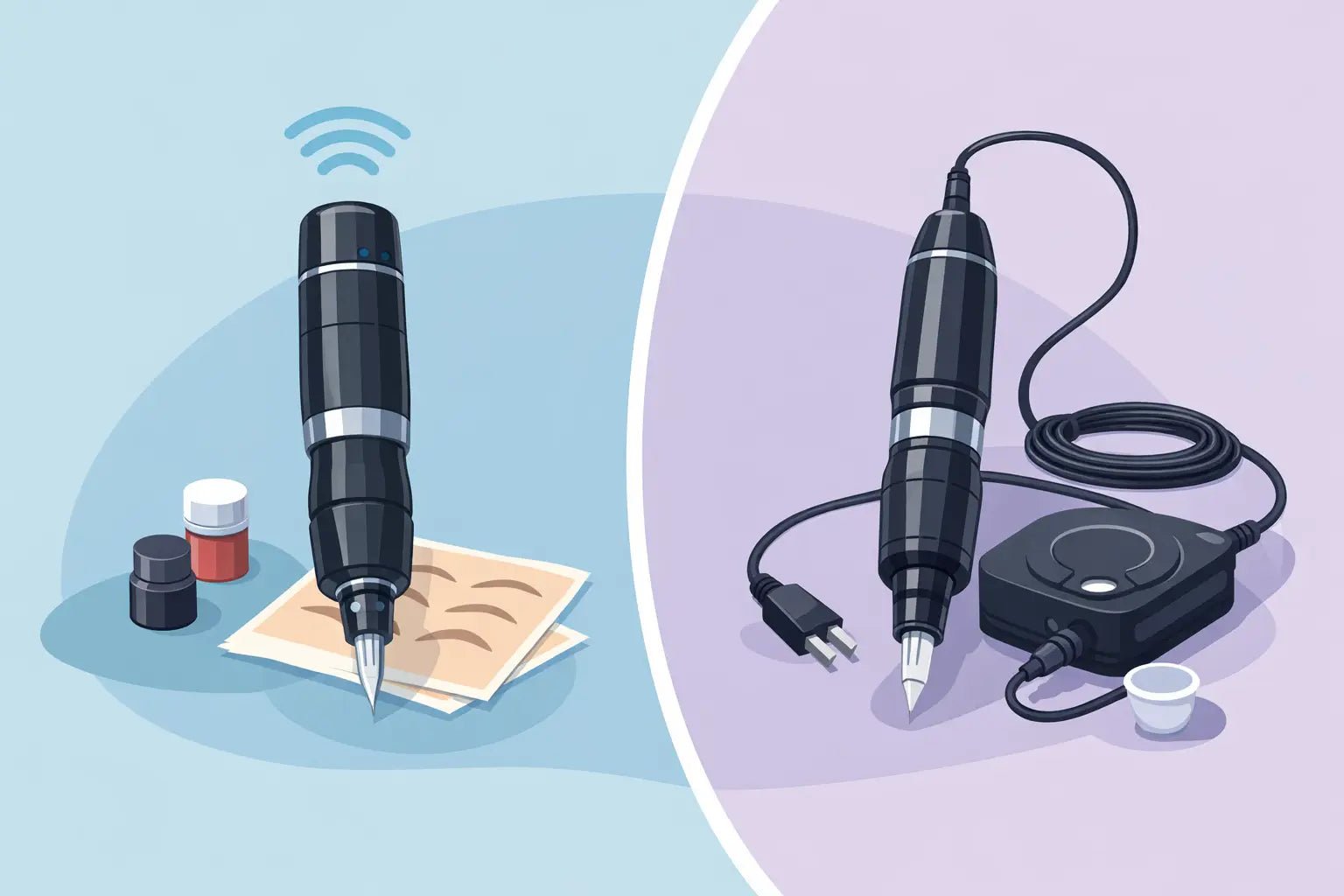
That is why many experienced artists treat the battery and the machine as related but separate lifespan issues. A premium wireless machine may still be worth keeping after years of use if the battery is replaceable or if the power unit can be swapped. If the battery is built in and starts failing, the entire setup can feel old much faster.
What affects how long wireless tattoo machines last?
Usage volume is the first major factor. A backup machine used once or twice a month will obviously age differently than a primary PMU machine used five days a week. If you are doing multiple brow appointments a day, plus occasional lip blush or liner work, you are putting meaningful cumulative wear on the motor and battery.
Build quality matters just as much. Professional machines from trusted brands are generally engineered for better balance, more consistent power delivery, and tighter manufacturing tolerances. That translates into less vibration, fewer connection issues, and more predictable wear patterns. Lower-end machines may look similar on paper, but internal components often break down sooner.
Your setup habits also matter more than many artists realize. Overcharging batteries, storing the machine with a depleted battery for long periods, exposing it to pigment or cleaning fluid intrusion, and dropping it onto a hard studio floor can all shorten its life. So can forcing mismatched cartridges that do not seat cleanly or create unnecessary drag.
Then there is treatment type. Brow work is often less demanding on a machine than procedures requiring longer continuous runtime or more needle resistance. Artists switching between soft powder brows, lip work, and eyeliner may notice that certain machines hold up better in one service category than another.
Battery life versus machine life
This is where a lot of buying decisions get clearer. When artists ask how long do wireless tattoo machines last, they are often describing battery fatigue, not total machine failure.
Most rechargeable batteries begin to lose peak performance after repeated charge cycles. In practical terms, that may show up as shorter run time, inconsistent voltage output, or a machine that feels weaker at the same settings you used six months ago. For many artists, the first sign is subtle. The machine still turns on, but it no longer feels as crisp or steady during detailed work.
A machine body may remain mechanically sound while the battery becomes the weak point. That is why replaceable battery packs are such a strong advantage for busy professionals. If the handpiece performs well and you can refresh the power source, you may extend the usable life of the full setup considerably.
Built-in battery models can still be excellent, especially for artists who prioritize compact design and fewer moving parts. But from a longevity standpoint, they can be less forgiving once the battery starts declining.
Signs your wireless machine is wearing out
The biggest red flag is inconsistent power. If your machine starts strong and then loses stability during a procedure, that is not something to ignore. In PMU, small fluctuations can affect saturation, trauma, and line consistency.
You may also notice increased vibration, unusual noise, heat buildup, or intermittent startup issues. Sometimes the machine needs to be turned on more than once before it responds. Other times, the battery percentage drops quickly or behaves unpredictably.
Cartridge fit can also tell you something. If a machine begins to feel loose at the cartridge connection point, or if there is more wobble than usual with cartridges that previously fit well, wear may be developing in the grip or drive area. That affects precision, which is exactly what cosmetic tattoo artists cannot afford to lose.
Aging does not always mean immediate replacement. But once performance issues start affecting treatment consistency, client comfort, or your confidence in the machine, it is time to stop treating it like a minor inconvenience.
How to make a wireless tattoo machine last longer
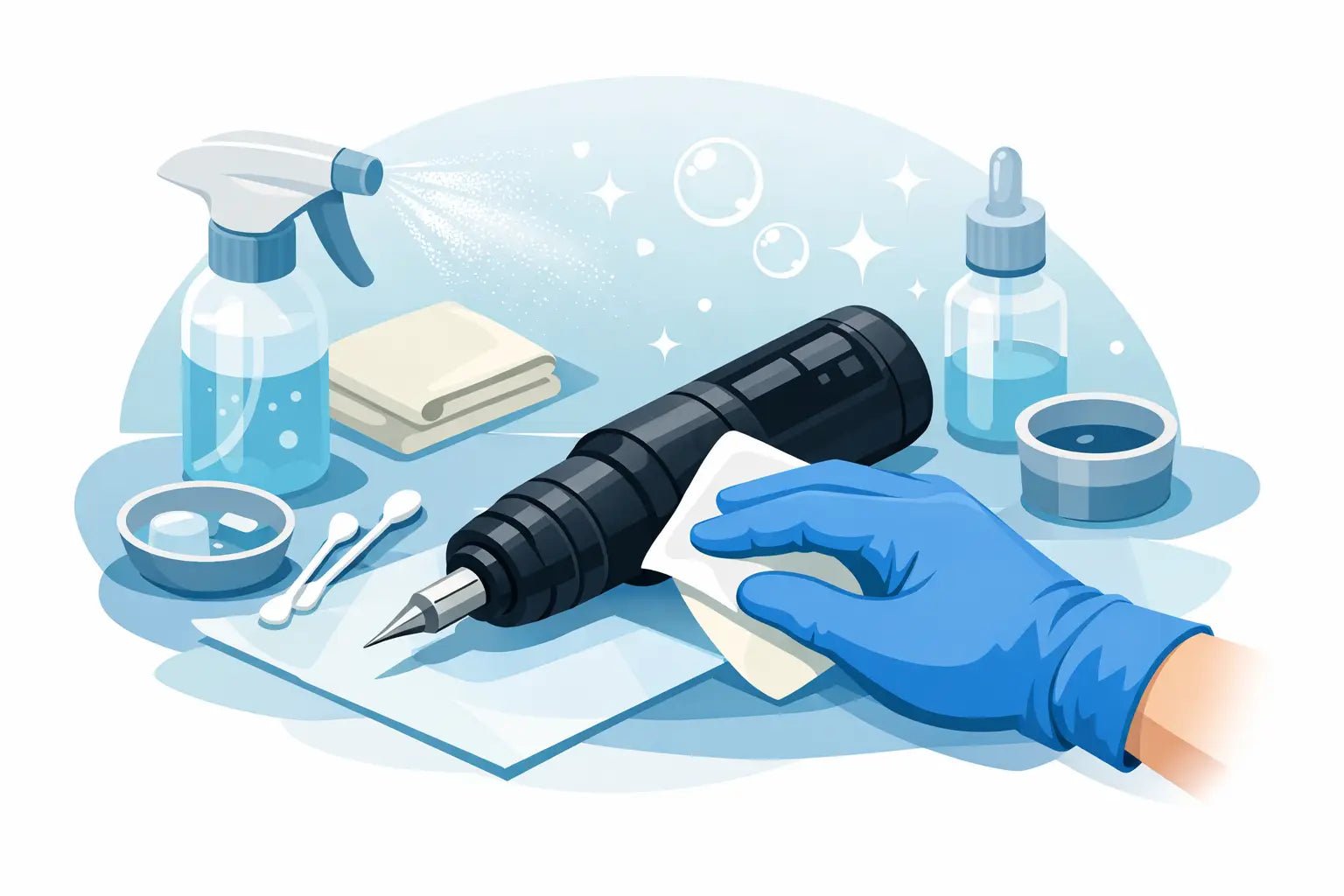
Routine care has a direct impact on machine lifespan. Barrier your device correctly during procedures, clean according to manufacturer guidance, and be careful about fluid exposure around seams, buttons, and charging ports. A machine can look clean on the outside while internal contamination slowly creates problems.
Battery care is just as important. Avoid letting the battery fully drain every time, and avoid leaving it on the charger for days. Store it in a stable, dry environment and pay attention to heat. Excessive heat is hard on battery health and internal electronics.
It also helps to rotate machines if you work at a high volume. Many established artists keep a primary and backup setup, not just for emergencies but to spread wear more evenly across their equipment. That is a smart studio move, especially if you are booked heavily or teaching.
Finally, use quality cartridges that are compatible with your machine. Poor cartridge fit increases mechanical stress, affects needle stability, and can make a good machine feel worse than it is. Your machine should not have to work harder because of inconsistent disposable components.
When should PMU artists replace instead of repair?
If the issue is isolated to battery performance and the power pack can be replaced, replacement often makes financial sense. The same is true for minor serviceable parts on premium machines. But if your machine has repeated power issues, motor inconsistency, poor cartridge stability, and visible wear from daily use, repair may only delay the obvious.
For PMU artists, reliability is the real metric. You are working on the face. If your equipment creates doubt during a procedure, that cost is bigger than the price of a new machine. Lost efficiency, compromised healed results, and added client stress are expensive in ways that do not show up on the invoice.
This is also where buying from an industry-native supplier matters. A curated professional assortment makes it easier to choose machines designed for actual artist workloads, with compatible cartridges and accessories that support performance over time. Inkbox Artistry is built by permanent makeup artists for artists, and that perspective matters when you are investing in equipment that needs to hold up in real treatment rooms.
A better question than lifespan
Instead of asking only how long a wireless machine should last, ask how long it will stay reliable at your booking volume, service mix, and maintenance standard. Those are not the same thing. A machine can technically still run long after it stops meeting professional expectations.
For most serious PMU artists, the goal is not to squeeze every possible month out of a tool. It is to keep a machine in rotation while it still delivers stable power, clean handling, and consistent results. When it stops doing that, replacement is not wasteful. It is part of protecting your work.
The best machines earn their value over time, but only if you treat them like precision equipment and not just another rechargeable device on your tray.