Machine Stroke Versus Voltage for PMU Artists
A 3.5 mm machine at 6 volts can feel completely different from a 3.5 mm machine at the same voltage in another artist’s hand. That is why machine stroke versus voltage is not a simple choice between “fast” and “slow.” For PMU artists, the real goal is controlled needle behavior that suits the treatment, cartridge grouping, pigment, client skin, and your own hand speed.
Voltage is the setting you adjust during a procedure. Stroke is part of the machine’s mechanical design. They influence one another in practice, but they do not mean the same thing. Understanding where each one has its place can prevent overworking, improve pigment placement, and help you choose a machine that supports the services you actually perform.
Machine Stroke Versus Voltage: The Core Difference
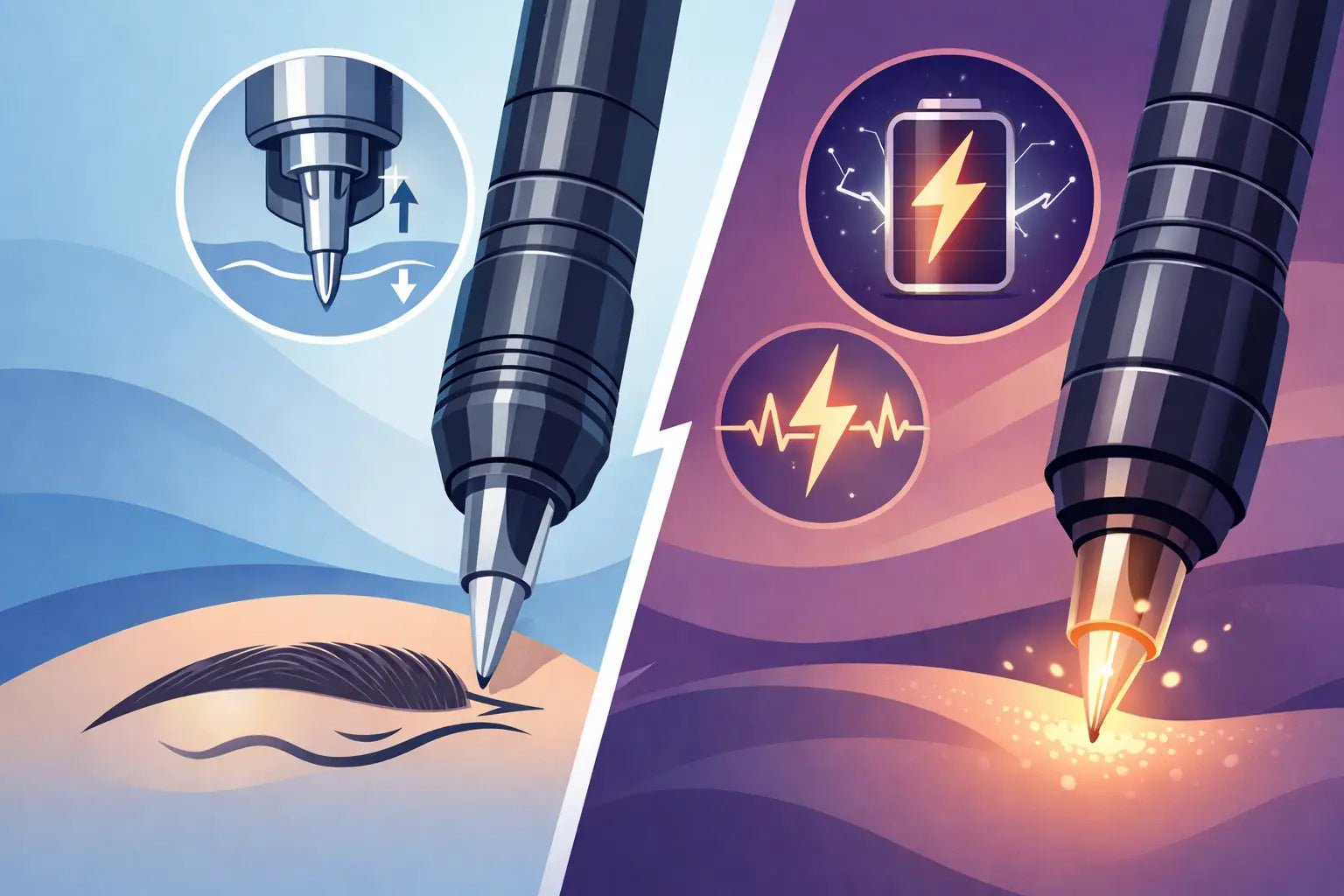
Machine stroke refers to the distance the needle travels up and down in each cycle. It is usually measured in millimeters. A shorter stroke moves the needle through a smaller travel distance, while a longer stroke produces a more pronounced, direct hit.
Voltage controls the motor’s operating speed and power delivery. In general, increasing voltage makes the needle cycle faster. Lowering it slows the cycle down. However, voltage is not a universal performance measurement. A 6-volt setting on one wireless PMU machine may not equal the same speed, torque, or skin feel on another model.
Think of stroke as the character of the needle hit and voltage as the pace of that hit. The two settings must work together, but neither can replace sound technique. A long-stroke machine run too quickly can become overly aggressive for delicate facial skin. A low-voltage setting on a machine with insufficient power can create inconsistent implantation if it cannot maintain its rhythm under resistance.
Why machine design changes the equation
Motor type, cam design, battery output, cartridge membrane tension, and machine weight all affect how a machine performs. This is why copying another artist’s voltage setting rarely delivers identical results. Their machine, cartridge, pigment viscosity, hand pressure, and movement speed may all be different.
Use recommended manufacturer ranges as a starting point, then test your setup on practice skin before bringing it into a client appointment. Your working voltage should feel stable, not hesitant or forced. The needle should be able to implant pigment with a light, deliberate hand rather than requiring you to press harder or repeatedly pass over the same area.
How Stroke Length Affects PMU Treatments
Stroke length influences how the needle meets the skin, how much feedback you feel, and how forgiving the machine may be during different techniques. There is no one best stroke for every artist or procedure. A versatile setup is useful, but treatment-specific performance matters more than chasing a number.
Short stroke machines
Shorter stroke options, commonly around 2.5 mm to 3.0 mm, tend to offer a softer needle impact. Many artists prefer this feel for cosmetic tattoo work that calls for gentle layering, controlled shading, and refined detail. They can be especially appealing for powder brows, pixelated effects, lip blush, and artists with a naturally light hand.
The trade-off is that a shorter stroke may require more precise control of hand speed and machine speed to achieve consistent implantation. If voltage is too low for the cartridge and skin resistance, the needle can feel weak or irregular. Turning voltage up may restore movement, but it can also make your technique feel rushed if your hand speed does not match.
Medium stroke machines
A medium stroke, often around 3.2 mm to 3.5 mm, is a popular all-around range for permanent makeup artists who offer multiple services. It generally provides a balanced feel: enough drive for dependable pigment placement, with more softness than a longer-stroke configuration.
For artists building a core machine kit, this range can suit powder brows, hairstrokes with the right cartridge and technique, eyeliner, and lips. It is still essential to adjust your voltage and movement to the area being treated. Brows, vermilion borders, and lash lines do not respond the same way, even when you are using the same machine.
Longer stroke machines
Longer stroke machines, often 4.0 mm and above, produce a firmer, more direct needle action. They may appeal to artists who prefer strong feedback, use larger cartridge groupings, or work in techniques that benefit from more assertive implantation.
For delicate PMU procedures, the trade-off deserves careful consideration. A longer stroke can make it easier to create trauma if depth, pressure, or speed are not tightly controlled. It may be a better match for artists with an experienced, consistent hand than for someone who is still learning to read skin response. A more powerful feeling machine is not automatically a more precise machine.
Choosing Voltage Without Chasing a Universal Number
Many PMU artists work within a moderate voltage range, but the right number depends on the specific machine. Instead of asking, “What voltage should I use for lips?” ask a more useful question: “At what setting does this machine, with this cartridge and pigment, create a clean and controlled result on this client’s skin?”
Start at the lower end of your machine manufacturer’s recommended operating range. Watch and listen for signs that the machine is not keeping up: sluggish movement, skipped dots, uneven saturation, or a need to increase pressure. Raise voltage gradually, in small increments, until the needle movement feels consistent with your hand motion.
Higher voltage is not a shortcut to faster work. When the machine cycles too quickly for your hand speed, you may create overly dense passes, unnecessary trauma, or less refined pixelation. Conversely, a setting that is too low can lead to repeated passes because implantation is inconsistent. Both scenarios can compromise healing and color retention.
Your hand speed must match the machine. If you increase voltage, you generally need to move with more intention and pace. If you lower voltage for a softer technique, slow down enough to allow appropriate pigment placement without lingering or pressing into the skin.
Match Your Setup to the Service, Not Just the Trend
A machine setup that performs beautifully for soft powder brows may not be your preferred choice for a defined eyeliner treatment. Cartridge selection also matters. A small single needle, a curved magnum, and a larger round shader create different resistance and distribute pigment differently. Voltage may need adjustment every time you change configurations.
Pigment formulation can also influence your setup. Thicker pigments, different bottle agitation, and varying skin conditions may affect how readily color flows and implants. Before changing your voltage dramatically, confirm the basics: use a fresh, compatible cartridge; shake pigment thoroughly according to its instructions; and assess whether the skin is becoming sensitized from repeated passes.
For brows, aim for a setting that supports clear, even pixel placement without forcing saturation. For lips, the focus is often smooth, gentle layering across highly vascular tissue. For eyeliner, stability and restraint matter because the treatment area is compact and sensitive. The same numerical voltage can be appropriate in one zone and excessive in another.
A Practical Test Before Client Work
When you add a new wireless machine or switch cartridge brands, set aside time for a controlled test. Use practice skin and the cartridge configurations you use most often. Work at a low, middle, and higher setting within the manufacturer’s guidance, keeping your hand speed as consistent as possible.
Pay attention to the needle’s response rather than only the finished mark. Does the machine sound steady? Does the cartridge feel like it is dragging, bouncing, or punching? Can you create clean pixels and smooth transitions without changing pressure? These observations will tell you more than a voltage recommendation pulled from someone else’s treatment video.
Document your preferred ranges by service and cartridge type. A simple note in your treatment setup process can save time on busy studio days and help maintain consistency across your work. If you train students or work with a team, this also gives everyone a practical baseline while reinforcing that skin assessment always comes first.
The Better Question to Ask
Machine stroke versus voltage is ultimately a question of balance. Stroke determines how the machine delivers the needle hit. Voltage helps you regulate the speed of that delivery. Technique determines whether either setting becomes a clean, predictable result.
Choose professional equipment that gives you reliable output, pair it with quality cartridges and pigments, and build your settings around the way you work. The best setup is the one that lets you stay light-handed, observant, and fully in control from the first pass to the final wipe.