How to Choose the Best PMU Cartridges for Brows
A brow cartridge can be technically sharp and still be the wrong choice for the result you want. A fine single needle that creates elegant hairstrokes may feel too slow for a soft powder brow, while a larger grouping that builds pixels quickly can overwhelm a delicate front. The best PMU cartridges for brows are not one universal configuration. They are the cartridges that match your machine, hand speed, pigment behavior, skin condition, and chosen brow technique.
For working artists, cartridge selection is also a consistency decision. When the needle delivers pigment predictably, you can focus on pressure, stretch, saturation, and design instead of compensating for drag, wobble, or inconsistent flow. That matters across every appointment, whether you are creating subtle machine hairstrokes, a velvety ombre finish, or a combination brow.
Best PMU Cartridges for Brows Start With Technique
Start with the finished look, not the cartridge label. Brows are built with different types of marks, and each mark calls for a different needle behavior.
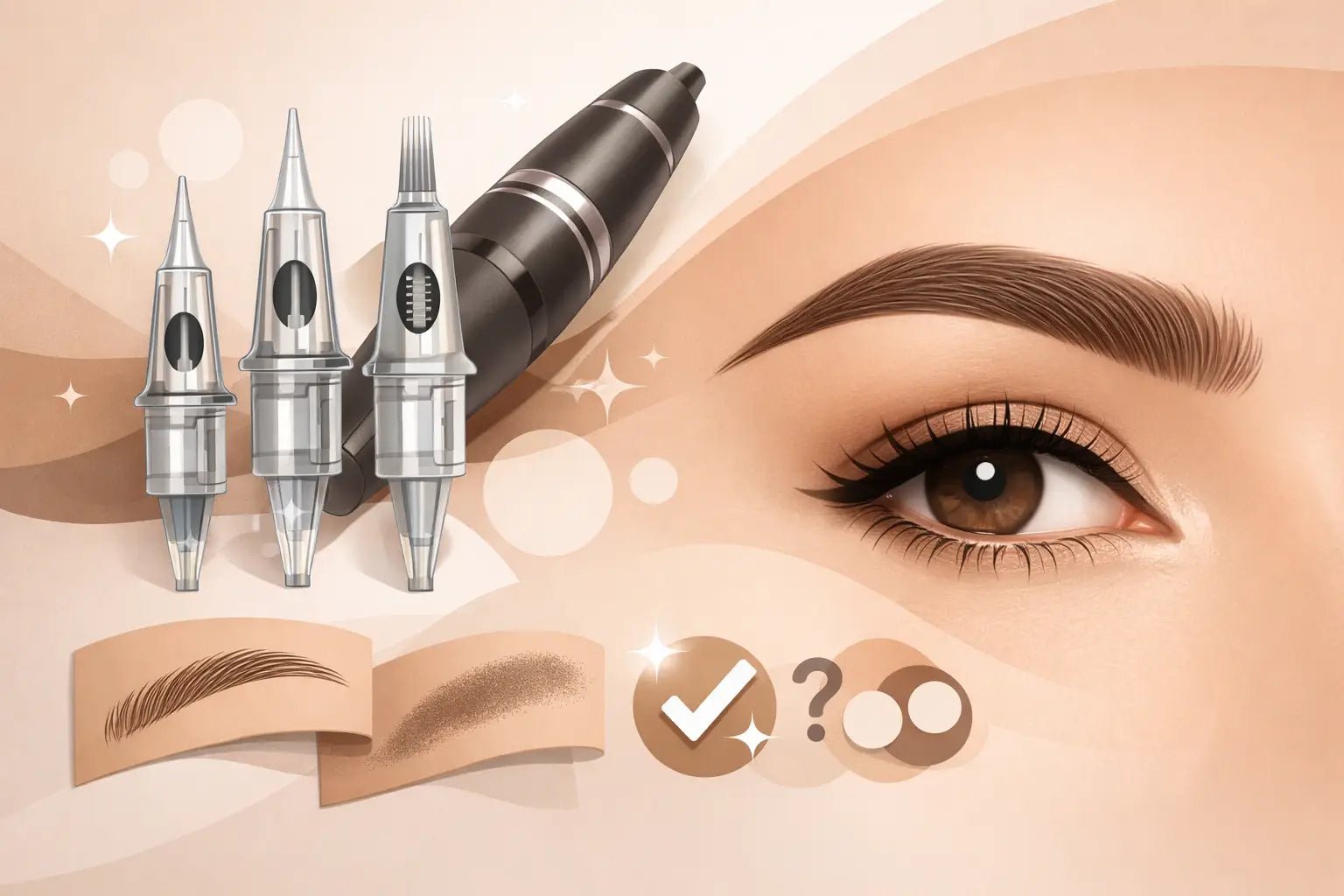
For machine hairstrokes, a single needle configuration is typically the starting point. A 1RL-style cartridge gives you the control to place narrow, intentional strokes with clean spacing. It is especially useful for artists working through sparse natural hair, building realistic fronts, or creating high-definition detail. Needle diameter and taper matter here: a finer diameter and longer taper can support delicate strokes, but they also demand disciplined pressure and skin stretch. They are not automatically the best choice for every client.
If the skin is thin, mature, highly textured, or easily irritated, chasing ultra-fine strokes can create unnecessary trauma or inconsistent healed results. A slightly more forgiving single configuration, paired with lower voltage and a controlled hand movement, may be the smarter professional choice. The goal is not the finest possible line. The goal is a healed stroke that remains clear, balanced, and appropriate for the client’s skin.
For powder and ombre brows, round shader configurations are often more efficient. A 3RL or 3RS-style grouping can create soft, controlled pixelation while still allowing detail around the outline and brow front. As you move into wider body work, a 5RS or a small curved magnum-style configuration may help distribute color more evenly and reduce the number of passes required. That efficiency can be valuable, but only if your technique stays light. A larger grouping covers more surface area and can deposit more pigment than intended when used with excessive pressure or a slow hand.
Combination brows usually require more than one cartridge. Many artists reserve a single needle for select hairstrokes and switch to a small round shader for the powder component. Using the right cartridge at each stage is often cleaner than trying to force one configuration to perform every task.
Choose Diameter and Taper for Skin, Not Trends
Needle diameter affects how the needle enters the skin, how much pigment it carries, and how the mark reads. Fine diameters are popular for detailed brow work because they can create refined pixels and crisp strokes. However, they are not a shortcut to better retention. On challenging skin, a very fine needle can require more passes to achieve adequate saturation, increasing the risk of overworking the area.
A medium diameter may offer more stability and pigment delivery for many powder brow applications. It can be a practical choice when working on normal to oily skin, when building a soft but visible tail, or when you need controlled saturation without repeatedly revisiting the same area. Your preferred pigment formula also plays a role. Thinner pigments, thicker formulas, and highly concentrated brow shades can all behave differently through the same needle configuration.
Taper deserves the same attention. Long-taper needles are often favored for detail because they create a more gradual point. Shorter tapers can feel more direct and may support faster saturation in certain techniques. Neither is objectively superior. A long taper may reward a light, precise hand, while a shorter taper may suit an artist who needs dependable color placement in denser shading work.
Test new configurations on practice skins before bringing them into a paid appointment. Pay attention to how the cartridge feels at your normal working voltage, how smoothly pigment flows, and whether your hand has to change speed or pressure to get the mark you expect.
Membrane Quality Is a Non-Negotiable
A professional cartridge must do more than hold a needle. It needs to support a hygienic, stable workflow. A reliable safety membrane helps limit backflow from the cartridge into the grip or machine. This is a core consideration for every disposable cartridge setup, particularly in busy studios where equipment protection and clean turnover matter.
Look for cartridges with secure needle stabilization and consistent construction. Needle wobble can make brows harder to control, especially with singles and small groupings where every mark is visible. A poorly made cartridge may also create drag, inconsistent pigment release, or an uneven feel from one unit to the next. Those small interruptions add up during a procedure that depends on rhythm and precision.
Compatibility matters just as much. Many professional PMU artists use universal-style cartridges, but universal does not mean every cartridge performs identically in every machine. Check that the cartridge seats securely in your preferred pen-style or wireless machine, that the needle protrusion is easy to adjust, and that the fit does not introduce vibration. If you are switching machine brands or adding a new wireless machine to your kit, test your go-to brow cartridges before scheduling them into a full day of clients.
Build a Practical Brow Cartridge Setup
You do not need every needle configuration on the market. A focused selection is easier to organize, easier to reorder, and more likely to produce repeatable results. For many brow artists, a practical core setup includes a fine single for detailed hairstrokes, a second single option with a different diameter or taper for varied skin types, a small round liner or shader for pixel work, and a slightly larger shader for efficient body saturation.
If your service menu centers on soft powder brows, prioritize small round shaders and the configurations you use most often for transitions, fronts, and tails. If you specialize in realistic machine hairstrokes, invest more time comparing single-needle options and documenting which skin types respond best to each. Trainers may also want a broader range on hand so students can understand the visible difference between groupings on practice material before working on live models.
Keep your selection consistent enough to learn it deeply. Changing cartridges every appointment because a new configuration looks exciting can make it difficult to identify what is actually affecting your healed results. Record the cartridge grouping, diameter, taper, machine settings, pigment, skin type, and technique for each procedure. Over time, that documentation becomes more useful than generic recommendations.
Signs It Is Time to Change Your Cartridge Choice
If you are constantly making extra passes to achieve even saturation, your current configuration may be too fine or too small for that portion of the brow. If a powder brow is healing denser than intended, consider whether your grouping is too large, your hand speed is too slow, or your pigment loading is too heavy. Cartridge choice is one variable, not the entire diagnosis.
For hairstrokes that blur, first assess depth, skin suitability, and stroke pattern before blaming the needle. A larger or more stable single may improve control, but no cartridge can make unsuitable skin behave like ideal dry skin. On oily, porous skin, a soft shaded approach may be more predictable and more flattering long term than dense machine strokes.
When you find a cartridge that performs well, do not assume it will remain the best option across every brow service. Keep your technique-led system flexible, source professional-grade supplies from a PMU-focused partner such as Inkbox Artistry, and let your healed work guide the next cartridge you place in your tray.