How to Store Cosmetic Pigments Between Clients
A pigment drawer can tell you a lot about a PMU setup. Bottles packed tightly, labels turned away, and dried residue around caps slow down every service and make shade selection harder than it needs to be. When you store cosmetic pigments with a deliberate system, your brow and lip workflow stays cleaner, faster, and easier to control.
Pigment storage is not just about keeping products off the counter. Light, heat, contamination, poor stock rotation, and rushed setup can all affect how reliably you work. For artists who depend on consistent healed results, a disciplined storage routine supports the same precision you bring to mapping, needle selection, and implantation.
Start With the Manufacturer’s Storage Directions
Every pigment line has its own formula, packaging, and handling instructions. The label and manufacturer directions should always lead your process, including the recommended temperature range, shelf life, lot information, and guidance for opened bottles. Do not assume that all brow and lip pigments should be treated the same simply because they look similar on the shelf.
Most professional cosmetic pigments are best kept upright in a clean, dry, room-temperature location away from direct sunlight and major temperature swings. A cabinet or covered drawer in the treatment area is usually more practical than an open display shelf near a window, sink, or heat source. Refrigeration is not automatically better. Unless the manufacturer specifically directs it, cold storage can create avoidable temperature changes and condensation when bottles return to room temperature.
Heat is a common issue in studios with warm lighting, sunny storefronts, or supply storage near equipment. Avoid leaving pigments in a parked car, on a windowsill, or in a shipping box that has been sitting in extreme temperatures. If a bottle appears damaged, leaking, unusually separated, or otherwise compromised, set it aside and follow the brand’s product guidance before using it on a client.
Build a Clean System to Store Cosmetic Pigments
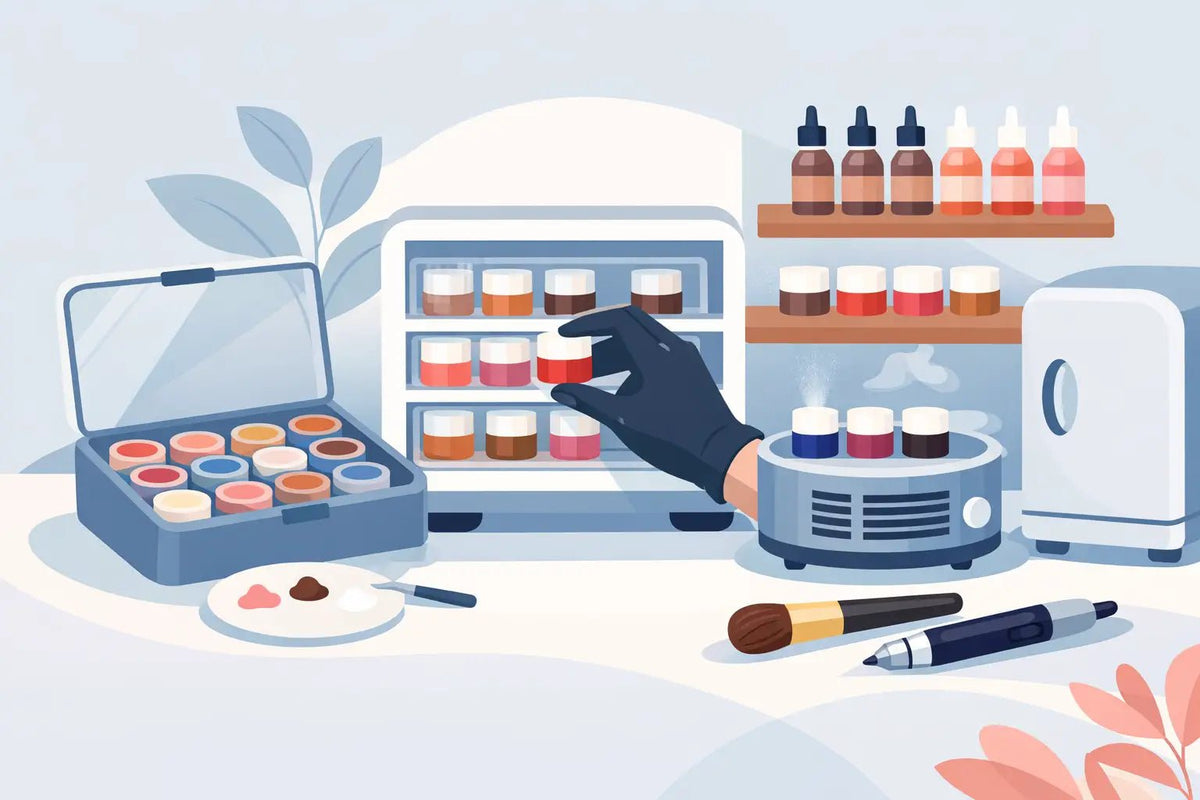
The strongest storage setup is one that works during a fully booked day, not just when the studio is quiet. Keep pigments organized by treatment category first: brows, lips, correctors, modifiers, and specialty shades. Within each group, arrange bottles so labels face forward and shades are easy to identify without moving every bottle in the drawer.
Clear acrylic organizers, divider trays, or shallow drawer inserts can prevent bottles from rolling and make inventory visible at a glance. Choose a storage solution that can be wiped down easily. A deep, crowded bin might hold more stock, but it often leads to lost caps, overlooked expiration dates, and unnecessary handling.
Keep your working inventory separate from backup stock. Your active shades should be close to the procedure setup, while unopened reserve bottles can stay in a clean storage cabinet. This distinction helps prevent overbuying and makes it easier to see when a key shade, such as a frequently used neutral brown or lip modifier, needs replenishing.
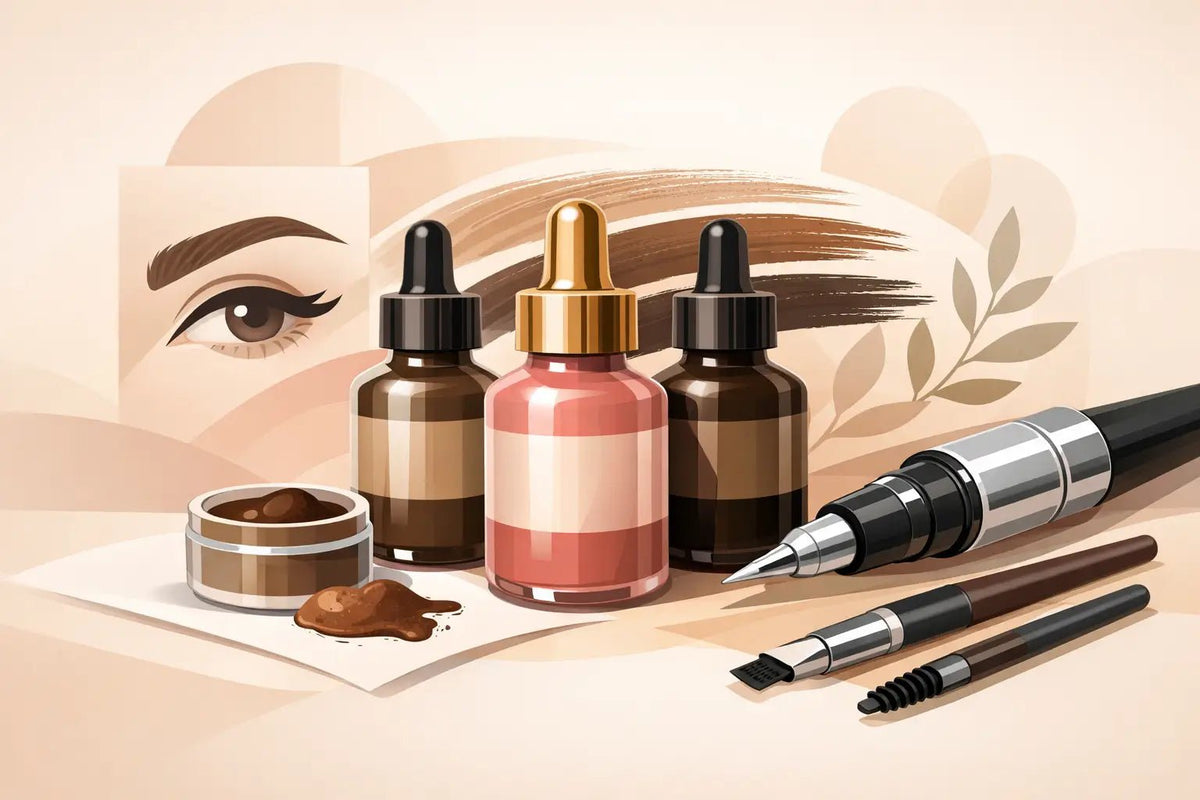
Before dispensing, inspect the bottle and shake it according to the pigment manufacturer’s directions. Pigments can settle, and uneven mixing can change the color concentration delivered into the ring cup. Wipe the exterior if needed, then dispense only what is required for that client into a single-use pigment cup. Never return leftover pigment from a cup to the original bottle.
Protect Bottles From Cross-Contamination
Pigment storage and pigment handling are connected. A beautifully organized cabinet does not compensate for poor dispensing habits at the workstation. Treat each bottle as a clean product source, not as an item that should come into contact with used gloves, procedure surfaces, or non-sterile tools.
Set up your pigments before beginning the procedure or use a clean dispensing method that avoids touching the nozzle with contaminated gloves. Keep bottle caps secure when not actively dispensing, and clean visible residue from the exterior before returning bottles to storage. Dried pigment around the cap can make bottles difficult to open, obscure labels, and leave your station looking less professional.
For studios with multiple artists, assign clear ownership and handling rules. A shared pigment collection can work well, but only if everyone follows the same process for dispensing, cleaning exteriors, reporting low stock, and quarantining questionable products. Consistency matters more than whether the studio uses one large central inventory or individual artist kits.
Local regulations, insurance requirements, and training protocols may also shape how your studio manages consumables. Build your system around the manufacturer’s instructions and the standards that apply to your practice. When in doubt, choose the handling method that reduces unnecessary contact and supports clear traceability.
Use Lot Numbers and Dates Like a Working Artist
Lot numbers and expiration dates are easy to ignore until you need them. In permanent makeup, they are part of professional documentation. Record the pigment brand, shade name, batch or lot number, and expiration date in the client record according to your studio protocol. If a client has a question later, you can identify exactly what was used.
A simple inventory log also prevents expensive waste. Review your pigment drawer monthly and use a first-expire, first-out approach. That means the product with the nearest appropriate expiration date is placed where it will be used first, provided its condition and manufacturer instructions remain suitable for use. Newly received stock belongs behind existing stock, not in front of it.
For opened products, follow the brand’s stated period-after-opening guidance if supplied. Some artists add a small date-opened label to the bottle or place a corresponding note in their inventory system. Keep those labels neat and readable so they do not cover the original shade, lot, or expiration information.
This process is especially useful when you carry multiple lines. A studio may prefer Perma Blend for specific brow work, Brow Daddy shades for a particular client profile, or a dedicated lip range for warm and cool corrections. Category depth is valuable only when your inventory is easy to track and every bottle can be identified quickly.
Plan for Travel, Training, and Pop-Up Work
Mobile appointments, training days, and convention travel create more risk for pigment storage because bottles are exposed to movement and changing temperatures. Pack pigments upright in a hard-sided, wipeable case with fitted compartments. Avoid tossing loose bottles into a machine bag with cords, cartridges, and metal tools.
Bring only the shades and modifiers needed for the scheduled work. A compact, edited travel kit is easier to protect, easier to inventory, and less likely to leave high-value pigments sitting in an uncontrolled environment. Once you return to the studio, inspect bottles, clean the case, and return pigments to their standard storage location rather than leaving the kit packed for days.
Trainers can take this one step further by building demonstration kits separate from student supplies. Clearly labeled, color-coded cases reduce setup time and help students learn the professional habits behind a clean treatment environment. The goal is not to make storage complicated. It is to make the correct choice the easy choice during a busy service.
Match Inventory to the Treatments You Actually Perform
An extensive pigment wall looks impressive, but more stock is not always better stock. If your studio specializes in powder brows and lip blush, prioritize reliable core shades, trusted modifiers, and the products you reach for every week. Then expand intentionally as your client mix and technique range grow.
Review your last several months of appointments. Which colors move consistently? Which bottles remain untouched because they were bought for one trend or one rare request? Keeping a focused selection reduces expired inventory and makes color selection more confident. It also frees budget for the products that affect every appointment, from quality cartridges to clean mapping supplies and aftercare.
For newer artists, start with a curated system rather than buying every shade in a collection at once. For established studios, evaluate inventory at the artist level as well as the studio level. One technician may use more warm brow adjustments, while another sees more lip neutralization work. Your stock should reflect real demand, not just shelf appeal.
Inkbox Artistry is built by permanent makeup artists for artists, so the best pigment storage plan is one that supports the complete workflow: easy shade selection, hygienic dispensing, accurate documentation, and reliable restocking. Give every bottle a clear place, follow the directions attached to that formula, and your pigment station will stay ready for the next client rather than becoming another task between appointments.