Choosing a Wireless Tattoo Machine for PMU
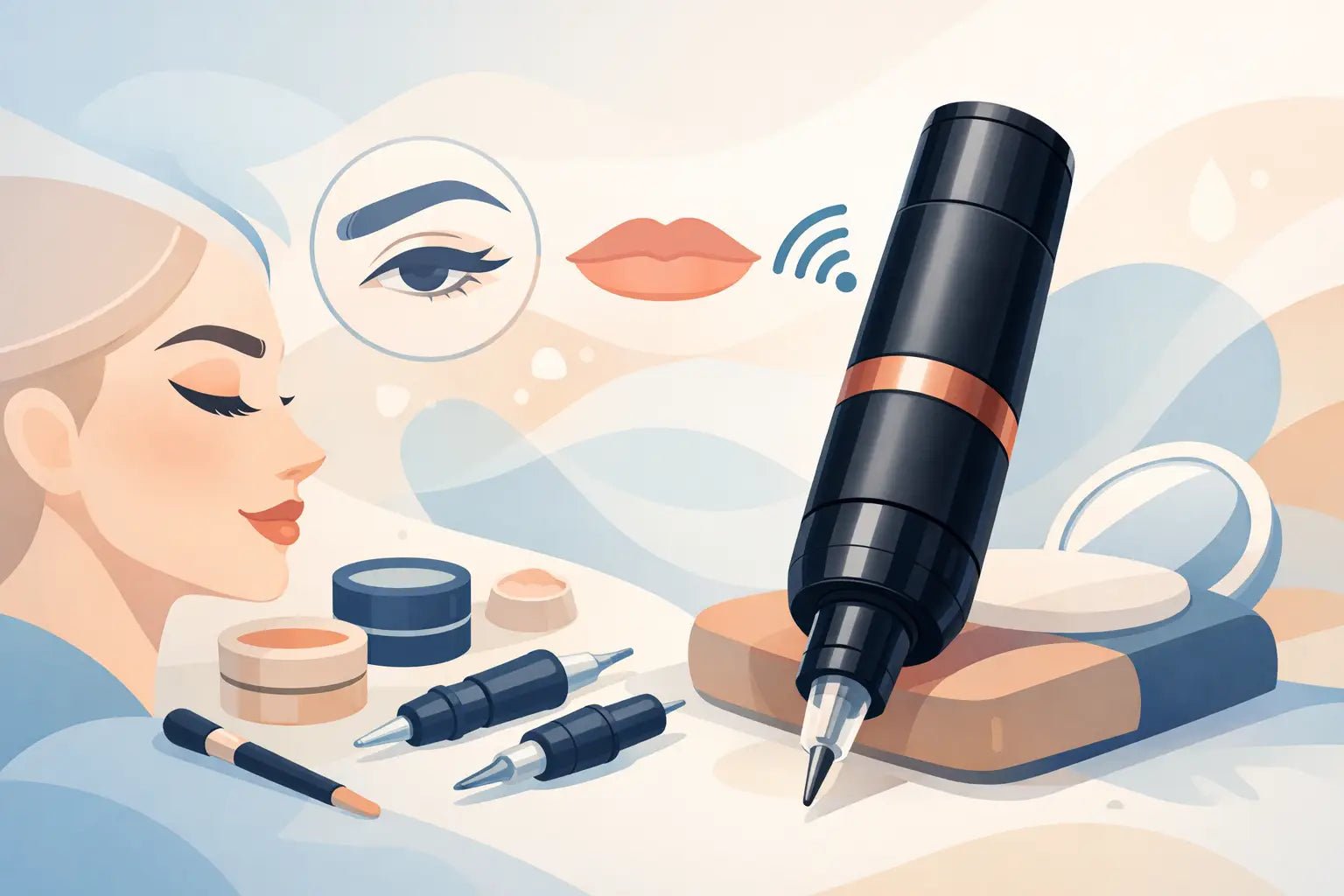
A wireless tattoo machine for PMU is not just a convenient upgrade from a corded setup. It changes how you move around the client, how cleanly you organize your station, and how consistently you can work through a full day of brows, lips, and eyeliner. The right machine should feel like an extension of your hand, not another variable you have to manage during a precise procedure.
For cosmetic tattoo artists, portability matters, but control matters more. A machine that looks sleek yet produces inconsistent needle movement, drains halfway through an appointment, or feels too heavy during detailed hair strokes will not earn a place in a professional kit. Choosing well means looking beyond the wireless label and matching the machine to your treatments, technique, cartridge system, and working pace.
What PMU Artists Need From a Wireless Machine
PMU work demands a different kind of performance than large-scale body tattooing. Brow pixels, crisp eyeliner, soft lip blush, and machine hair strokes require controlled implantation at shallow working depths. Your machine needs enough power to move smoothly through varied skin types, but it should not feel aggressive or difficult to regulate.
A dependable wireless setup gives artists greater freedom around the treatment bed. There is no cord dragging across a tray, catching on an armrest, or limiting how you position yourself for symmetry checks. That cleaner workflow can be especially useful in smaller studios, training environments, mobile services, and high-volume treatment days.
Wireless does involve trade-offs. Battery weight can make a pen-style machine feel more top-heavy than a comparable wired model, and not every battery pack delivers the same stable output as it approaches a low charge. Artists who perform several long procedures back to back should prioritize removable batteries, reliable charging options, or a backup power source rather than relying on a single charge.
Stroke Length and Power: Match the Machine to the Service
Stroke length affects how the needle hits the skin, how the machine feels in the hand, and how easily you can create a particular result. There is no single best setting or stroke length for every PMU artist. Technique, skin condition, needle configuration, pigment viscosity, and treatment area all influence what performs best.
A shorter stroke often appeals to artists focused on soft shading, powder brows, lip blush, and delicate pixel work. It can offer a gentler feel and more forgiving control for building color gradually. A medium stroke is a versatile choice for artists who want one machine to handle multiple services with consistent momentum.
Longer strokes may suit more experienced technicians performing machine hair strokes or working with techniques that need firmer, more direct needle movement. However, more impact is not automatically better. On thin, mature, sensitive, or compromised skin, an overly forceful setup can make it easier to overwork the area. The goal is clean, even saturation with minimal trauma, not the deepest or fastest possible pass.
Voltage control matters just as much as stroke. Look for clear, accessible adjustments that let you fine-tune your speed without interrupting your workflow. A machine with a responsive voltage range gives you room to adapt when moving from a dense brow outline to soft shading, or from the vermilion border into the body of the lips.
Battery Life Should Support Your Real Appointment Schedule
Battery claims can sound impressive, but the number on the box does not tell the full story. Runtime changes based on voltage, cartridge resistance, machine settings, and the type of work you perform. A short eyeliner appointment will place different demands on a battery than a detailed lip neutralization procedure or a full powder brow session.
Think about your busiest treatment day. If you commonly complete three or four procedures, use wireless machines in training sessions, or work at events, a removable battery system is usually the practical choice. It lets you begin each appointment with a fully charged unit and keeps a backup ready without pausing your schedule.
Pay attention to charging time, display readability, and how the machine signals low battery. A simple digital display can help you monitor voltage and remaining power at a glance. Controls should be easy to reach, but not so exposed that you can accidentally adjust settings while working.
Cartridge Compatibility Is a Professional Non-Negotiable
Your wireless machine needs to work with the cartridges you trust. Universal cartridge compatibility can simplify purchasing and make it easier to keep appropriate configurations on hand for each service, including round liners for details, round shaders for pixel work, curved magnums for larger lip areas, and specialized PMU needle options.
Compatibility is not only about whether a cartridge clicks into place. The cartridge should sit securely, maintain consistent needle depth adjustment, and work with the machine's grip without excess wobble or looseness. Any instability at the cartridge connection can affect precision, especially when you are creating fine hairstrokes, an eyeliner wing, or a sharp lip border.
Choose high-quality, safety membrane cartridges designed to help prevent fluid backflow into the machine. This is an essential part of a hygienic PMU setup, alongside proper barriers, single-use consumables, surface disinfection, and studio protocols. A premium machine cannot compensate for weak cartridge quality or inconsistent needle performance.
Hand Feel Can Affect Your Results by the End of the Day
A machine may feel comfortable for five minutes and still cause fatigue after two appointments. Weight balance, grip diameter, vibration, and button placement all become more noticeable over a full working day. If possible, consider how the machine will feel during the most detail-focused part of your treatment, when your hand is steady and your focus cannot drift.
Slim machines can feel precise and familiar to artists who prefer a lighter hand. Slightly wider grips may provide greater stability for some technicians, particularly during shading or longer lip procedures. Neither is universally right. The better choice is the one that supports your natural grip and lets you maintain controlled hand movement without squeezing too tightly.
Low vibration is another practical advantage. Excess vibration can contribute to hand fatigue and may make it harder to maintain a consistent rhythm. For newer artists, a balanced machine with smooth, predictable operation can also make the learning curve less frustrating while they develop depth, stretch, and saturation control.
Build a Wireless PMU Setup That Has a Backup Plan
Wireless freedom should never mean being unprepared. Even high-performing batteries can be forgotten on a charger, damaged in transit, or depleted during an unexpectedly long procedure. Working professionals should have a clear contingency plan before the client arrives.
Keep your setup supported with a charged spare battery, appropriate charging cable, compatible cartridges, barriers, and a reliable backup machine when possible. Trainers should also consider how easily students can operate the machine, identify settings, and maintain proper hygiene while changing cartridges or battery units.
At Inkbox Artistry, the most useful machine is never simply the newest one. It is the one that fits your services, works with the cartridges and consumables you already trust, and gives you consistent control from the first brow pass to the final aftercare photo.
Choose for Consistency, Not Hype
A wireless tattoo machine for PMU should make your treatment workflow cleaner, more flexible, and more comfortable without asking you to compromise on precision. Prioritize stable power, appropriate stroke, dependable cartridge fit, ergonomic balance, and battery planning over features you will rarely use.
Your technique will always lead the result, but the right machine helps you deliver that technique with fewer interruptions and more confidence. Test your setup on practice materials, refine your preferred voltage and cartridge combinations, and give every new tool enough time to prove itself before it becomes part of your daily client work.