Is Expired Pigment Safe for PMU Clients?
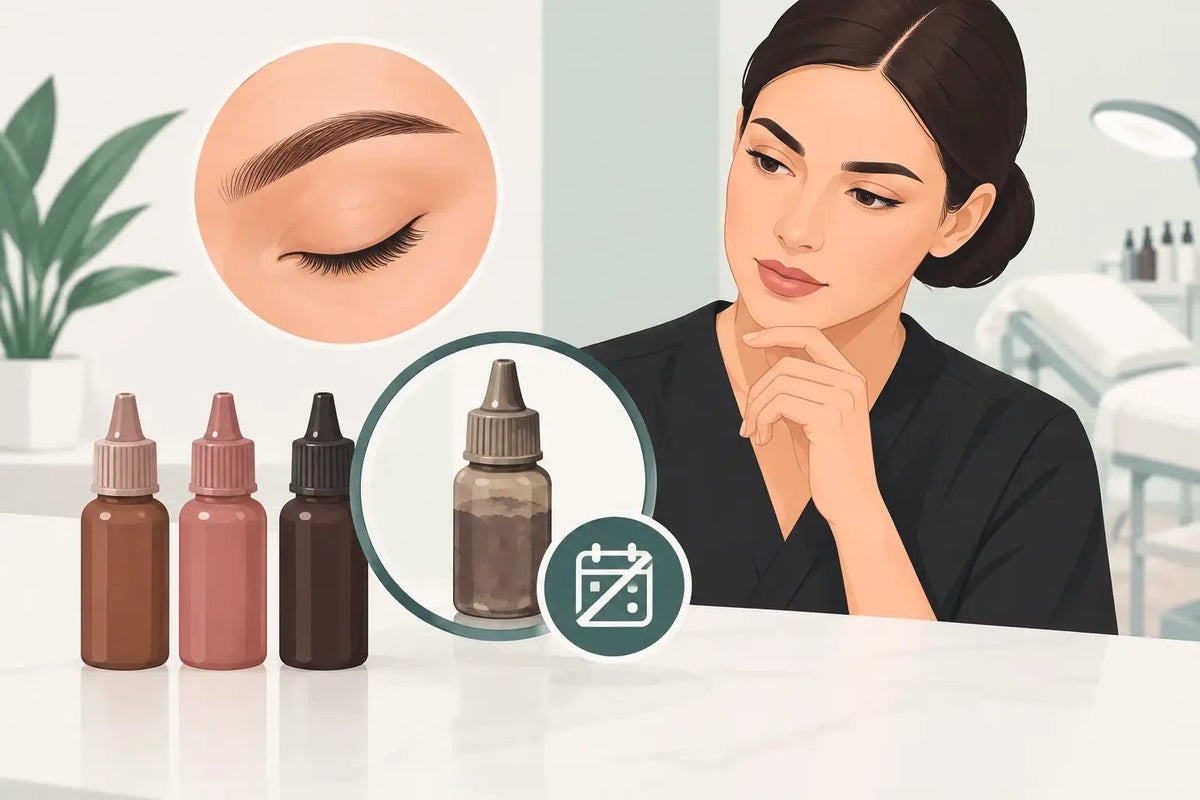
A pigment bottle can look perfectly normal long after its printed date. The cap may still be tight, the color may appear stable, and there may be enough product left for several treatments. But when artists ask, is expired pigment safe, the professional answer is not based on appearance alone. For cosmetic tattooing, an expired pigment should not be used on a client.
PMU is a procedure that deliberately places pigment into the skin. That changes the standard. A product must be considered not only for how it performs in the cup, but also for its sterility controls, preservative system, traceability, and predictable healed result. Saving a partially used bottle is never worth putting client safety, treatment outcomes, or your professional reputation at risk.
Is Expired Pigment Safe for PMU Treatments?
No - expired pigment is not a client-ready product. The expiration date is the point through which the manufacturer supports the product when stored under its stated conditions. Beyond that date, the manufacturer can no longer stand behind the pigment's stability, preservative effectiveness, viscosity, or intended performance in the skin.
That does not mean every bottle becomes visibly contaminated at midnight on its expiration date. It means the product has moved outside its validated use period. In a regulated, skin-breaking service, that distinction matters.
A PMU artist also needs to consider the full chain of accountability. If a client has an unexpected reaction, poor retention, altered color, or a healing concern, using a pigment past its expiration date is difficult to defend. Insurance requirements, local health department rules, studio protocols, and manufacturer guidance may vary, but none of them make expired product a smart choice for a treatment tray.
Why Pigment Has an Expiration Date
Cosmetic pigments are carefully formulated systems, not just color suspended in liquid. They can contain pigments, carriers, dispersants, preservatives, and other ingredients designed to keep the formula homogenous and usable for a defined period. Over time, these components can change in ways that are not obvious from a quick visual check.
The preservative system is a major concern. Once its validated lifespan has passed, there is less certainty that it can continue controlling microbial growth as intended. This is especially relevant for a bottle that has been opened repeatedly, handled during busy appointments, or stored in a treatment room with inconsistent temperature or humidity.
Stability is equally relevant to the result you deliver. An aging formula may separate differently, become thicker, develop altered flow, or heal less predictably than a fresh bottle. For brows, this can affect saturation and retention. For lips, where color selection and healed tone are central to client expectations, any loss of consistency can create an avoidable variable.
A bottle can also be expired before it is opened. An intact seal helps protect the product from outside contamination, but it does not extend the manufacturer-tested shelf life. If the printed expiry date has passed, keep it out of your live client inventory.
Expiration Date vs. PAO: Know Which Marking You Are Reading
Artists sometimes confuse a printed expiration date with a period-after-opening, often shown as an open-jar icon with a number such as 6M or 12M. These markings answer different questions.
An expiration date tells you the product's final approved use date under proper storage. A PAO marking indicates how long a product may be used after opening, provided that period ends before the printed expiration date. When both are present, follow whichever date comes first.
For example, a bottle may have a 12-month PAO but expire in eight months. If you open it today, it should be removed in eight months, not 12. Conversely, a bottle opened 10 months ago with a 6-month PAO should already be out of service, even if its printed expiration date is further away.
The exact instructions can differ by brand and formula. Always follow the labeling and manufacturer directions for that specific pigment rather than applying a universal timeline across every line in your inventory.
Signs a Pigment Should Never Reach the Treatment Tray
Expiry alone is enough reason to retire a pigment from client use. Before that date, however, visual and handling checks still matter. Do not use a pigment if you notice a broken or compromised seal, leakage around the cap, an unusual odor, unexpected clumping, stringy texture, excessive thickening, gas buildup, or color change.
Separation deserves nuance. Some settling can be normal in certain formulas and may resolve with the manufacturer's recommended mixing method. But separation that does not remix smoothly, or a formula that has developed a grainy or inconsistent texture, is not a bottle to troubleshoot during an appointment. Replace it.
Also consider storage history. A pigment kept in direct sunlight, left in a hot vehicle, frozen during shipping, or stored near heat sources may be compromised before its printed expiration date. Heat and temperature swings can affect formula stability and packaging integrity. When storage conditions have been questionable, the conservative choice is the professional choice.
Open-Bottle Hygiene Can Shorten Your Margin for Error
A pigment bottle is only as clean as the handling habits around it. Never dispense directly over a client or allow a nozzle to touch gloved hands, pigment caps, a work surface, or any item that may have been exposed during the procedure. Decant the amount you need into single-use caps, then discard the leftover pigment after the service.
Avoid returning unused pigment to the original bottle. It may feel waste-conscious, but it creates a contamination risk that can affect every future client. The same principle applies to mixing shades: build your blend in a disposable cap or approved single-use container, not inside a stock bottle.
A simple inventory label can prevent guesswork. Record the date opened, calculated discard date, lot or batch number, and artist initials if multiple team members share supplies. Studio owners should make this part of regular station checks, not a task saved for inspection day.
What to Do With Expired PMU Pigment
First, remove expired bottles from active storage and clearly mark them as not for client use. Do not leave them mixed among current shades where a rushed artist could grab the wrong bottle. A separate quarantine bin or clearly labeled disposal area works well until you can discard them according to local requirements and the manufacturer's guidance.
Expired pigment should not be used for live models, touch-ups, or discounted services. A lower-cost appointment does not lower your hygiene standard. It is also a poor choice for practicing on human skin, including your own.
For non-skin practice materials, studio policies vary. If you choose to use retired pigment on synthetic practice skins solely for technique drills, keep it physically separate from treatment supplies and label it unmistakably. Never use a bottle with questionable contamination, damaged packaging, or an unusual smell or texture, even for practice. When in doubt, dispose of it.
Build a Pigment Rotation System That Protects Your Work
The most efficient way to avoid waste is not to stretch old bottles. It is to manage stock before dates become a problem. When a shipment arrives, check expiration dates and lot numbers before shelving. Place earlier-dated products toward the front so they are used first, while still ensuring you have sufficient remaining shelf life for your appointment volume.
For artists with a broad brow and lip collection, review inventory monthly. Identify shades that are moving slowly, especially specialty modifiers, bright lip colors, and seasonal tones. Purchasing smaller quantities of low-volume shades can be more cost-effective than repeatedly discarding full bottles.
Maintain treatment records that include the pigment brand, shade, lot number, and expiry date used for each client. This is practical documentation, not busywork. It supports follow-up appointments, helps with color analysis, and gives your studio a stronger traceability system if a product concern ever arises.
When ordering, source professional pigments through authorized, reputable suppliers and inspect each bottle when it arrives. Inkbox Artistry was built by permanent makeup artists for artists, and dependable sourcing is part of protecting the precision behind every procedure.
The Cost of Replacing a Bottle Is Smaller Than the Cost of a Compromised Service
A nearly full expired pigment can feel difficult to discard, particularly when it is a premium shade. Still, pigment is a consumable with a defined service life, not a product to use until the last drop regardless of condition. The cost of replacement is part of running a professional PMU business, alongside cartridges, PPE, anesthetics, and proper aftercare.
Fresh, properly stored pigment gives you a more controlled starting point for every brow, lip blush, or corrective procedure. Keep dates visible, rotate inventory with intention, and let any bottle past its approved use period leave your client setup without debate. Your treatment tray should reflect the same standard of care your clients trust you to bring to their skin.