Cartridge Membrane Comparison for PMU Artists
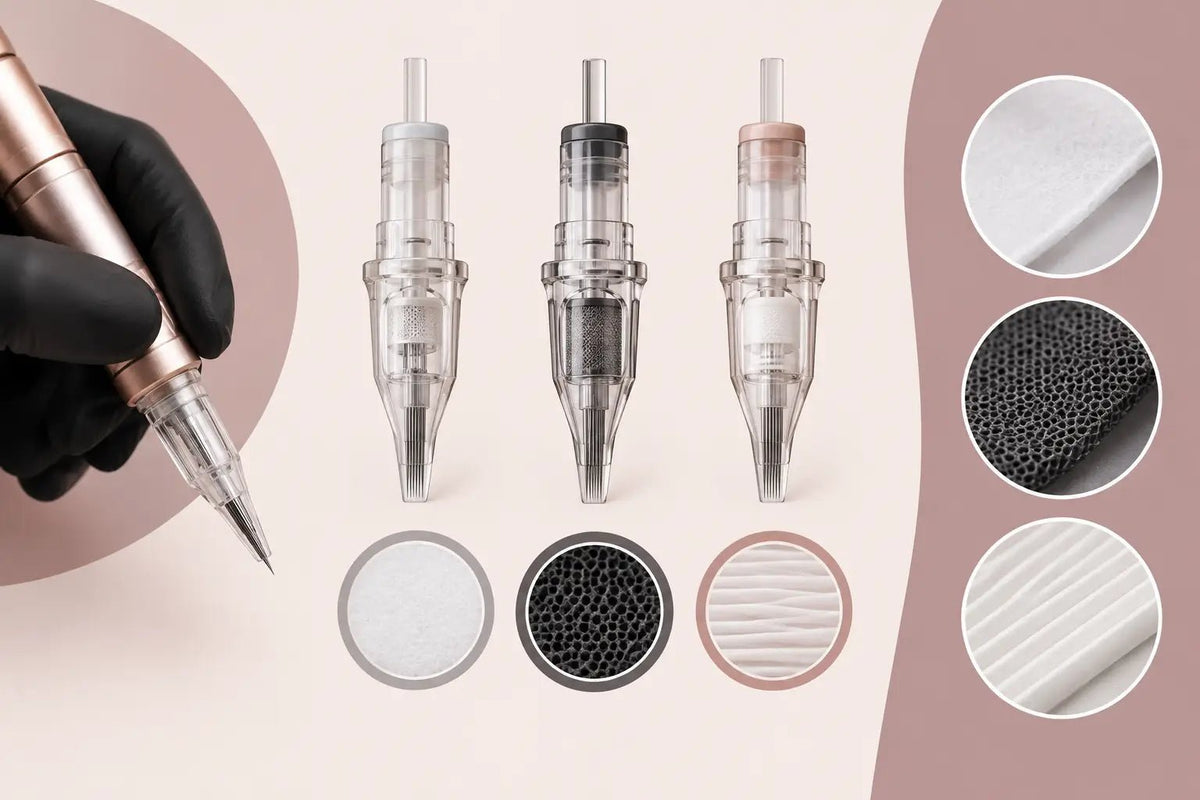
A cartridge membrane can change the way a familiar needle configuration feels in the skin. Two 1RL cartridges may look similar on the tray, yet one can deliver a softer, more responsive hand feel while the other feels firmer and more controlled. This cartridge membrane comparison focuses on what working PMU artists need to assess before choosing cartridges for brows, lips, eyeliner, and corrective work.
The membrane is not a marketing detail. It affects needle return, pigment delivery, machine response, and the practical hygiene controls built into your setup. The right choice depends on your technique, your machine, the area being treated, and the result you are building.
What a Cartridge Membrane Actually Does
Inside a membrane cartridge, an elastic barrier sits behind the needle assembly. As the needle moves, the membrane is designed to limit the movement of pigment, blood, and other fluids back toward the grip and machine connection. It also creates resistance against the needle bar movement, which is why membrane tension can noticeably affect the feel of a cartridge.
For PMU, that resistance matters. A cartridge with a softer membrane may feel more fluid and responsive, especially during long, light passes. A firmer membrane can provide a more planted feel and a more decisive needle return. Neither option is automatically better. The best fit is the one that supports controlled implantation without encouraging you to overwork the skin.
A membrane also does not replace proper barrier protection, single-use disposables, cleaning protocols, or manufacturer-recommended machine maintenance. Think of it as one part of a hygienic system, not the entire system.
Cartridge Membrane Comparison: Soft vs. Firm Tension
Manufacturers do not always use the same language to describe membrane tension. Some may refer to soft, medium, or hard membranes; others focus on low-resistance or high-resistance designs. The label is useful, but your working experience with the cartridge is the real test.
Soft or low-tension membranes
A softer membrane generally creates less resistance during the needle cycle. Artists often notice a lighter, smoother movement and more immediate response at lower machine settings. This can suit delicate lip work, airy pixel shading, soft powder brow layers, and artists who prefer to build color gradually.
The trade-off is that a very soft setup can feel less anchored if you are used to a firmer needle return. With an overly aggressive hand speed, excessive voltage, or too much pressure, a cartridge that feels effortless can still lead to uneven saturation or unnecessary passes. Soft does not mean forgiving of poor technique.
Medium-tension membranes
Medium tension is often the most versatile starting point for artists who perform multiple services. It can offer enough resistance to feel controlled while retaining the flexibility needed for soft shading and detailed work. If your kit needs to cover machine hairstrokes, powder brows, lip blush, and occasional eyeliner, a consistent medium-feel cartridge line may simplify your workflow.
That said, versatility is not the same as universality. Needle diameter, taper, grouping, and cartridge tip design can make the same membrane tension feel completely different from one configuration to another.
Firm or high-tension membranes
A firmer membrane typically gives a more deliberate, stable response. Some artists prefer this feel for structured strokes, dense saturation, or procedures where they want clear feedback from the machine and cartridge. It may also feel familiar to artists transitioning from traditional tattoo setups that use more resistance.
The trade-off is that a firm membrane can make a machine feel slower or less lively if your voltage and hand speed are not adjusted. When the system feels resistant, avoid compensating by pushing harder into the skin. Reassess your speed, machine setting, needle choice, and technique before adding pressure.
Membrane Tension Is Only One Variable
A useful cartridge membrane comparison never stops at soft versus firm. The membrane works alongside every other part of the needle system. A 0.25 mm single liner with a long taper will behave differently than a 0.30 mm round shader, even if both cartridges use the same membrane style.
Tip geometry influences visibility, pigment flow, and how much stabilization the needle has within the cartridge. Needle grouping affects the contact area and saturation pattern. Taper affects how the needle enters the skin and how concentrated the pigment delivery feels. Your machine stroke, give, voltage, and grip also influence the result.
This is why copying another artist's cartridge choice without considering their machine and technique rarely produces identical results. A setup that delivers clean, airy pixels for one artist may feel too soft or too slow for another. Test one variable at a time whenever possible.
Match the Cartridge Feel to the Procedure
For powder brows, many artists want a cartridge that supports gradual, even layering. A soft or medium membrane paired with an appropriate shader can help maintain a light hand, but skin type and desired density should guide the final choice. Mature, thin, or sensitized skin often benefits from a technique built around fewer, intentional passes rather than chasing immediate saturation.
For machine hairstrokes, precision and consistency are central. A cartridge that tracks cleanly and returns predictably can help maintain stroke rhythm. Depending on your method, you may prefer a medium or firmer membrane feel, particularly if you need more defined feedback through the handpiece. Practice on latex and document your machine settings before introducing a new cartridge to a client procedure.
For lip blush, controlled pigment flow and gentle layering are usually more useful than speed alone. Many artists favor a responsive setup that supports soft edges, consistent movement, and careful work across variable lip tissue. The right membrane tension should help you stay light-handed, not encourage repeated passes in one area.
For eyeliner, the margin for overworking is narrow. Cartridge stability, needle visibility, and your ability to work precisely matter as much as membrane tension. Choose a configuration and feel that you have already proven in practice, especially when working close to the lash line.
Check Compatibility Before You Commit
Universal-style cartridges can streamline inventory, but compatibility should never be assumed. Confirm that the cartridge seats securely in your machine or grip, engages correctly with the drive mechanism, and does not create abnormal noise, looseness, or inconsistent needle movement. A poor fit can affect performance and compromise the reliable workflow you need during a procedure.
When testing a new cartridge line, assess it with your actual machine, preferred grip, and usual pigment consistency. Run a controlled practice session using the same hand speed and voltage you would use for a service. Pay attention to needle movement, pigment flow, vibration, and whether the cartridge stays secure throughout the session.
For artists building a professional kit, it is usually smarter to standardize around a small range of trusted cartridges than to carry many unfamiliar options. Inkbox Artistry is built by PMU artists for artists, and that practical approach applies here: choose consumables that perform consistently enough to support repeatable technique.
Hygiene and Quality Checks That Matter
Before every procedure, inspect the individual cartridge packaging for damage, moisture, or an incomplete seal. Verify the expiration date when supplied, open the cartridge only when you are ready to set up, and follow your local regulations and studio protocols for disposal. If a cartridge feels loose, damaged, contaminated, or inconsistent, remove it from your workflow.
During setup, maintain barriers on the machine, cord or battery area as applicable, and any surfaces that may be touched with contaminated gloves. A membrane cartridge adds a protective layer within the cartridge design, but it does not make cross-contamination impossible. Clean technique still depends on disciplined setup, glove changes, surface management, and proper disposal.
Avoid These Comparison Mistakes
The most common mistake is judging a cartridge by membrane tension alone. A membrane may feel excellent in one needle grouping and unsuitable in another. Compare like for like: test the same configuration, same machine, similar voltage range, similar pigment, and the same practice surface or procedure type.
Another mistake is treating lower resistance as proof of better quality. Some artists need a light, responsive system; others create their best work with more feedback and structure. Quality shows up in consistent construction, secure fit, predictable needle movement, reliable packaging, and performance that matches the manufacturer's intended use.
Finally, do not force a new cartridge to behave like your old favorite. If it requires a dramatically different voltage or hand speed, that is not always a flaw. It may simply be a different system. Decide whether adapting your technique serves your treatment style, or whether another cartridge is the better professional fit.
The cartridge you reach for should make your technique easier to repeat, not harder to control. Keep notes on your preferred configurations, membrane feel, machine settings, and results across skin types. That record becomes more valuable than any product claim when it is time to refine a kit that supports your best work.