How to Choose PMU Machines for Better Results
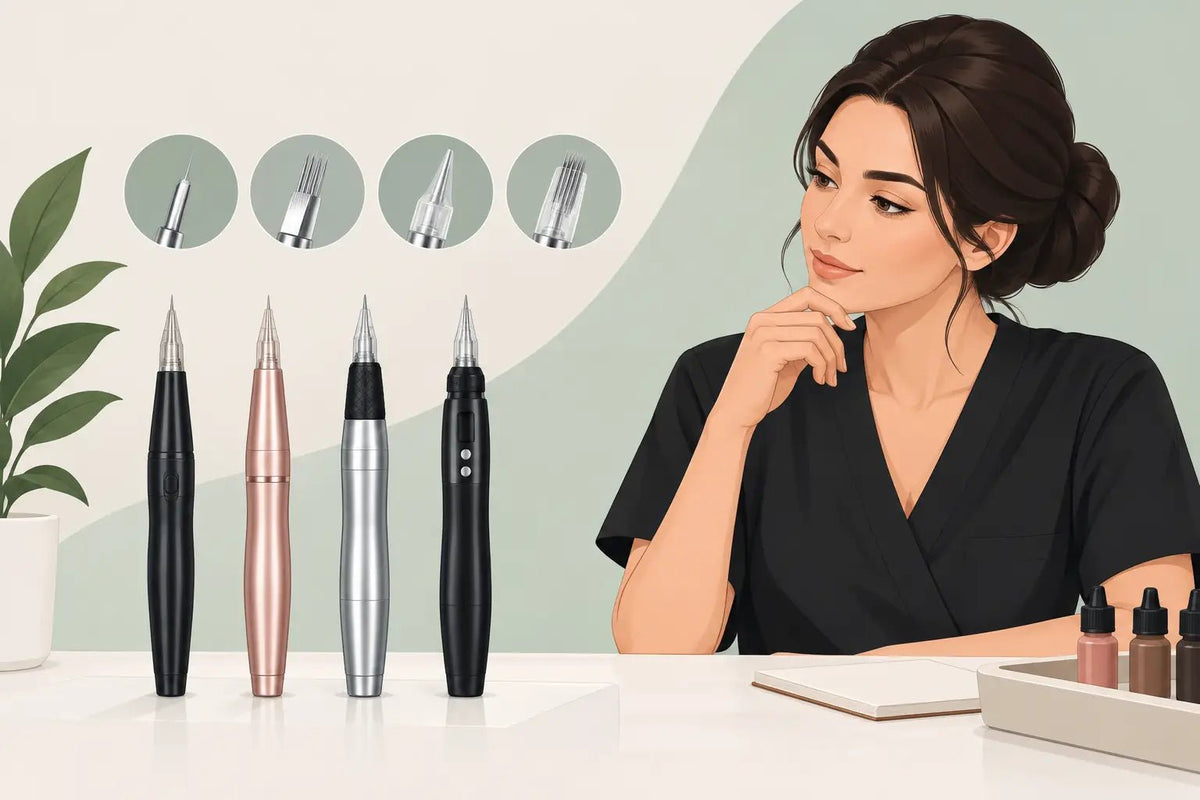
A machine can feel perfect in your hand during a quick test, then become a problem halfway through a full lip blush appointment. The right PMU machines support controlled implantation, consistent pigment flow, and comfortable working posture across the services you actually perform. The wrong choice can make saturation harder to achieve, fatigue your hand, or limit the cartridges and configurations you rely on.
For working artists, machine selection is not about chasing the newest release. It is about building a setup that matches your technique, treatment menu, and standards for clean, dependable client work.
Start With the Treatments You Perform
Brows, lips, and eyeliner do not demand the same feel from a machine. Before comparing specs, look at your book. An artist focused on soft powder brows may prioritize smooth, consistent shading and the ability to work with a light hand. A lip artist often needs controlled saturation over a larger area, while an eyeliner specialist may favor a precise, responsive setup for detailed work around sensitive skin.
One versatile machine can be a smart starting point for a newer artist. It keeps the kit focused, simplifies maintenance, and allows you to learn how voltage, hand speed, needle grouping, and skin tension work together. As your service menu grows, a second machine can be a practical upgrade rather than a luxury. Many established artists keep separate setups for soft shading, stronger saturation work, or backup coverage during busy days.
Your technique matters just as much as the treatment. If you work slowly and deliberately, a machine that feels stable at lower operating settings may suit you well. If your hand moves quickly, you may prefer a machine with enough power and consistency to keep up without forcing you to overwork the skin. Specs are useful, but they only make sense in the context of your own hand movement and implantation depth.
What to Compare When Shopping PMU Machines
Stroke length and skin response
Stroke length affects how the needle moves and how the machine feels in the skin. Shorter strokes are often associated with softer, more delicate work and can appeal to artists creating airy pixel shading or refined detail. Longer strokes generally offer a firmer hit and may be preferred for more demanding saturation work.
There is no universally correct stroke length for permanent makeup. A machine that produces beautiful results in experienced hands can still be a poor fit for a beginner who has not developed consistent pressure and depth control. Consider the healed results you want, the skin types you see most often, and the technique you have been trained to perform.
Voltage range and consistency
Voltage controls machine speed, but it is not a shortcut to better retention. Turning up the voltage can help a machine move through resistant areas or support a faster hand, yet excessive speed or pressure can lead to unnecessary trauma. The goal is a setting that allows clean, controlled passes without repeatedly working the same area.
Look for a machine with a reliable voltage range and clear adjustment controls. Artists who switch between brows, lips, and liner benefit from settings that are easy to read and repeat. Once you find a range that works with a specific cartridge, pigment, and technique, document it. A simple treatment note can make your next appointment more consistent.
Weight, balance, and grip
Machine weight is easy to overlook until you are three hours into a treatment day. A lightweight pen-style machine can reduce strain, especially for artists who work multiple appointments or use a relaxed grip. But lighter is not automatically better. Some artists need a slightly more substantial body for stability and confidence in their hand.
Balance is equally important. If the machine feels front-heavy or forces your wrist into an awkward position, precision can suffer. Consider grip diameter, vibration, cord placement if applicable, and whether the machine remains comfortable when paired with your preferred cartridge. Your machine should support good ergonomics, not require you to compensate for it throughout the procedure.
Wireless versus wired setups
Wireless PMU machines offer a clean workstation and freedom of movement. They are especially useful in compact treatment spaces, for artists who travel, or for anyone who dislikes managing cords around a tray setup. Battery life, charging time, and the availability of backup power should be part of the decision.
Wired machines remain a strong choice for artists who prefer uninterrupted power through long appointments or want a familiar, consistent setup. They can also make sense for a dedicated studio station where cable management is already organized. The best option depends on your workflow, not on which format looks more modern.
Cartridge compatibility and needle selection
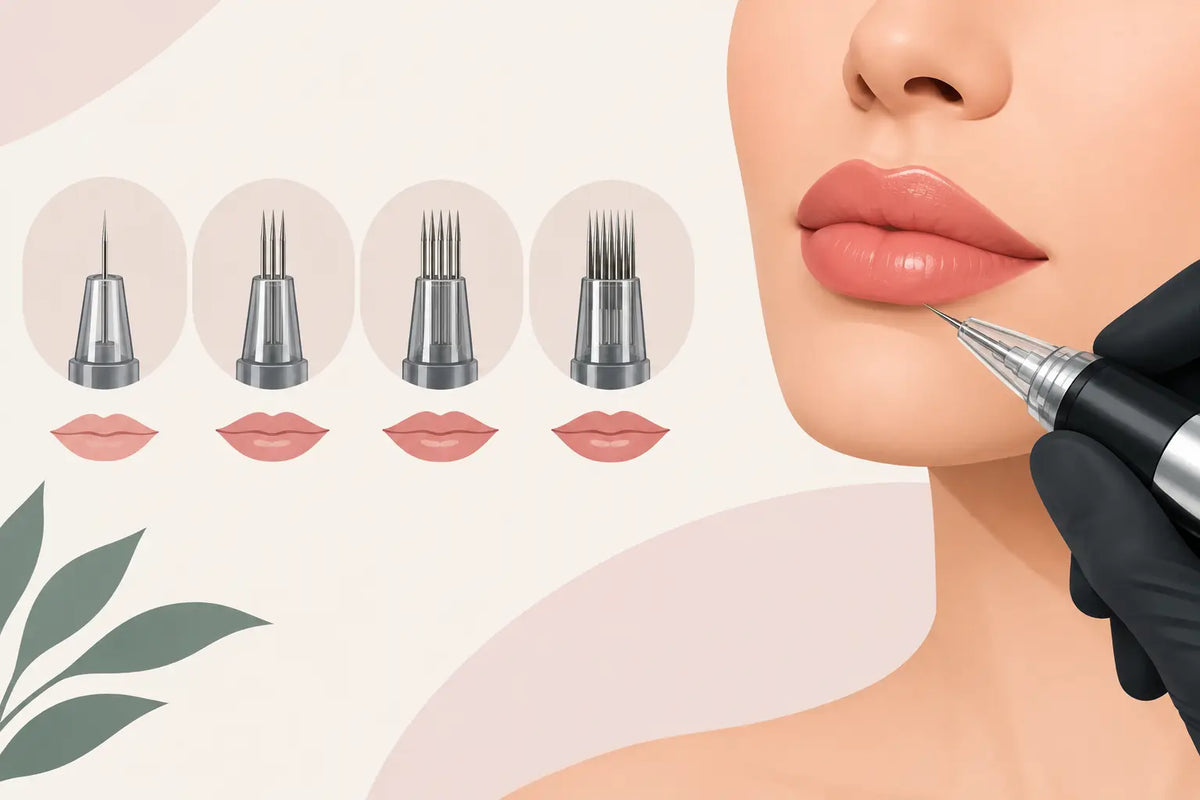
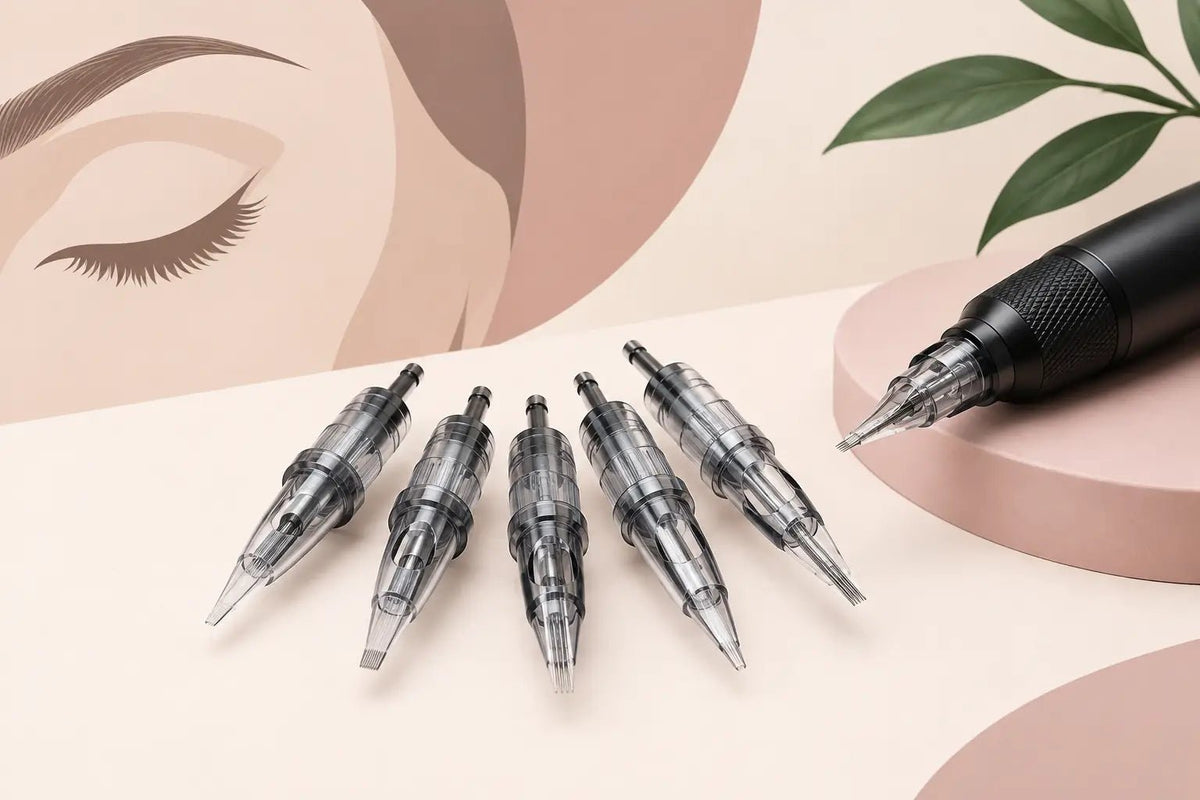
Your machine is only one part of the system. Cartridge compatibility determines how easily you can access the needle configurations you trust for individual hair strokes, shading, lip saturation, and liner details. Universal cartridge systems can simplify purchasing and give you more flexibility across professional needle brands.
Do not choose a machine before checking the cartridges it accepts. Confirm that you can consistently source the configurations you use most, including your preferred diameters, tapers, and groupings. Also evaluate cartridge quality: secure membrane protection, stable needle movement, and dependable fit are foundational to hygienic, predictable work.
Build a Clean, Repeatable Machine Setup
Professional results come from repeatable preparation. Even a premium machine cannot compensate for inconsistent barrier practice, poorly fitted cartridges, or a cluttered station. Create a setup sequence you can follow before every client, whether you are in your studio, at a training event, or working from a mobile setup.
Barrier protection should cover the parts of the machine and cord or battery system that may be exposed during treatment. Use single-use cartridges, follow manufacturer guidance for cleaning and care, and keep your power supply controls accessible without compromising your clean field. Replace barriers between every client and inspect your machine body for pigment residue or damage before putting it away.
It also helps to keep machine-specific supplies together. Store compatible cartridges, grip accessories, batteries, and charging equipment in a dedicated area of your studio. When everything is organized by workflow, you avoid scrambling for a backup cartridge during an appointment or discovering a low battery when your client is already mapped and prepped.
Test Before You Commit to Client Work
A new machine deserves more than a quick unboxing test. Spend time with it on practice materials before adding it to your service menu. Test several needle configurations and use the same hand speed, angles, and motions you would use during a procedure. Pay attention to vibration, sound, cartridge stability, and whether the machine encourages you to change your pressure or speed.
Practice also shows where a machine fits in your lineup. You may find that it performs beautifully for lip blush but does not give you the softness you prefer for powder brows. That is useful information, not a failed purchase. Specialized tools can be worthwhile when they make your treatment results more consistent and your working day more comfortable.
For trainers, testing matters on a larger scale. A machine selected for student kits should be intuitive, compatible with readily available cartridges, and durable enough for repeated practice sessions. Standardizing equipment can make it easier to teach voltage, movement, and needle choice without every student working from a completely different baseline.
Price Matters, but Downtime Costs More
Budget should be part of the conversation, particularly when you are building your first professional kit. A lower-priced machine may be appropriate for practice or as a backup, provided it meets your expectations for cartridge fit, hygiene, and performance. However, the least expensive option can become costly if it is unreliable, difficult to service, or incompatible with the supplies you use every week.
When comparing prices, consider the full operating picture: batteries or power supplies, replacement parts, available cartridges, warranty support, and the value of having a dependable backup. For a busy artist, machine downtime can mean rescheduling clients and losing confidence in your workflow. Investing in professional equipment is often about protecting consistency as much as improving comfort.
Inkbox Artistry is built by permanent makeup artists for artists, so the goal is never to add equipment just for the sake of it. Choose the machine that fits the work in front of you, practice until its response feels familiar, and keep a clean backup plan ready. When your tools are dependable, more of your attention stays where it belongs: on precise work and an exceptional client experience.